The Roman Dodecahedron: 100 Artifacts That Defy History
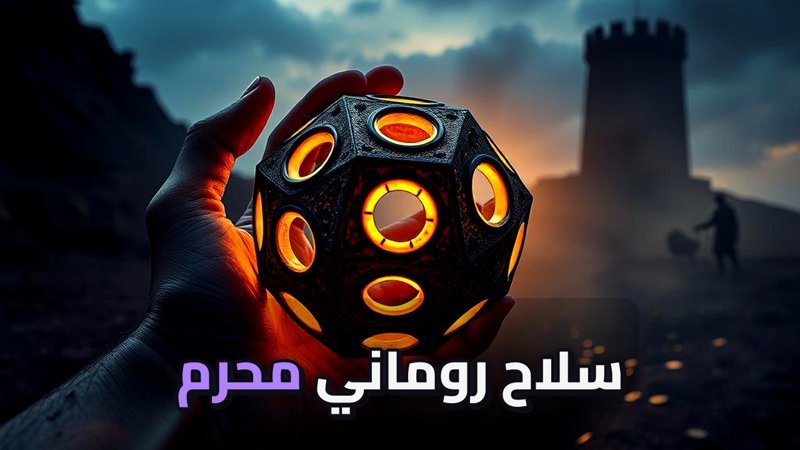
The Roman Dodecahedron: 100 Artifacts That Defy History
In 1739, a farmer in the English countryside unearthed a mysterious twelve-faced bronze object that would baffle archaeologists for centuries. Known as the Roman dodecahedron, this artifact—featuring circular holes and protruding corner balls—remains one of the most perplexing enigmas of the ancient world. Despite being found in museums across Europe, not a single Roman manuscript mentions its existence, purpose, or name.
Navigate Content
A Silent Legacy Across the Empire
What began as a solitary discovery in England soon expanded into a widespread phenomenon. Researchers have now cataloged over 100 of these dodecahedrons, primarily located along the northern frontiers of the Roman Empire, including modern-day Belgium, Germany, and France. The precision of their bronze casting suggests they were not random experiments, but rather significant items. Yet, their complete absence from Roman texts—a civilization known for documenting everything from tax records to military maneuvers—remains a profound mystery. For more ancient puzzles, explore Skara Brae: The 5,000-Year-Old Stone Age Village That Defies History.
The Failure of Practical Theories
The human desire to categorize objects by utility has led to several theories, all of which face significant scrutiny:
- Surveying Tool: Some suggest they were theodolites for military engineers, but the inconsistent hole sizes across different specimens make standardized measurement impossible.
- Knitting Frames: Recent experiments showed they could be used to knit glove fingers, yet metallurgical analysis reveals no signs of thread wear or friction.
- Precious Objects: The high-quality bronze and artistic design suggest these were luxury items rather than common workshop tools.
Why the Silence in Rome?
Perhaps the most baffling aspect is the geographical distribution. While these objects are found in the northern provinces, not a single piece has been discovered in Italy or the heart of Rome. This suggests the dodecahedron may have been tied to specific cultural or religious practices unique to the fringes of the empire. If you are interested in how ancient societies kept secrets, read about The Amarna Archive: How Clay Letters Exposed Ancient Royal Greed.
Beyond the Physical: A Cosmic Connection?
As we move away from ‘dry’ logic, some researchers propose that the dodecahedron served a symbolic or astronomical purpose. The twelve faces could represent the zodiac or other celestial alignments. By viewing the Romans through a lens of ritual rather than just utility, we may finally begin to understand why these objects were so carefully crafted yet never written about. For further reading on mysterious ancient sites, check out Derinkuyu: The Ancient Underground City That Housed 20,000 People.
Frequently Asked Questions
Generated by AI Content Architect
About The Author