The Terracotta Army: Secrets of China’s Eternal Underground Empire
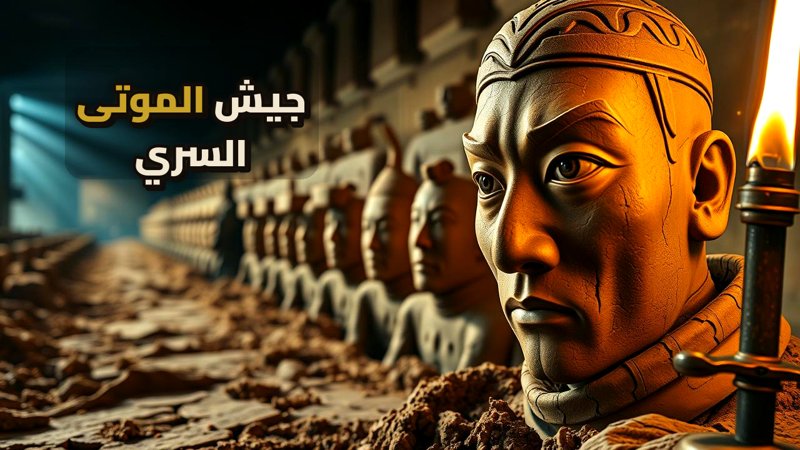
The Terracotta Army: Secrets of China’s Eternal Underground Empire
In March 1974, a simple act of digging a well in the Chinese village of Xiyang led to the most significant archaeological discovery of the 20th century. What farmer Yang Zhifa initially mistook for a pottery jar was actually the first glimpse of an entire army that had remained hidden for over two millennia. This discovery revealed the immense power and obsession of Emperor Qin Shi Huang, the man who unified China and sought to command an empire even in the afterlife.
Navigate Content
A Gateway to the Afterlife
Emperor Qin Shi Huang was not merely a ruler; he was a visionary obsessed with immortality and eternal authority. In ancient Chinese belief, death was a transition, not an end. Fearing that his defeated enemies would seek revenge in the next world, Qin commissioned a massive, fortified underground empire. This project, which spanned 38 years, involved 700,000 workers and artisans tasked with creating a permanent guard for his tomb.
The Art of Individualism
The most baffling aspect of the Terracotta Army is the level of detail found in each of the 8,000 soldiers. Rather than using a single repetitive mold, the artisans crafted each figure as a unique individual.
- Distinctive features: From thick mustaches to the wrinkles of age, no two faces are identical.
- Military Ranks: The statues accurately reflect the hierarchy of the real army, including commanders, cavalry, and infantry.
- Real-life Models: It is widely believed that the sculptors used actual soldiers of the time as models for their work.
The Vanishing Colors of the Past
While we see the statues as dull clay today, they were originally painted in vibrant, brilliant colors. Using a rare chemical compound known as ‘Han purple’ alongside reds, greens, and blues, the army was a sight to behold. Unfortunately, the moment these statues were exposed to oxygen during excavation, the paint reacted with the air and peeled away within minutes, leaving behind the monochromatic figures we recognize today. This phenomenon is a stark reminder of how fragile history can be when exposed to the modern world, much like the secrets explored in Damnatio Memoriae: The Engineering of Oblivion in Ancient History.
A Legacy of Power
The construction of the mausoleum was a reflection of the same precision that allowed Qin to unify China, standardize currency, and initiate the Great Wall. The army was not just a collection of statues; it was a strategic battle map arranged in trenches to protect the Emperor for eternity. The scale of this achievement continues to challenge our understanding of ancient engineering and logistics, much like the mysteries discussed in The Nazca Lines: Ancient Desert Prayers or Astronomical Maps?.
Frequently Asked Questions
Generated by AI Content Architect
About The Author