The Statue of Liberty: Egypt’s Rejected Project That Changed History
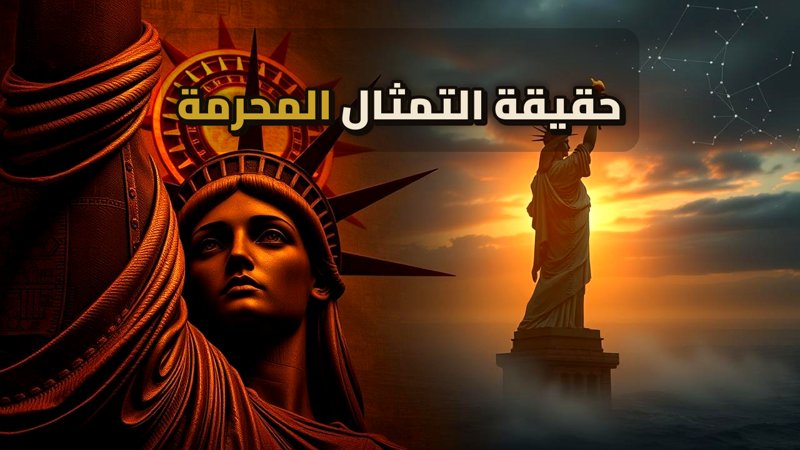
The Statue of Liberty: Egypt’s Rejected Project That Changed History
To truly understand the Statue of Liberty, we must look past the standard historical narrative. By examining the monument through the lens of an engineer and a researcher of ancient symbolism, we uncover a story that suggests the statue is far more than a diplomatic gift—it may be a vessel for lost knowledge and ancient architectural secrets.
Navigate Content
From the Suez Canal to New York Harbor
Before it became the icon of American liberty, Frédéric Bartholdi envisioned a colossal statue titled ‘Egypt Carrying the Light to Asia.’ Originally intended for the Suez Canal, the project was rejected by Khedive Ismail due to financial constraints. This ‘migration’ of a monument raises questions:
- Was the design always meant to be a global beacon?
- Did the rejection in Egypt simply provide a convenient cover for a project with deeper, perhaps esoteric, origins?
Engineering Beyond Its Time
The internal structure, designed by Gustave Eiffel’s company, utilizes load-bearing logic that mirrors the grandeur of ancient structures like the Colossus of Rhodes. This level of precision at the end of the 19th century suggests that the builders may have been following an ancient ‘map’ of engineering. For more on how ancient civilizations mastered massive construction, see Nabta Playa: The Ancient Stone Clock That Predates Stonehenge.
The Language of Symbols and Numbers
The statue is laden with symbolic detail that transcends mere aesthetics. The seven spikes in the halo are often cited as representing the continents, but they also align with ancient ‘Sol worship’ and cosmic power. Similarly, the tablet held by the statue possesses geometric dimensions that hint at a larger, hidden system. This use of symbolic language is a recurring theme in history, much like the mysteries found in The Nazca Lines: Ancient Desert Prayers or Astronomical Maps?.
A Message for the Future
If the Statue of Liberty is indeed a message, what is it trying to convey? By analyzing the recurring patterns in ancient monuments, we see a global system of navigational and symbolic markers. The statue may be the final key to decoding a lost heritage that connects civilizations across time. To explore other instances of hidden history, visit The Terracotta Army: Secrets of China’s Eternal Underground Empire.
Frequently Asked Questions
Generated by AI Content Architect
About The Author