From Silence to Voice: How Science Reconstructed an Egyptian Mummy’s Voice
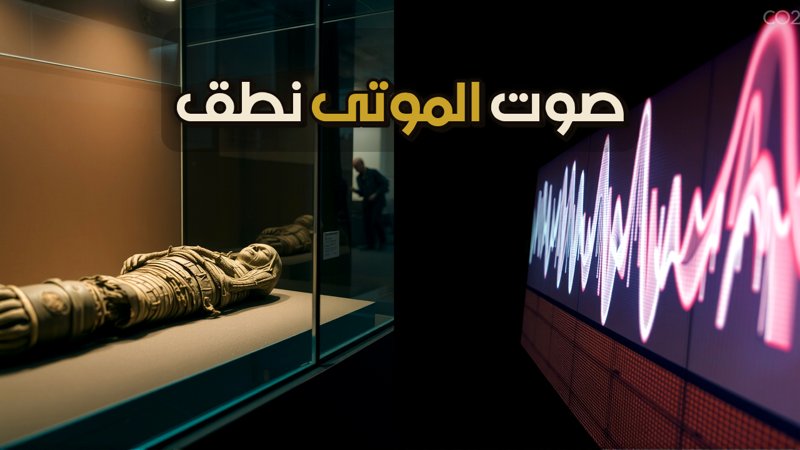
From Silence to Voice: How Science Reconstructed an Egyptian Mummy’s Voice
Stepping into any royal tomb in the Valley of the Kings, the first sensation you encounter is silence. Yet, behind this quietness lies a profound ancient desire: the wish to never be forgotten. For the ancient Egyptians, retaining one’s voice in the afterlife was essential for survival. Now, modern science has achieved the seemingly impossible by recreating the voice of a 3,000-year-old mummy.
Navigate Content
The Ancient Egyptian Philosophy of the Voice
The ancient Egyptians did not see death as an end, but merely as a journey to another realm. For this journey to succeed, the deceased had to retain their identity, most importantly their voice. In their philosophy, the voice breathed life into the ‘name,’ keeping it animated. They harbored a profound fear of losing their voice, believing it meant eternal obliteration. Similar historical efforts to decode and preserve the past can be seen in discoveries like The Rosetta Stone: How a Single Discovery Decoded Ancient Egyptian.
The Ritual of the ‘Opening of the Mouth’
To confront eternal silence, the ancient Egyptians performed a vital religious ritual called the ‘Opening of the Mouth.’ A priest would touch the face of the deceased with a specialized flint blade called the peseshkef. This act was designed to restore the soul’s capacity for senses, breath, and speech so the deceased could recite the ‘Confessions of Innocence’ before the divine tribunal.
Nesyamun: The Scribe Who Left a Written Wish
Our central figure is Nesyamun, an Egyptian priest and ‘scribe of the sacred texts’ who lived during the reign of Pharaoh Ramesses XI. Nesyamun left a clear inscription on his coffin expressing his wish that his voice might be heard in the afterlife. Because his mummification was executed with astonishing precision, his vocal tract remained remarkably well-preserved. Other fascinating ancient mysteries of preservation and human structure are explored in The Truth Behind the Bodies of Pompeii in 79 AD.
Bridging 3,000 Years with Modern Science
In 2020, researchers at the University of London and the Leeds City Museum used high-resolution CT scans to map Nesyamun’s vocal tract from throat to lips. They utilized 3D printing to create an exact physical replica of his vocal cavities. By passing electronic sound waves through this artificial tract, scientists successfully generated a single vowel sound, effectively allowing the mummy to speak again after three millennia.
Frequently Asked Questions
Generated by AI Content Architect
About The Author