Land of Ash: The Forgotten Struggle for Ferdinandea Island
Land of Ash: The Forgotten Struggle for Ferdinandea Island
In July 1831, a routine maritime route off the coast of Sicily became the stage for a bizarre geological event. A volcanic eruption beneath the Mediterranean Sea birthed a brand-new island made of black ash and tephra. What followed was a frantic geopolitical scramble among Sicily, Britain, and France to claim a pile of rock that nature had other plans for.
Navigate Content
A Volcanic Eruption in the Open Sea
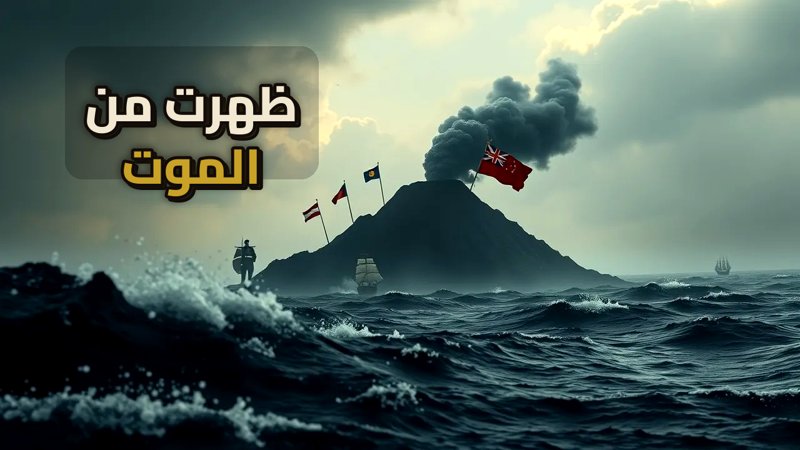
In July 1831, Captain Francesco Corrao aboard the Gustavo noticed a massive column of black smoke rising 600 meters into the air in a supposedly deep part of the Mediterranean. There were no mountains or shipwrecks nearby—only boiling water, the scent of sulfur, and a rising mass from the seabed. Within days, the material cooled and solidified into a four-kilometer circumference island standing 60 meters above sea level, reminiscent of historical anomalies like those explored in Did 2,000 Ships Sink at Once in Alexandria? Seafloor Evidence Revealed.
King Ferdinand II and the Birth of Ferdinandea
Sensing a golden opportunity to control vital trade routes without spending a dime on war, King Ferdinand II of the Kingdom of Sicily quickly dispatched engineers and illustrators. They claimed the land, raised the Sicilian flag, and named the island Ferdinandea in honor of the king. The royal court celebrated the effortless strategic expansion in the Mediterranean.
An International Crisis: Three Flags on One Rock
Sicilian triumph was short-lived as global powers rushed to claim the territory:
- Great Britain: Captain Humphrey Senhouse planted the Union Jack, naming it Graham Island.
- France: A scientific expedition led by Constant Prévost planted the French flag, naming it Julia Island.
- Sicily: Defended its original sovereignty over the newly minted territory.
Warships circled the island in a tense standoff, all prioritizing geopolitical dominance over a volatile volcanic rock.
Nature’s Reversal: The Disappearing Island
While diplomats argued and military engineers mapped out fortifications, nobody accounted for the fragile composition of the land. Composed entirely of tephra—loose volcanic ash and rubble—the island lacked the solid rock of traditional mountains. Waves relentlessly battered the shores, eroding the ash day by day until military maps became useless and the strategic base dissolved back into the sea.
Frequently Asked Questions
Generated by AI Content Architect
About The Author