The Rosetta Stone: How a Single Discovery Decoded Ancient Egyptian
The Rosetta Stone: How a Single Discovery Decoded Ancient Egyptian
If we travel back in time some two and a half centuries and stand before any Pharaonic temple, the scene appears strange and perplexing. Entire walls are covered in dazzling reliefs and inscriptions, yet not a single person alive at that time could read a single word of it. Until the late eighteenth century, ancient Egypt remained a profound enigma—until a broken basalt stone changed everything.
Navigate Content
An Enigma Carved in Stone
For centuries, European scholars stood before Egyptian temples captivated yet utterly helpless. Many researchers believed hieroglyphics were not a genuine language with rules and pronunciation, but merely religious symbols and magical ciphers intended to conceal the secrets of the universe. Similar historical puzzles often capture our imagination, much like the architectural enigmas explored in The Mystery of Easter Island: How Moai Statues Were Built & Transported. An entire civilization had recorded its history on every wall, but that history stood mute.
The Accidental Discovery at Rosetta
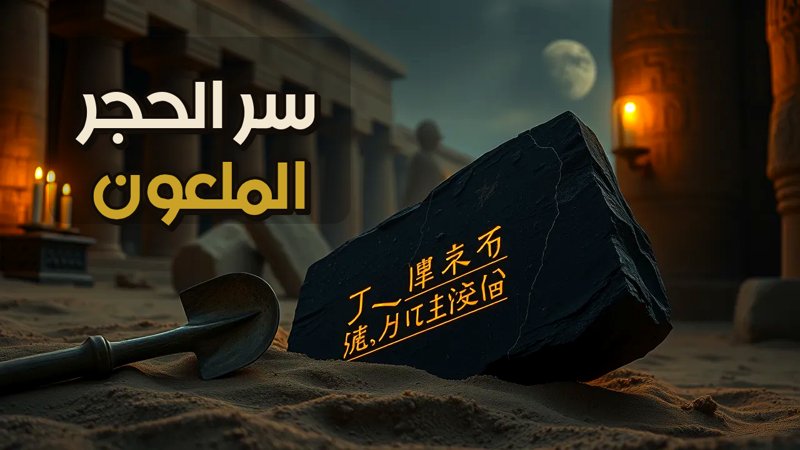
The landscape changed in July 1799 in the coastal city of Rosetta. Under the supervision of military engineer Pierre-François Bouchard, French soldiers were reinforcing an old fortification. Amidst the demolition dust, a soldier’s pickaxe struck a solid object distinct from the surrounding stones: a broken black granodiorite slab measuring about a meter long. Bouchard, endowed with genuine scientific curiosity, immediately noticed the inscriptions were divided into three distinct sections.
Three Scripts, One Message
Upon closer examination, Bouchard realized the immense value of the artifact:
- Upper portion: Inscribed in hieroglyphs, the sacred script of the time.
- Middle section: Written in Demotic, the popular script.
- Lower portion: Written in Ancient Greek, which scholars of the era could read fluently.
Since all three texts conveyed the exact same message, Bouchard reasoned that this stone could be the key to translating the language of the Pharaohs. This artifact shares historical weight with other pivotal discoveries, paralleling events seen in The Mystery of the Sun’s Disappearance and the Volcano Behind Cleopatra’s Fall.
The Scientific Race: Young vs. Champollion
Following the defeat of the French, the stone was transferred to British hands, sparking a fierce scientific race between London and Paris.
- Thomas Young: In England, the polymath focused on cartouches (royal enclosures) and used an analytical, mathematical perspective to identify phonetic values.
- Jean-François Champollion: In France, Champollion treated the challenge as a living language, immersing himself in Coptic as a natural continuation of ancient Egyptian.
Their distinct methodologies ultimately unlocked a lost civilization for the modern world.
Frequently Asked Questions
Generated by AI Content Architect
About The Author