White Gold: The Forgotten Wars Fought Over Bird Droppings
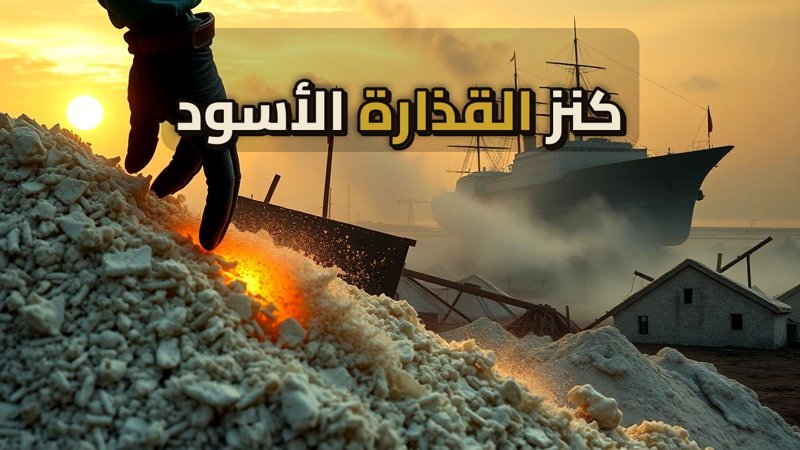
White Gold: The Forgotten Wars Fought Over Bird Droppings
In the mid-19th century, the world was gripped by a strange obsession with a substance that most found repulsive: bird droppings. Known as guano, this ‘white gold’ became the most valuable commodity on Earth, capable of saving Europe from famine and transforming nations. However, this agricultural revolution was built upon a foundation of greed, exploitation, and international conflict.
Navigate Content
The Scientific Discovery of Guano
The global frenzy began with Alexander von Humboldt, who observed the indigenous Inca people using guano to fertilize their land. Upon bringing samples to Europe, scientists discovered it was 30 times more potent than any known animal fertilizer. As Europe faced the ‘Malthusian trap’—the fear that population growth would outpace food production—this substance became the only hope for preventing mass starvation.
The Rise and Fall of the Peruvian Boom
Peru quickly became one of the wealthiest nations in the world, using guano profits to modernize Lima with grand theaters and opera houses. The trade was dominated by British firms, and the phrase ‘as rich as a Peruvian’ became a global benchmark for prosperity. However, this wealth was short-lived and came at a devastating human cost, often compared to other historical collapses like those explored in The Last Cry of the King of Ugarit.
The Dark Reality of the Chincha Islands
Behind the luxury lay a brutal reality. To meet demand, Peru imported ‘coolie’ laborers from China who faced horrific conditions:
- Inhalation of ammonia-saturated dust that burned lungs and eyes.
- Backbreaking labor on remote, prison-like islands.
- Extreme despair leading many to commit suicide by jumping from cliffs.
Global Expansion and the Guano War
The United States entered the fray by passing the Guano Islands Act of 1856, allowing citizens to claim any uninhabited island containing guano for the U.S. This sparked naval expansion and territorial tensions. Eventually, Spain attempted to reclaim the islands in 1864, leading to a fierce naval conflict where Peru, allied with Chile, Ecuador, and Bolivia, fought to defend their sovereignty. This era of resource-driven conflict mirrors the environmental shifts seen in 1816: The Year Without a Summer.
Frequently Asked Questions
Generated by AI Content Architect
About The Author