The Processing Gap: Observing a Man Calculate His Own Emotions
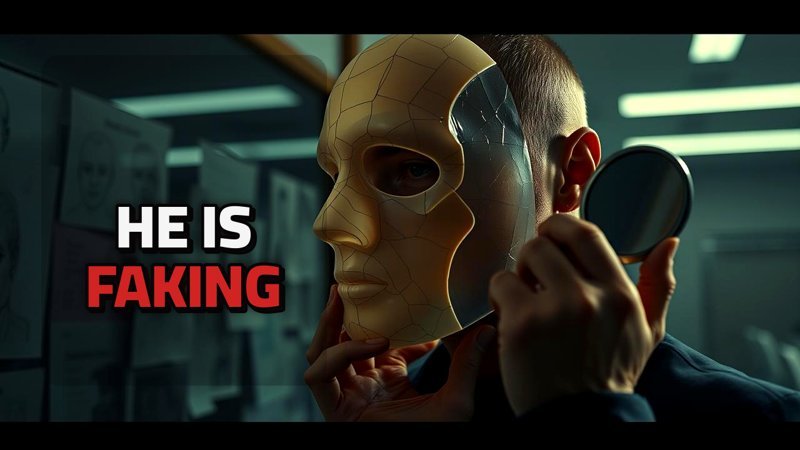
The Processing Gap: Observing a Man Calculate His Own Emotions
True empathy is often considered a reflexive human trait, but what happens when that reflex is absent? This account explores the unsettling reality of a man who does not feel emotions, but instead archives and performs them with surgical precision, revealing a ‘processing gap’ that separates the genuine from the manufactured.
Navigate Content
The Performance of Grief
At a funeral, most people exhibit the uncoordinated, visceral grief of genuine loss. Mark, however, was different. While his posture was impeccable and his expressions were perfectly timed, there was a noticeable latency period. He did not react to the room’s sorrow; he scanned it, gauged the emotional temperature, and then tightened his facial muscles to mirror the pain of others. It was not mourning; it was a masterclass in detecting and reflecting social cues.
Manual Empathy: The Archive of Human Behavior
Mark’s ability to make others feel heard was not born of friendship, but of acquisition. He treated social interactions like data collection, asking specific questions about the physical sensations of emotions. He built a mental library of human responses:
- Lowering vocal pitch for sadness.
- Widening eyes for pride.
- Mirroring physical symptoms of frustration.
By treating empathy as a system, he could often appear more ‘accurate’ than those experiencing real emotions, as he was free from the internal noise of personal struggle.
The Latency Period: When the Script Fails
The illusion of humanity is fragile and relies entirely on timing. When a sudden, unscripted crisis occurred in the office, Mark’s mask slipped. He did not react with immediate adrenaline; he paused, blank-faced, waiting for instructions from his internal database. This latency period revealed that he was operating in ‘manual mode.’ Much like the manipulative tactics used to engineer crises, Mark’s composure was a tool used to maintain control over the social environment.
The Clinical Reality of Curated Behaviors
The discovery of his tablet—filled with video files organized with textbook precision—confirmed the suspicion: Mark was not improvising. He was studying. This level of detachment is a chilling reminder of how easily human interaction can be simulated. For those interested in the mechanics of human behavior and the dangers of unchecked influence, understanding these patterns is essential, much like studying guides to silent control.
Frequently Asked Questions
Generated by AI Content Architect
About The Author