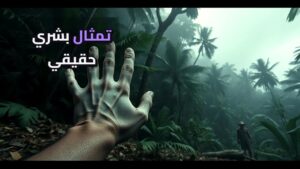
The Ruins of the Monkey God: The Curse of the White City

The Ruins of the Monkey God: The Curse of the White City
When a team of explorers returned from the heart of the Mosquitia rainforest in 2015, they brought back more than just data; they returned with a haunting physical toll. Nearly half the team suffered from leishmaniasis, a brutal ‘flesh-eating’ disease that locals believe is a warning from the forest itself. This is the story of the White City, a place where history, legend, and modern science collide in a dangerous dance.
Navigate Content
The Legend of the White City
The Pech people have long warned that the Mosquitia region is the ‘House of the Gods.’ They describe a city of white basalt stone that stands out against the jungle chaos. The local wisdom is chilling: ‘Those who enter do not return, and those who do return are no longer themselves.’ This isn’t just a warning about physical danger, but a suggestion that the site leaves an indelible mark on the human psyche. For more on ancient civilizations lost to time, see The Maya Collapse.
Theodore Morde and the Lost Map
In 1940, explorer Theodore Morde defied local warnings and claimed to have discovered the ‘City of the Monkey God.’ He returned with thousands of artifacts but refused to reveal the location, fearing looters. His mysterious death in 1954 as a ‘suicide’ buried the secret for decades. His story echoes other historical enigmas, much like the mysteries found in The Tunguska Event.
Lidar: Piercing the Green Canopy
After 70 years of silence, technology finally unveiled the truth. In 2012, researchers used Lidar—a laser-based mapping technology—to peer through the dense jungle canopy. The results were undeniable:
- Vast plazas
- Stepped pyramids
- Complex water channels
These geometric shapes proved that a sophisticated civilization once thrived in the heart of the impenetrable Mosquitia forest.
The Price of Discovery
Reaching the site was an ordeal that required Special Forces support to manage the extreme isolation and psychological pressure. The environment is so hostile that sunlight rarely touches the ground, and the risk of disease is constant. The expedition serves as a reminder that some places are not meant to be disturbed. For further reading on remote, mysterious locations, explore Point Nemo.
Frequently Asked Questions
Generated by AI Content Architect
About The Author