The Voynich Manuscript: Lost Language or Elaborate Hoax?
The Voynich Manuscript: Lost Language or Elaborate Hoax?
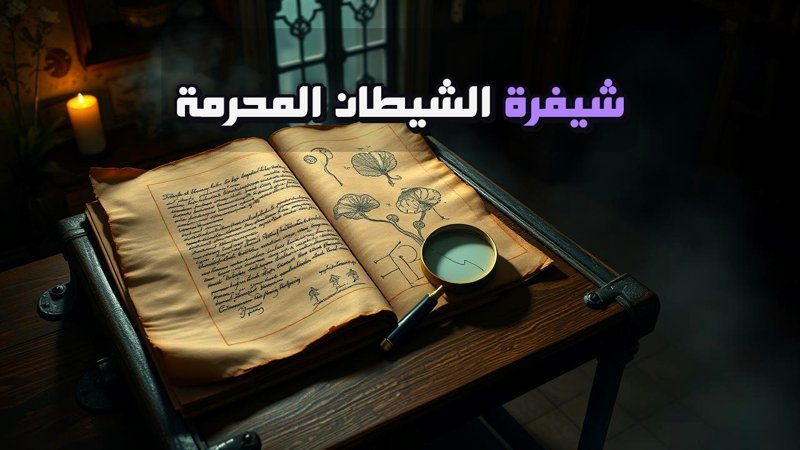
The Voynich manuscript is a 240-page enigma that has defied decryption for centuries. Crafted on ancient vellum between 1404 and 1438 AD, this mysterious book features a fluid, unknown script and illustrations of plants and biological structures that exist nowhere in our natural world. Whether it is a lost language or a masterfully executed hoax, it remains one of history’s most compelling puzzles.
Navigate Content
A Masterpiece of Precision or Deception?
The most striking feature of the manuscript is its lack of errors. There are no crossed-out letters, no marginal corrections, and no signs of drafting. This leads to two primary theories:
- The Fluent Author: The writer was composing in a native, albeit lost, language with incredible speed and confidence.
- The Professional Hoaxer: The author was a skilled artist who spent years perfecting a system of gibberish to deceive scholars.
Botanical and Biological Anomalies
The illustrations within the manuscript are as baffling as the text. Botanists have failed to identify a single species depicted in the book, which features plants with human-like roots and hybrid leaves. Furthermore, the ‘biological’ section displays women in green basins connected by complex pipe networks, reminiscent of ancient artifacts that defy history. These images suggest a documentation of a reality—or a fantasy—that is entirely alien to our own.
From Emperor Rudolf II to Yale University
The manuscript’s provenance is as mysterious as its contents. It was once owned by Emperor Rudolf II, who believed it to be the work of the philosopher Roger Bacon and paid a fortune for it. After centuries of obscurity, it was rediscovered by book dealer Wilfrid Voynich in 1912. Today, it is housed at Yale University, where it continues to be a focal point for cryptographers and historians alike.
The Linguistic Wall: Zipf’s Law
The text of the manuscript is not random. Researchers have noted that it follows Zipf’s Law, a mathematical pattern observed in all known human languages where word frequency follows a specific distribution. This discovery suggests that the text is not merely random symbols, but a structured language. Much like the secrets hidden in the Amarna Archive, the Voynich manuscript forces us to question if we are looking at a lost civilization’s knowledge or a sophisticated code.
Frequently Asked Questions
Generated by AI Content Architect
About The Author