The Weaponized Smile: Why Your Face is Your Most Dangerous Tool
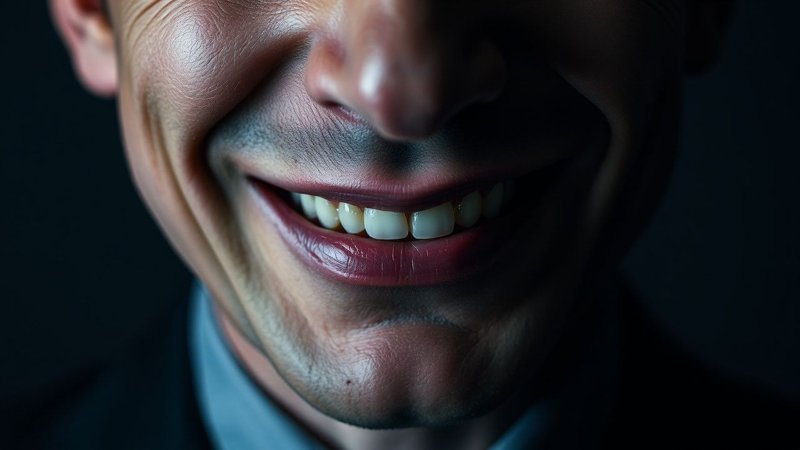
The Weaponized Smile: Why Your Face is Your Most Dangerous Tool
The same muscle that lifts your mouth to smile is the one that pulls your lips back in terror. We have been conditioned to view the smile as a universal sign of warmth, but in the hands of a strategist, it is the most lethal tool in human conflict. It is a velvet curtain masking a blade, designed to lull you into a false sense of security while your opponent calculates your defeat.
Navigate Content
The Anatomy of a Deceptive Smile
A genuine ‘Duchenne’ smile involves the eyes, crinkling the skin and revealing true emotion. However, master manipulators intentionally avoid this. They employ a ‘functional smile’—a mechanical, lower-face movement that leaves the eyes cold and dead. This disconnect creates a silent, predatory gaze that measures you for your downfall while you are distracted by the pleasant geometry of their lips.

Cognitive Dissonance as a Tactical Edge
When a person smiles during a confrontation, they trigger cognitive dissonance. Your primitive brain signals ‘safety,’ while your secondary instinct screams ‘danger.’ This momentary confusion is all a manipulator needs to gain the upper hand. To learn more about how individuals manipulate perception, read The Mirror Code: Understanding Psychological Manipulation and Mirroring.
Why Scowling is a Weakness
Displaying anger through a scowl tells your opponent that they have successfully provoked you, exposing your emotional state. A cold, calculated smile acts as a shield, keeping your face a smooth surface that reveals nothing. To delve deeper into the predatory nature of individuals who master these social masks, explore The Covert Sociopath: Identify the Smiling Predator & Protect Yourself.

The Power of Ambiguity
Ambiguity is the ultimate form of power. By smiling while delivering a threat or a refusal, you force the opponent to guess your confidence levels and hidden agendas.
- A smile is a coded message of ‘I know something you don’t.’
- It converts the opponent’s anger into internal tension.
- It maintains your total control over the room’s narrative.
For further reading on silent tactics, see Dark Body Language: Decoding the Silent Threats of Micro-contempt.
Frequently Asked Questions
Generated by AI Content Architect
About The Author