Why Decision-Makers Prefer Visual Tranquility in Crises

0
image_1-77


Why Decision-Makers Prefer Visual Tranquility in Crises
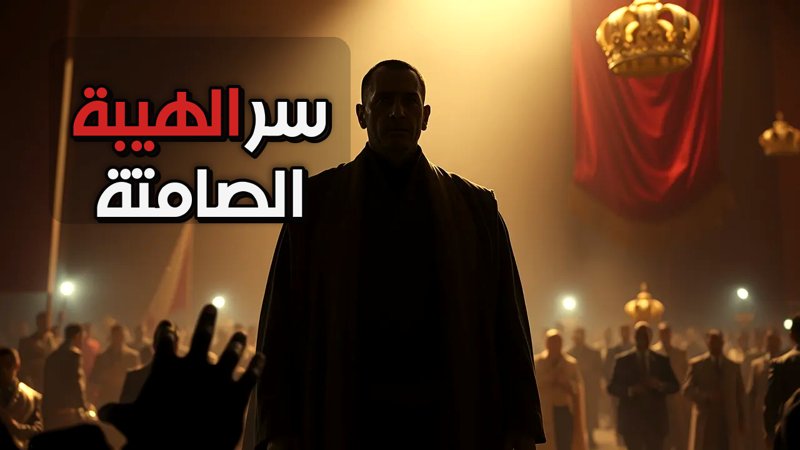
Amidst major crises, when the entire world is holding its breath awaiting a critical decision, we often observe a recurring scene. The figure of influence emerges amidst all the noise, completely calm and dressed in neutral, muted colors—so much so that you might mistake them for an ordinary person. What is the wisdom in powerful individuals distancing themselves from eye-catching displays, opting instead for visual tranquility?


The Psychology of Reducing Visual Presence

In high-stakes situations, the eye naturally searches for crowns, medals, or symbols of greatness, yet we frequently witness the exact opposite. Leaders choose to reduce their visual presence at the very moment they are expected to appear in their most powerful form. This asceticism is not a sign of weakness, but a calculated form of dignity. When colors recede, personal gravitas fills the room with overwhelming force.

Simplicity transforms into a filter that strips the scene of ornamentation. To understand how environmental factors shape authority and focus, consider how The Architecture of Subtle Control: How Seating Arrangements Influence Power similarly explores the hidden mechanisms of influence.


Historical Precedents of Simple Authority

To understand how tranquility translates into true gravitas, we must look back at the origins of our history. Great figures taught us that true prestige is revealed in the simplest forms:

  • Umar ibn al-Khattab: In Jerusalem, he appeared wearing a simple, patched garment, walking on foot while holding the reins of his servant’s mount, shaking the traditional image of power.
  • The Prophet Muhammad: He wore whatever was available without affectation, sitting among his companions so that a stranger would ask, “Which of you is Muhammad?”

This awe did not stem from bright colors; it arose from sincerity and serenity.


Minimizing Visual Noise and Cognitive Effort

Bold and shiny colors create a kind of visual noise, distributing focus across superficial details as if the wrapper is competing with the content. In decisive moments, a leader needs to minimize these distractions.

When wearing calm gray or earthy tones, the leader acts as a filter for meaning. The absence of glaring color reduces the cognitive effort required by the listener, who automatically directs all senses toward the tone of voice and the weight of the words. For a deeper look at how perception and cognitive processing can be influenced, see Your Eyes Are Not a Scale: The Science of False Memories.


The Feeling of Stability and Composure

There is another layer of depth to muted colors: the feeling of stability. A color devoid of sheen suggests constancy, remaining unaffected by shifting lights. This stability indirectly conveys reassurance that the individual stands resolute amidst the storm.

Gravitas is achieved through deliberate unobtrusiveness. True power always leans toward calmness and composure, allowing the substance of the message to override any superficial distraction.


Frequently Asked Questions

Why do leaders wear muted colors during crises?
Muted colors act as a visual filter that removes distractions, reducing the listener’s cognitive effort and allowing the core message and weight of responsibility to take center stage.
Is visual simplicity a sign of weakness?
No, it is a calculated form of dignity and a silent weapon for controlling consciousness. It replaces external ornamentation with inner gravitas and authority.
How did historical figures utilize simplicity?
Figures like Umar ibn al-Khattab and the Prophet Muhammad projected profound authority through simple garments and unpretentious behavior, proving that true prestige comes from sincerity rather than the sheen of fabric.

Generated by AI Content Architect

About The Author

Leave a Reply

Your email address will not be published. Required fields are marked *