
The Viking Ivory Trade: How Greenland’s Economy Collapsed
The Viking Ivory Trade: How Greenland’s Economy Collapsed
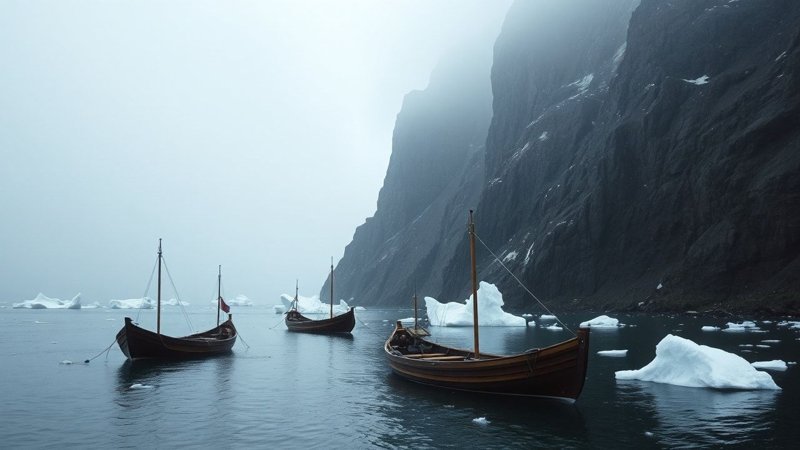
In the 10th century, Greenland was far from a barren wasteland—it was Europe’s ‘white gold mine.’ While modern history focuses on African elephant ivory, the Vikings built an entire economic infrastructure on the back of walrus tusks, a material that dictated the political and artistic landscape of the Middle Ages.
Navigate Content
The Marine Ivory Economy
The Viking settlements in Greenland served as specialized extraction hubs rather than agricultural colonies. By targeting walruses, they secured a commodity that was:
- Highly durable and harder than elephant ivory.
- Used as a primary status symbol for the European elite.
- Valued at the price of an entire English farm per individual tusk.
For more on how economic shifts define civilizations, see Greenland: The Hidden Economic Collapse of the Viking Civilization.

Artistic Mastery: The Lewis Chessmen
The peak of the marine ivory trade is immortalized in the Lewis Chessmen. Discovered in 1831, these pieces were carved from Greenlandic walrus tusks by master craftsmen. They serve as evidence that the power struggles of European kingdoms were literally being played out on boards carved from the creatures of the extreme North.
The Disruptive Rise of African Ivory
The dominance of the Viking trade was shattered in the 13th century as new Mediterranean trade routes opened. African elephant ivory entered the market, offering several advantages that made walrus tusks obsolete:
- Larger size for more complex carvings.
- Greater availability at a lower price point.
- Dominance in merchant hubs like Venice and Genoa.
The Silent Collapse
With the collapse of the ivory market, the Greenlandic settlers found themselves isolated and economically destitute. The inability to pivot away from their dependency on the walrus trade turned thriving colonies into ghost towns. This historical trajectory reflects the dangers of economic singular focus, a theme echoed in other vanished societies like those discussed in Madain Salih: How Economic Desperation Reshaped Nabataean Identity.
Frequently Asked Questions
Generated by AI Content Architect
About The Author