The Grave Wax Phenomenon in New Zealand: Adipocere in Waitomo
The Grave Wax Phenomenon in New Zealand: Adipocere in Waitomo
The Waitomo Caves in New Zealand are much more than just a scenic tourist destination; they hold a chemical secret that rewrites the conventional definition of ‘the end.’ Normally, biological tissues decompose and disappear over time, but in these caves, the earth absorbs bodies and transforms them into solid white masses with a texture resembling soap sculptures.
Navigate Content
The Accidental Discovery in the Darkness
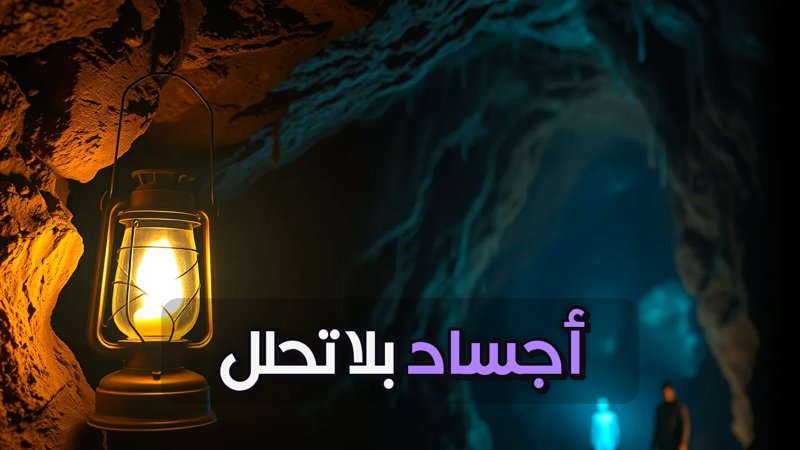
The story began in the late 19th century when an explorer was navigating cautiously through the darkness of the caves, and the beam of his flashlight accidentally fell upon something unusual. Before him lay a human body, but the shock was not in finding a corpse in such a place, but rather in its condition. In a humid environment like this, the natural expectation is for a body to decompose and reduce to a skeleton in a very short time. However, what the explorer saw completely defied this rule; the body was intact, its features still distinct, yet it had a dull, pale white color. When he drew closer and touched it, he felt neither skin nor bone, but rather a cold, hard texture akin to marble or dried soap, much like the remarkable preservation seen in The Truth Behind the Bodies of Pompeii in 79 AD.
Unlocking the Chemistry of Adipocere
When the first samples of these bodies reached 19th-century laboratories, researchers were surprised to find that this was not merely ‘petrification,’ similar to the fossilization of ancient wood. As the scalpel cut through the tissue, it encountered a dense substance with a consistency somewhere between wax, rubber, and dry soap. It was here that the term ‘adipocere’—also known as ‘grave wax’—first appeared. What occurs within the darkness of these caves is a chemical reaction known in science as ‘saponification.’ For this reaction to succeed, New Zealand’s nature provided a precise ‘recipe’:
- High humidity that saturates the tissues with water
- A near-total absence of oxygen, which prevents normal decomposition bacteria
- Alkaline soil rich in calcium and magnesium minerals
Natural Burial Shafts Across Subterranean Sites
With increased expeditions into regions like Waitomo and Te Kuiti, the picture became clearer. This was no accident; it was an entire network of limestone passages functioning as natural burial shafts. The local geology, abundant in limestone and mineral-rich groundwater, caused this phenomenon to replicate across multiple subterranean sites. The preservation is so striking that researchers have discovered corpses with exceptionally clear facial features and even tattoos remaining intact on the skin after many years, echoing other historical mysteries of preservation like The Two Moons Enigma: How the Dead Sea Scrolls Changed History.
The Māori Viewpoint: Tapu and Sacred Sanctuaries
However, for the Māori, the indigenous people of New Zealand, these bodies were not simply a matter of chemistry and minerals. To them, what transpired inside the caves required no test tubes. In their worldview, the earth is the source of all things, and the caves are sanctuaries that receive and protect the dead. They adhere to the concept of Tapu—a sacredness dictating that anyone approaching the site without permission places themselves in peril. These caves were restricted areas where silence was mandatory, and any attempt to tamper with their contents was considered an affront to the earth itself. The Māori did not see ‘soap’; they saw the earth asserting its claim over an individual, preventing their return to dust and transforming them into a resilient guardian for the tribe.
Frequently Asked Questions
Generated by AI Content Architect
About The Author