The Secret Registry of Fallen Stars: Tutankhamun’s Dagger & Meteors
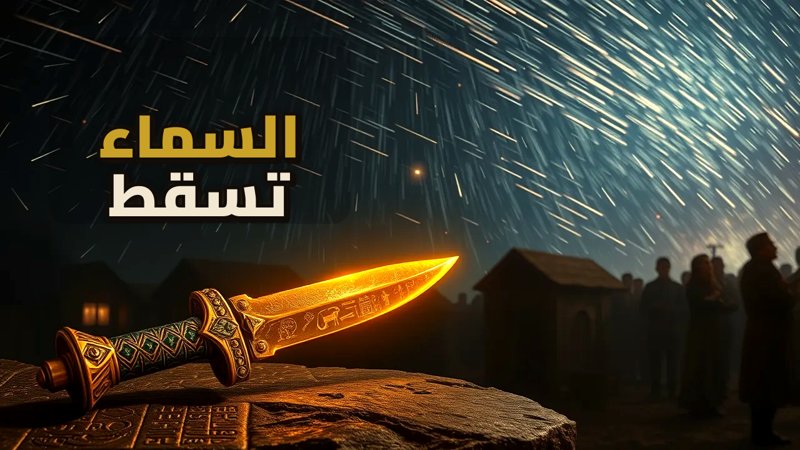
The Secret Registry of Fallen Stars: Tutankhamun’s Dagger & Meteors
On the night of November 12, 1833, the inhabitants of North America witnessed a bewildering sight: the sky rained meteors by the thousands. This spectacle was a confrontation with one of humanity’s oldest fears—that the sky might fall. Today, we trace the journey of falling stars in human history, transforming from a sacred fear to weapons of the pharaohs.
Navigate Content
The Night the Sky Rained Meteors
On that fateful November night in 1833, people poured into the streets, feeling as though it were the end of the world. The sky was filled with luminous streaks moving in every direction at incredible speed. There was no sound at all, filling people’s souls with mystery and awe. Farmers abandoned their homes, doctors stood helplessly at their windows, and clergymen opened churches for prayer. This event echoed similar historical mysteries, much like The Tunguska Blast Mystery: The 1908 Siberian Catastrophe, which left later generations questioning the violent forces descending from the cosmos.
Metal of the Heavens: Ancient Egyptian Beliefs
During the Bronze Age, humans had not yet mastered smelting terrestrial iron. However, a strange and powerful material fell from above. In ancient Egyptian texts, this was called ‘bia en pet’, translating literally as ‘metal of the heavens’.
- They believed meteorites were the bones of fallen gods.
- Craftsmen worked the dark, heavy rock cold with extreme patience and precision.
- This cosmic element was far rarer and more precious than gold.
Tutankhamun’s Meteoric Dagger
In 1925, archaeologist Howard Carter discovered a unique piece in the tomb of King Tutankhamun: a dagger with a golden hilt and a shimmering gray metallic blade. The blade was made of iron, centuries before terrestrial iron-smelting existed. For a deeper look at how ancient civilizations preserved profound historical milestones and artifacts, see The Rosetta Stone: How a Single Discovery Decoded Ancient Egyptian.
Scientific Proof and Enlightenment Denial
In 2016, an Egyptian and Italian research team used X-ray fluorescence technology to examine the blade. The nickel and cobalt proportions matched iron meteorites, specifically linked to the Kharga Oasis. Surprisingly, while the ancient Egyptians understood this truth, Europe’s greatest minds during the Age of Enlightenment met falling rocks with stubborn denial, refusing to believe simple peasants who reported blazing rocks falling from the sky.
Frequently Asked Questions
Generated by AI Content Architect
About The Author