
The Baghdad Battery: Ancient Electricity or Archaeological Myth?
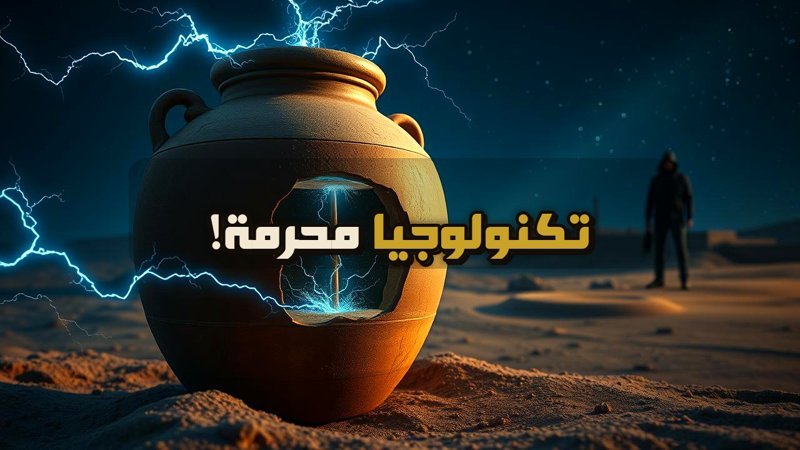
The Baghdad Battery: Ancient Electricity or Archaeological Myth?
In 1936, a routine excavation in the Khujut Rabu region of Iraq unearthed a modest clay jar that would ignite one of the most enduring debates in archaeology. While it appeared to be a simple vessel from the Parthian era, its internal components—copper, iron, and bitumen—suggested a level of engineering that defied the historical timeline of human innovation.
Navigate Content
The Discovery of a Technical Puzzle
When Wilhelm König, director of the National Museum of Iraq, examined the jar in 1938, he discovered a sophisticated arrangement:
- A 10 cm copper cylinder sealed with lead and tin.
- An iron rod suspended in the center, isolated from the copper.
- Bitumen plugs used as insulators to prevent short-circuiting.
This design was not meant for storage; it was a functional assembly that mirrored the structure of a modern galvanic cell.
The Hypothesis: Ancient Electroplating
König proposed that these jars were not mere curiosities but power sources. He hypothesized that ancient jewelers linked multiple ‘batteries’ together to perform electroplating. By using acidic liquids like vinegar or lemon juice, these devices could generate enough current to deposit thin layers of gold onto silver artifacts, a technique previously thought to be impossible for the Parthian civilization.
Putting Theory to the Test
In 1940, electrical engineer Willard Gray sought to validate König’s theory. By constructing a replica and filling it with common household acids, he successfully generated a measurable electric current. This experiment proved that the Baghdad Battery was physically capable of producing electricity, though it remains a subject of intense scrutiny among historians who question whether such technology was actually utilized for industrial purposes.
Historical Context and Skepticism
Despite the experimental success, many scholars remain skeptical. They argue that there is no written evidence of electrical knowledge in the Parthian era and that the jars may have been used for storing sacred scrolls. For more on how ancient civilizations managed complex tasks, see Thousands of Years Before NASA: How Maya Engineers Purified Toxic Water or explore other historical enigmas like The Voynich Manuscript: Lost Language or Elaborate Hoax?.
Frequently Asked Questions
Generated by AI Content Architect
About The Author