Easter Island Statues: The Truth About the Buried Full Bodies
Easter Island Statues: The Truth About the Buried Full Bodies
In the middle of the Pacific Ocean lies Rapa Nui, or Easter Island, a place long defined by an iconic, unchanging image: massive stone heads gazing silently at the sky. For generations, these monoliths were known simply as the ‘Easter Island Heads,’ fueling decades of speculation about their origins and purpose. However, a groundbreaking 2012 excavation proved that what we saw was merely the tip of the iceberg.
Navigate Content
Beyond the Surface: The 2012 Revelation
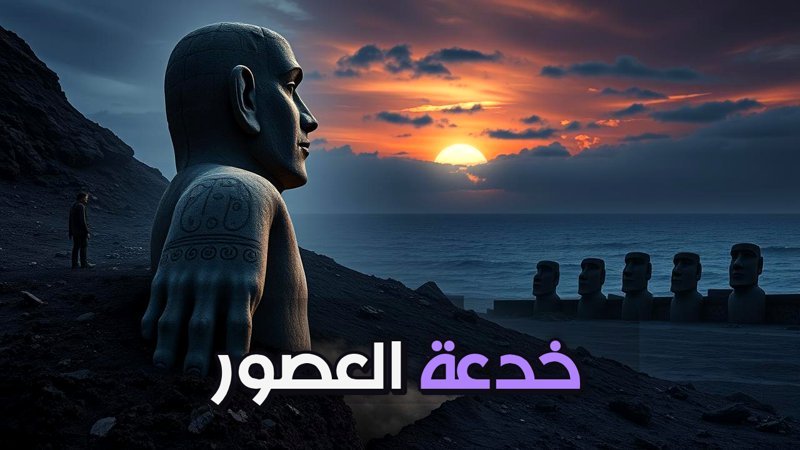
For years, the public and even cinema treated these statues as mere heads buried in the ground. In 2012, archaeologist Dr. Jo Anne Van Tilburg led a mission that shattered this perception. As her team excavated beneath the soil, they didn’t just find dirt; they uncovered finely carved hands, broad shoulders, and torsos covered in mysterious, tattoo-like carvings. These statues, some reaching up to 10 meters in height, were full-bodied figures that had been hidden by centuries of erosion and sediment.
The Mystery of the ‘Alien’ Theory
The isolation of Rapa Nui led to wild theories regarding how these 80-ton statues were carved and moved without modern tools. In the 1970s, authors like Erich von Däniken suggested that extraterrestrials were responsible for the construction. This narrative dominated the public consciousness, overshadowing the ingenuity of the Rapa Nui people. Much like the Voynich Manuscript, the statues became a magnet for fringe theories, distracting from the logical, albeit complex, archaeological reality.
Why Were They Buried?
The burial of these statues was not a deliberate act of concealment, but a natural consequence of time.
- Erosion: Centuries of rainfall and wind moved sediment down the slopes of the Rano Raraku volcano.
- Sedimentation: The statues were gradually swallowed by the earth, leaving only the heads exposed.
- Preservation: Ironically, the soil protected the lower bodies, keeping the carvings and rock texture in better condition than the exposed heads.
The Craftsmanship of Rapa Nui
The excavation revealed that the heads represent only about 30% of the total statue. The hands, positioned precisely over the abdomen, suggest a deep cultural or spiritual significance. This discovery highlights the advanced engineering capabilities of the islanders, who managed to transport and erect these massive volcanic stones across rugged terrain. For more on how ancient civilizations managed monumental tasks, explore how Maya engineers purified water using sophisticated methods.
Frequently Asked Questions
Generated by AI Content Architect
About The Author