The Last Cry of the King of Ugarit: How the Bronze Age Collapsed
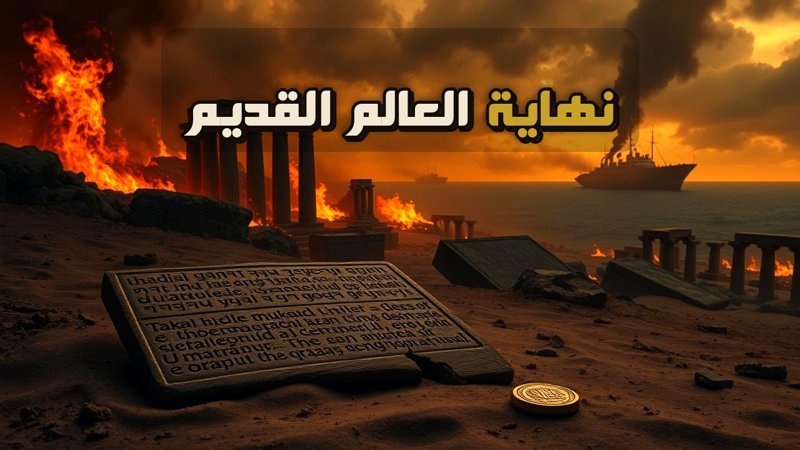
The Last Cry of the King of Ugarit: How the Bronze Age Collapsed
3,200 years ago, Ugarit was the beating heart of global trade, a bustling port city where the world’s wealth converged. Yet, in a sudden, violent flash, this golden age vanished. Through a final, desperate letter from King Ammurapi, we uncover the chilling reality of a civilization that believed it was invincible, only to be erased by a mysterious, sweeping catastrophe.
Navigate Content
The Final Letter from the Gates of Doom
Archaeologists discovered a clay tablet that never reached its destination. Written by King Ammurapi of Ugarit to the King of Cyprus, it captures the terror of the final moments:
- ‘My father, the enemy ships have arrived.’
- ‘They have burned my cities and committed atrocities.’
- ‘I am now alone; my army and my ships are not here.’
The very fire that destroyed the palace served to ‘fire’ the clay, preserving this desperate cry for millennia.
An Interconnected World of Bronze
The collapse of Ugarit was not an isolated incident but the first tremor of a systemic failure. The ancient world was a tight-knit ‘club’ of empires—Egypt, the Hittites, and the Mycenaeans—linked by the bronze industry. Because tin had to be imported from as far away as Afghanistan, the entire global economy relied on fragile trade routes. Much like the economic crashes of later history, a disruption in one region triggered a domino effect across the Mediterranean.
The Ash Layer: A Chronological Divide
Across the Mediterranean, excavations reveal a thick, uniform ‘layer of ash’ that serves as a grim historical marker. Below this layer, archaeologists find evidence of thriving palaces and complex trade; above it, only silence and primitive structures remain. This physical signature marks the sudden end of empires like the Hittites in Hattusa and the Mycenaean palaces in Greece, which entered a ‘Dark Age’ so severe that the art of writing was temporarily lost.
The Mystery of the Sea Peoples
While the world crumbled, one power stood ready: Egypt. Ramesses III documented the invaders in his mortuary temple at Medinet Habu. These ‘Sea Peoples’ were not a single army but a coalition of tribes, including the Peleset (likely the ancestors of the Philistines) and the Sherden, known for their distinct horned helmets. Their arrival remains one of history’s most fascinating enigmas, similar to other unsolved historical mysteries that continue to baffle researchers today.
Frequently Asked Questions
Generated by AI Content Architect
About The Author