How Unfinished Conflict Hijacks Your Brain: The Strategy of Open Loops
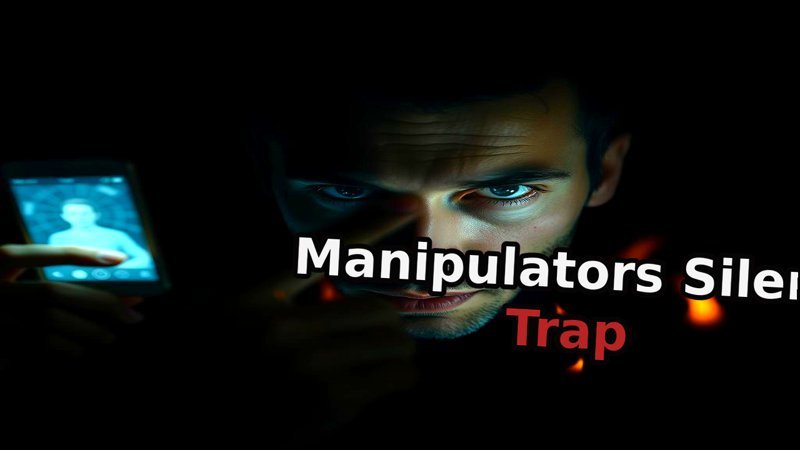
How Unfinished Conflict Hijacks Your Brain: The Strategy of Open Loops
It is 3:14 AM, and you are staring at a static screen, replaying a conversation that ended abruptly. This isn’t just insomnia; it is a biological response to an unresolved pattern. When a conflict is cut short, your brain refuses to file the memory away, keeping the tension active in a state of hyper-fixation. This phenomenon, known as the Zeigarnik Effect, is often weaponized in interpersonal dynamics to maintain proximity and control.
Navigate Content
The Zeigarnik Effect: Why Your Brain Craves Completion
In the 1920s, psychologist Bluma Zeigarnik observed that waiters could remember complex, unpaid orders with perfect clarity, only to forget them the moment the bill was settled. This revealed a fundamental truth about human cognition: the brain maintains a ‘tension system’ for any task left unfinished. This is a survival mechanism designed to keep us focused on goals until they are achieved. However, when applied to emotional conflict, this drive becomes a vulnerability.
The Tactical Withdrawal: Weaponizing Silence
Manipulators often use a tactic known as the ‘Body Language of Absence.’ By walking away at the peak of an argument, they deny you the resolution your brain biologically demands. This creates an open loop that forces your mind to work overtime to fill in the blanks. Unlike a standard argument that follows a natural rhythm of escalation and resolution, this maneuver leaves you trapped in a state of cognitive dissonance. For more on how silence is used as a tool, see How 72 Hours of Silence Rewired Elena’s Brain Into a Biological Trap.
The Information Gap and Hyper-Fixation
When a conversation is cut off, your brain prioritizes the missing information over your emotional well-being. This leads to:
- Physical symptoms, such as chest pressure and shallow breathing.
- Compulsive replaying of the interaction to find the ‘missing piece.’
- A state of hyper-fixation that prevents sleep and focus.
Your intelligence often becomes a liability here, as you attempt to logically solve a riddle that was designed to be unsolvable.
Breaking the Loop: Reclaiming Your Cognitive Space
Recognizing that this fixation is a biological reflex rather than a personal failure is the first step toward recovery. To regain control, you must consciously close the loop yourself rather than waiting for the other person to provide the ‘click’ of completion. Understanding these psychological traps is essential for maintaining mental autonomy. Explore further insights into protecting your mindset in The Struggle for Survival Within Your Mind: Why We Protect Our Exploiters.
Frequently Asked Questions
Generated by AI Content Architect
About The Author