The Dancing Plague of 1518: When Doctors Prescribed Death as a Cure

0
image_1-23


The Dancing Plague of 1518: When Doctors Prescribed Death as a Cure
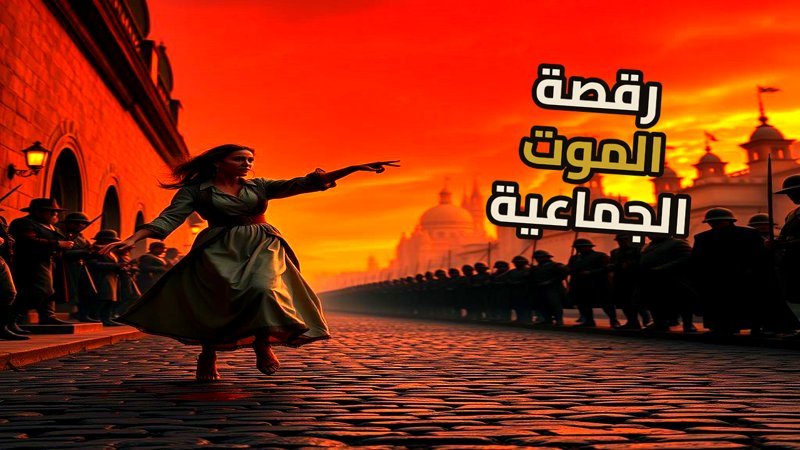
July, 1518. The sun in Strasbourg was so scorching it felt as though it would burn skin, and the air hung still, as if hesitant to stir. Amidst the usual crowds and the pervasive odors filling the narrow alleys, a woman named Troffea emerged from her home. She neither screamed nor sought assistance; she simply began to dance.


The Unsettling Genesis of the Plague

This dance was no celebration; it was a violent, agonizing physical act. Troffea began to move her body in complete silence, with no music in the background, only the rhythmic thud of her bare feet on the rough cobblestones. Her husband stood aghast, attempting to pull her away, to speak to her, to implore her to calm down. Yet, she seemed to exist in another realm, her eyes wide open but seeing none of them, as if compelled by an inescapable internal command.

Hours passed, the day ended, the sun set and rose again, and Troffea continued. Sweat drenched her clothes, causing the fabric to cling to her skin, and her breathing became a loud, painful gasp, like one struggling against death. Neighbors began to gather, whispers filling the air, and terror crept into their hearts as they watched this woman transform into a tireless kinetic machine. Eventually, her feet began to bleed, leaving faint red marks on the ground with every painful step.

Everyone expected Troffea to collapse and for the ordeal to end, but no one could have imagined that this horrific physical exhaustion was merely the spark that would ignite a widespread catastrophe, nor that the silence in which she danced would transform into a collective scream, as the contagion began to spread like wildfire.


A Contagion of Movement

Within just one week, 34 other individuals joined Troffea, abandoning their homes and livelihoods to participate in the same state in the streets. There was no speech, no greeting, not even eye contact with another human being—just continuous, hysterical movement. By the end of the month, this number had swelled to 400 people. Imagine an entire city transforming into a stage for ‘forced movement,’ with the contagion spreading with terrifying coldness, consuming the nerves and muscles of the populace, until the situation spiraled completely out of control. This mass compulsion, where individuals seemed to lose their autonomy, presents a chilling historical parallel to concepts of psychological control and influence, albeit on a grand, tragic scale.


The Bizarre Diagnosis and the ‘Cure’

At this point, Strasbourg’s elite had to intervene. The city council convened an emergency meeting, gathering prominent physicians and priests to put an end to this calamity. While everyone anticipated a religious explanation involving a ‘curse’ or ‘demonic possession,’ the doctors surprised everyone by completely dismissing supernatural causes.

The diagnosis was that the victims suffered from a physical ailment they termed ‘hot blood.’ According to the logic of that era, blood was believed to boil within the veins, compelling the limbs into violent movement as a form of involuntary release. Therefore, the doctors prescribed the most bizarre treatment in medical history; they explicitly stated: ‘Let them dance; dancing is the only cure that will cool their blood and release this energy.’


State-Sponsored Death Dance

The city council implemented the advice with terrifying enthusiasm. Instead of trying to calm the people, they decided to transform the condition into an ‘official’ state-sponsored activity. This decision, born from a flawed understanding, echoes the phenomenon of The Paradox of Big Lies, where an impossible solution gains traction. Immediate orders were issued to construct wooden platforms and stages in the central squares, and large areas in the ‘Grain Market’ were allocated to accommodate the numbers exploding by the hour. All that was missing was rhythm, and indeed, the government hired professional flutists and drummers, and brought in strong ‘sturdy men’ whose sole job was to pick up dancers who collapsed from exhaustion and force them to continue dancing!

The plan was to turn the city into an open-air dance floor around the clock, assuming that complete physical depletion was the only path to recovery. They did not realize they were building a collective ‘guillotine,’ and that the music playing in the background was not for joy; it was a ‘funeral march’ accelerating the victims’ steps towards the grave. Everything was ready: the stages, the musicians, and the victims who had no luxury of refusal. As soon as the music intensified, the true horror began to reveal its terrifying features upon the wooden platforms.


The Grim Harvest of the Dance

The squares and plazas, once symbols of city life, suddenly became open-air ‘execution stages.’ These platforms, which the authorities had built as field hospitals to release energy, transformed within days into arenas receiving souls departing from bodies that were still moving. Imagine the rhythm playing, drums beating, and people on the wooden stages trembling and stomping violently—but not a single smile; their faces were melting with terror and pain.

In the scorching heat of July 1518, death did not wait for anyone to come to it; it was leading the dance in the squares. Historical records document terrifying moments; the rate reached 15 funerals per day. People did not die peacefully; they collapsed at the peak of their kinetic explosion, succumbing to:

  • Sudden heart attacks
  • Strokes
  • Lungs bursting from lack of oxygen
  • Cracked bones from continuous strain
  • Artery failure to pump blood to exhausted hearts

The most difficult scene in this tragedy was in the eyes of the dancers. Silent, heartbreaking pleas for help, lips moving with inaudible words begging for mercy, but the body was trapped in a kinetic ‘furnace’ with no off switch, as if the nerves had disconnected from the mind. The dark irony here was that the musicians hired by the authorities continued to beat their drums violently, and the ‘sturdy men’ whose job was to support the sick so they wouldn’t stop, were effectively dragging them towards the grave, believing they were applying the correct medical prescription.


Frequently Asked Questions

What was the Dancing Plague of 1518?
The Dancing Plague of 1518 was a bizarre historical event in Strasbourg where hundreds of people were compelled to dance uncontrollably for days, often to their deaths, due to unknown causes.
How did the Dancing Plague begin?
The plague began in July 1518 when a woman named Troffea started dancing uncontrollably in the streets of Strasbourg. Her agonizing, silent dance continued for days, and within weeks, dozens, then hundreds, joined her in the same involuntary movement.
What was the doctors’ diagnosis and prescribed cure for the Dancing Plague?
Dismissing supernatural causes, the doctors of Strasbourg diagnosed the condition as ‘hot blood,’ believing that blood boiling in the veins compelled the limbs to violent movement. Their prescribed cure was to encourage more dancing, believing it would cool the blood and release the energy.
What were the consequences of the city council’s ‘cure’?
The city council enthusiastically implemented the doctors’ advice, building stages, hiring musicians, and even employing ‘sturdy men’ to force exhausted dancers to continue. This state-sponsored ‘cure’ tragically accelerated the deaths of many, turning the city squares into ‘execution stages’ where people collapsed from heart attacks, strokes, and exhaustion.
How many people died during the Dancing Plague of 1518?
Historical records indicate a terrifying death rate, reaching up to 15 funerals per day during the peak of the plague. Many succumbed to heart attacks, strokes, burst lungs, and other complications from continuous, extreme physical exertion.

Generated by AI Content Architect

About The Author

Leave a Reply

Your email address will not be published. Required fields are marked *