Iram of the Pillars Discovered: Were the Builders Giants? Secrets of the Lost City in the Empty Quarter
Iram of the Pillars Discovered: Were the Builders Giants? Secrets of the Lost City in the Empty Quarter
Navigate Content
The Myth Becomes Reality: Satellite Visions of Iram
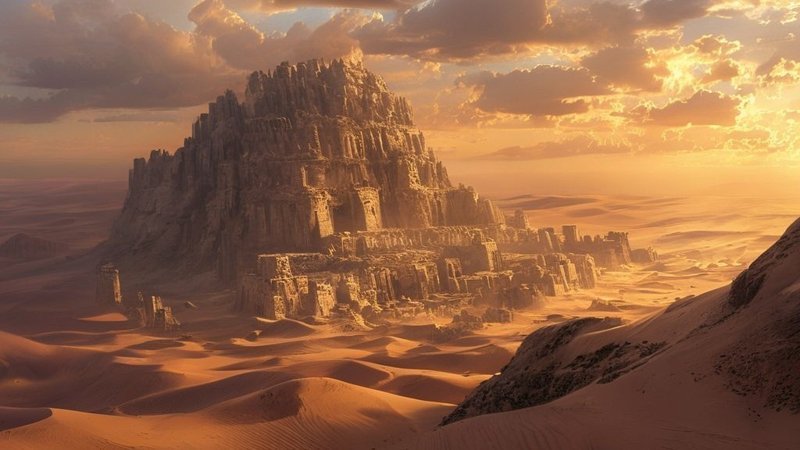
For centuries, Iram remained a ghost story, a city of towering columns praised in sacred texts but never found. However, the modern era brought advanced technology capable of piercing the desert’s veil. Sophisticated satellite imagery revealed undeniable patterns beneath the dunes—evidence of extensive, buried city networks spanning the arid Rub’ al Khali. This wasn’t a small outpost; it was the footprint of a massive, sophisticated civilization, beckoning explorers toward the ancient land of Yemen.
Colossal Architecture: A City Built for Giants?
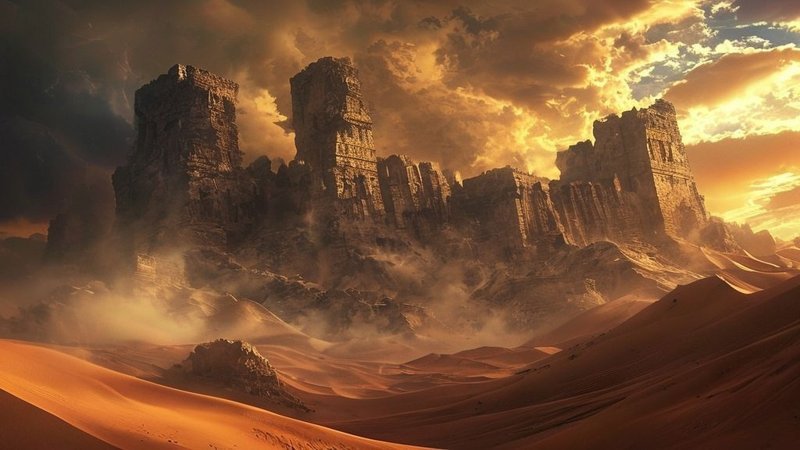
The initial archaeological foray into the site yielded structures that defied conventional understanding. Teams uncovered:
- Massive Stone Columns: Some exceeding twenty meters in height, exhibiting engineering precision that seems impossible for the era.
- Impregnable Fortifications: Walls of immense thickness, built from largely unknown materials.
- Engineering Marvels: The sheer scale required to quarry, transport, and erect these enormous rock masses raises questions about the labor and methods involved.
The builders were clearly masters of logistics, but their scale hints at inhabitants far larger than modern humans.
Anomalous Technology Unearthed Beneath the Sand
Deeper excavations revealed the most startling evidence: subterranean chambers containing apparatuses wholly incompatible with ancient human capabilities. Imagine finding:
- Massive, Unidentified Mechanisms: Structures resembling power units or generators, forged from exotic, corrosion-resistant metals.
- Active Inscriptions: Symbols on chamber walls that faintly glow upon touch, suggesting residual power circuits.
This suggests Iram possessed scientific knowledge—perhaps even harnessing energy—that we associate only with highly advanced future societies, not a people millennia removed. This lost knowledge connects to broader mysteries, such as the Secrets of the Sahara and the Empty Quarter’s Eerie Secrets.
The Fate of the ‘Ad and the Terror of Divine Retribution
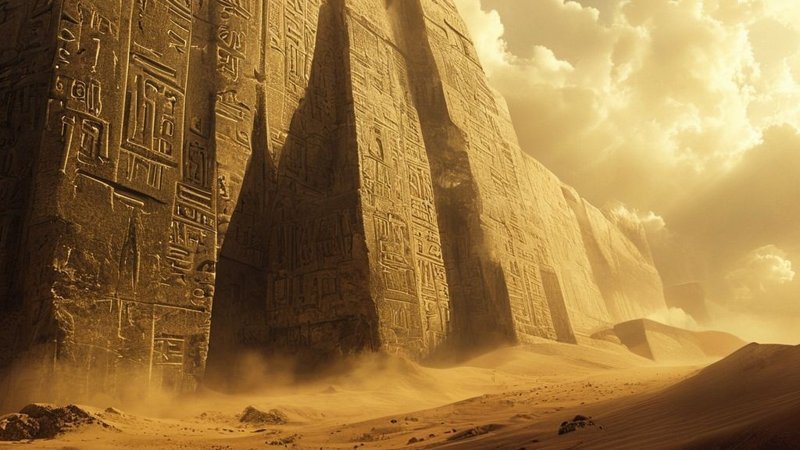
The central puzzle posed by the city’s immensity—the colossal doors and towering halls—is who these structures were intended for. If the inhabitants, the ‘Ad, were indeed the giants spoken of in legend, their city represents a peak of strength and technological prowess. Yet, their reign ended abruptly. Religious texts suggest divine wrath descended due to their arrogance, manifesting as a ferocious storm that raged for seven nights and eight days, erasing the entire civilization from the map. This history serves as a stark warning that even technological supremacy cannot guarantee permanence, a theme echoed in discussions about the Collapse of Bronze Age Civilizations.
Frequently Asked Questions
About The Author