The Piri Reis Map: Unraveling the Ancient Enigma of Antarctica’s Lost Past
Imagine holding a faded piece of parchment, drawn by an Ottoman captain five hundred years ago, yet containing secrets that modern science struggles to explain. It depicts Antarctica, not as a featureless icy mass, but with precise geographical details that satellites only uncovered in the twentieth century. Are we confronting irrefutable evidence of a lost civilization that predates recorded history by millennia?
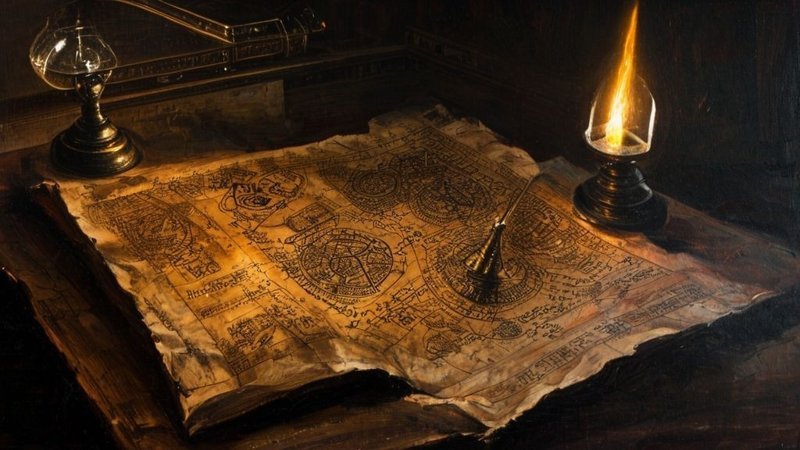
In 1929, as the world dusted off the past within Istanbul’s venerable Topkapi Palace, a document emerged that shook the foundations of modern science. Archivists were cataloging the Imperial Library when they stumbled upon a unique map drawn by the Ottoman Admiral Piri Reis in 1513. At that time, the world was still charting the oceans’ boundaries, and Antarctica was entirely unknown to humanity. It was not officially discovered until 1820, three hundred years after Piri Reis drafted his maps. However, the enigma lies not merely in the continent’s existence, but in its depiction. The map’s existence itself is a profound unsolved mystery, posing questions about forgotten knowledge.
Antarctica Unveiled: A Pre-Ice Age Landscape
Examine the details meticulously. The map does not show mere white ice. It reveals mountains, rivers, and valleys in the Queen Maud Land region of Antarctica. The major problem is that this area has been covered by an ice sheet up to a mile thick for millions of years—or so science tells us. In 1949, a joint British-Swedish expedition conducted a seismic survey of the Antarctic continent beneath the ice. The discovery was astounding. The topography revealed by modern sonar devices perfectly matched what Piri Reis had drawn on his ancient parchment. How could a man in the sixteenth century have known the contours of land hidden beneath thousands of feet of solid ice? This deep mystery invites parallels with other Antarctica’s Hidden Secrets, hinting at unknown pasts.
Ancient Sources and Astronomical Cartography
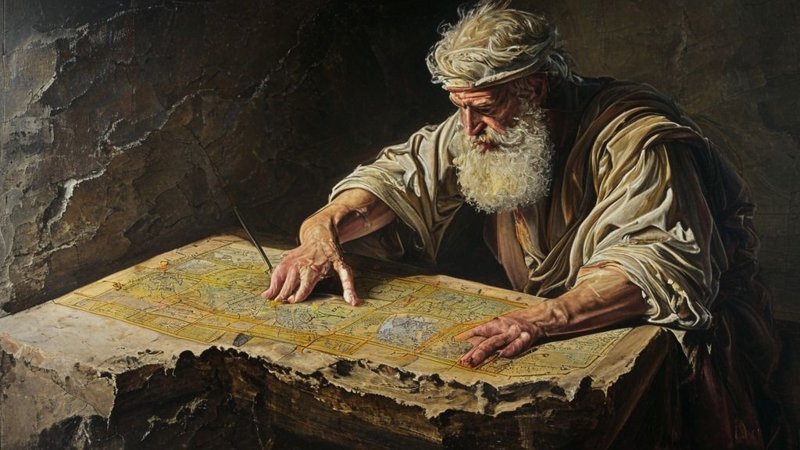
The astonishment you feel now mirrors that of scientists when they realized Piri Reis never claimed to have drawn these details from his imagination. He left small notes in his own hand on the map’s margins, stating clearly that he relied on twenty much older maps. He mentioned that some of these maps dated back to the time of Alexander the Great, while others were authored by unknown navigators from ancient civilizations. You are now faced with a terrifying truth: maps existed, perhaps in the Library of Alexandria or even earlier, that depicted the world with astonishing accuracy before ice covered its extremities. Who possessed this knowledge? And who were these navigators who traversed the seas at a time when science assumes humans were using primitive stone tools?
Let us delve deeper into this enigma. The map is not a mere random drawing; it is a mathematical marvel. Piri Reis employed a type of cartographic projection available only to those who view Earth from outer space. If you center the map over Cairo, you will find that the distances and angles between continents are incredibly accurate. This requires a complete understanding of Earth’s sphericity and complex spherical trigonometry. In 1513, mariners lacked instruments for precise longitude measurement. They relied on estimation and the stars; yet, Piri Reis’s maps display longitudes with an astonishing accuracy far exceeding the capabilities of his era. This advanced knowledge echoes discussions of Ancient Computers & Nanotechnology and Lost Roman Technology.
Challenging Conventional History: A Pre-6000 BC Survey?
Consider this seriously. To create a map with such precision, one requires aircraft, satellites, or at least highly advanced topographic surveying equipment. One needs a global civilization that exchanges information and possesses ships capable of traversing frozen oceans. Is it possible that the history we study in schools is merely a superficial veneer concealing golden ages erased from humanity’s memory? Professor Charles Hapgood, who studied these maps for years, sent a letter to the U.S. Air Force, inquiring about the accuracy of the Antarctic topography depicted. The reply was startling. They confirmed that the map showed the coastlines as they were before being covered by ice. This implies that the original survey for this map was conducted at a time when Antarctica was ice-free, at least six thousand years ago.
This figure changes everything you know about civilization. Six thousand years ago, humanity, according to the official narrative, was just beginning to learn agriculture and writing in Sumer and Egypt. Where did these cartographic geniuses come from? Were they inhabitants of lost Atlantis? Or remnants of a technological civilization destroyed by a colossal cosmic catastrophe? Feel the terror in this idea: we live upon the ruins of worlds about which we know nothing. Piri Reis was merely a custodian, preserving the last fragments of lost knowledge. This notion aligns with the profound questions raised by The Forgotten World War and the search for Lost Cities in the Sahara.
Unanswered Questions and the Cycles of Civilization
Examine the remaining colors on the map. You will see strange animals, men with enigmatic heads, and small ships sailing vast oceans. Behind these symbolic depictions lie serious geographical data. The map shows the Andes Mountains in South America and a huge river in Brazil that was unknown to Europeans at the time. It reveals details of the Caribbean islands with astonishing precision. Every inch of this map screams that an eye was watching Earth from above. The accuracy of the coastlines makes you question the source of such absolute confidence in the curved lines.
Why does official science ignore this evidence? Perhaps because acknowledging it would mean dismantling everything we have built regarding theories of human evolution. Recognizing the Piri Reis maps means admitting that our ancestors were not as primitive as we imagine. It implies that we may pass through cycles of ascent and collapse, and that our current civilization might not be the first, and certainly will not be the last. You are now looking into a mirror of the past, seeing a terrifying reflection of our capacity for forgetfulness.
Imagine ancient ships approaching the shores of the Antarctic continent. There were no mountains of blue ice, but green forests and flowing rivers. Life thrived there before the white death crept in, imprisoning the continent’s secrets beneath its impenetrable shield. This vision connects to the deeper mysteries discussed in Deep Sea Neon Cities and Iram of the Pillars Discovered.
Frequently Asked Questions
What is the Piri Reis Map?
The Piri Reis Map is a unique document drawn by Ottoman Admiral Piri Reis in 1513, discovered in Istanbul’s Topkapi Palace in 1929. It is notable for its astonishing accuracy, particularly in depicting continents unknown to Europeans at the time, including Antarctica.
Why is the Piri Reis Map considered an enigma by scholars?
The map is considered an enigma because it depicts Antarctica with precise geographical details, including mountains, rivers, and valleys in Queen Maud Land, an area that has been covered by a mile-thick ice sheet for millions of years. This level of detail predates Antarctica’s official discovery by 300 years and the modern seismic surveys that confirmed its topography by over 400 years.
What did Piri Reis claim about the sources for his map?
Piri Reis himself stated in marginal notes on the map that he did not create these details from scratch. He relied on twenty much older maps, some dating back to the time of Alexander the Great, and others from unknown ancient navigators.
What did Professor Charles Hapgood’s research reveal about the Piri Reis Map?
Professor Charles Hapgood, after extensive study, corresponded with the U.S. Air Force, who confirmed that the map depicted the coastlines of Antarctica as they were before being covered by ice. This suggests the original survey for the map was conducted at least six thousand years ago when Antarctica was ice-free.
What are the implications of the Piri Reis Map for our understanding of ancient history and civilization?
The Piri Reis Map challenges conventional historical narratives by suggesting the existence of highly advanced ancient civilizations with sophisticated cartographic, navigational, and even potentially aerial surveying capabilities. It implies that humanity’s past may include forgotten golden ages and cycles of advanced technological knowledge that predate recorded history by millennia.