The Parisian Nobleman’s Murder: Voltaire’s Unsolved Mystery and Judicial Legacy

0
image_1-138


The Parisian Nobleman’s Murder: Voltaire’s Unsolved Mystery and Judicial Legacy

A muffled cry from behind the opulent walls of a Parisian palace forever altered the course of judicial history. The mystery of the nobleman’s murder, which Voltaire, despite his keen intellect, could never explain, still whispers in the dark corridors of history.


The Scene of the Crime: A Nobleman’s Fatal Enigma

Imagine yourself walking through the dim alleys of Paris in 1750. The air is heavy with the scent of rain, horses, and gunpowder. Oil lamps flicker in the wind, casting dancing shadows upon the cold stone walls. Suddenly, the silence is shattered by a scream emanating from one of the palaces overlooking the venerable Place Vendôme. This was no mere fleeting plea for help; it heralded the beginning of one of the most intricate cases in the history of Royal France. A case that compelled the great thinker Voltaire to set aside his pen and contemplate the brutality of the human soul and the impotence of the human mind before an impenetrable enigma.

The victim was no ordinary man from the common populace who crowded the bustling streets of Paris. He was the Marquis de Lumière, a nobleman whose influence extended from the gilded halls of Versailles to the literary and philosophical salons at the heart of the capital. He was discovered in his study, securely locked from the inside. He sat behind his massive desk made of luxurious ebony, his fingers still clasped around a writing quill, as if he had been composing a final, unfinished message. But his eyes were wide open, gleaming with a look of absolute terror, as if he had seen a demon standing before him just moments before drawing his last breath.

The Scene of the Crime: A Nobleman's Fatal Enigma


Voltaire’s Pursuit of Truth: Logic vs. the Impossible

Upon entering the room with the investigators, one would detect the scent of musk mingled with the cold odor of death. The perplexing details mounted:

  • There was no trace of a knife or bullet on his slender body.
  • No broken windows; they were sealed shut with iron bars from the inside.
  • No poison was found in his silver goblet, which contained aged French wine.
  • The walls were covered in untouched silk wallpaper, and the Persian rug bore no sign of struggle or altercation.

How did the killer enter a room with no apparent exit? And how did they depart without leaving a single speck of dust to indicate their identity? These were the questions that haunted Voltaire’s mind for many years, transforming him from a philosopher who believed in logic into an investigator seeking truth amidst a heap of falsehoods.

In that era, forensic science as we know it today did not exist. There were no fingerprints to lift, no DNA analysis to identify culprits. Investigators relied on contradictory testimonies and confessions often extracted under torture in dark prison cellars. Forensic medicine was in its infancy, groping its way through the darkness of ignorance and superstition. The physician who examined the Marquis’s body merely stated that his heart had suddenly stopped due to an unknown shock. But Voltaire never believed in coincidences or supernatural explanations. He was convinced that behind every action lay an agent, and behind every mystery, a brilliant criminal mind that had managed to manipulate all the rules of the game.


Unraveling the Marquis’s Dark Secrets and Suspects

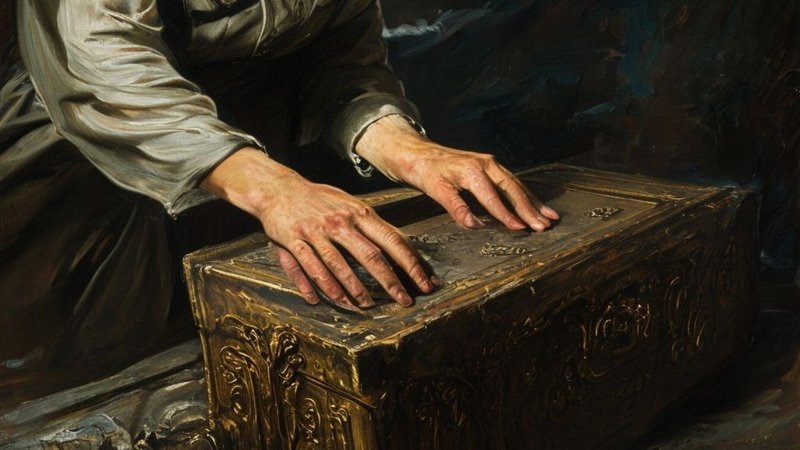
Voltaire began corresponding with his contacts within the Parisian police force. He demanded an investigation into every dark corner of the Marquis’s life. He discovered that the Marquis possessed dangerous state secrets, secrets related to financial corruption within the Royal Treasury. Was he killed by the King? Or did a rival nobleman fear exposure? Suspicion fell upon everyone:

  • the young wife who coveted the vast inheritance,
  • the younger brother drowning in gambling debts,
  • even the servants who trembled in fear at the mention of their late master’s name.

Each had a motive, yet none possessed the ability to vanish like smoke from a locked room.

Dear reader, imagine the psychological pressure Voltaire endured as he attempted to decipher this enigma. He sat in his study at Ferney, surrounded by thousands of books, yet found no explanation within them for what had befallen the Marquis. He wrote lengthy letters, questioning the nature of undetectable poisons. He delved into ancient chemistry texts and the memoirs of Italian toxicologists. He feared that this crime was evidence of a hidden power tampering with human destinies, beyond the authority of law and logic. He feared that ignorance and darkness would triumph over the enlightenment he had dedicated his life to defending.
Unraveling the Marquis's Dark Secrets and Suspects


The Anonymous Tip and an Engineered Conspiracy

Ten years passed since the crime, and the case remained unsolved, filed against an unknown assailant. But Voltaire did not give up. In 1760, he received an anonymous letter from someone claiming to have been a servant in the palace on the night of the incident. The letter spoke of a strange mechanical sound heard from behind the walls. It mentioned a man in a velvet mask seen emerging from a secret crypt not recorded on the palace’s official blueprints. Here, the pieces of the puzzle began to coalesce in Voltaire’s mind. Was the crime the result of an engineered conspiracy? Did the killer utilize secret passages, built since the reign of Louis XIV, to enter and exit without a trace?


High-Level Political Assassination and Vanishing Evidence

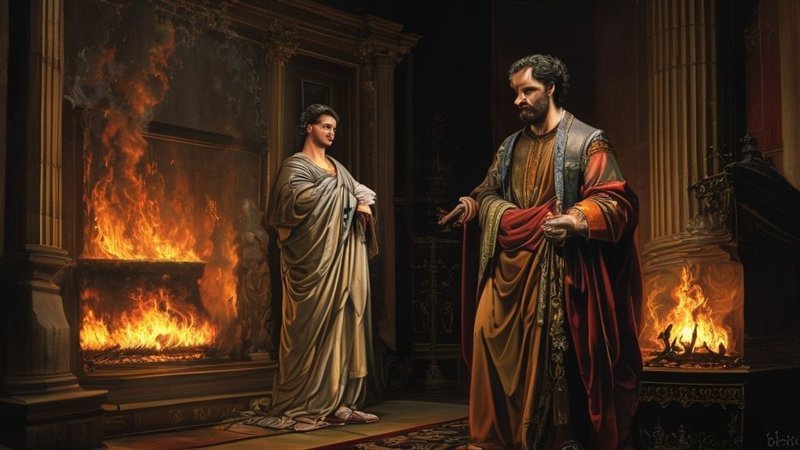
Investigating these new details led Voltaire into the labyrinthine corridors of sordid politics. He discovered that the Marquis was murdered not merely for money, but because of a coded message he intended to send to the King of Prussia. The message contained the names of French spies operating at the Berlin court. The crime, therefore, was a high-level political assassination, executed with the brilliance of a master engineer and the perfidy of a professional killer. Yet, even with this discovery, the true identity of the assassin remained an enigma. Official documents in the police archives mysteriously began to disappear. Witnesses interviewed by Voltaire started to recant their statements or vanished under mysterious circumstances.

You now grasp the extent of the corruption that gnawed at the foundations of the French state before the Revolution. Voltaire wrote in his memoirs that this crime was a stark testament to the hidden powers that often operated beyond the reach of law and justice, leaving even the most brilliant minds to grapple with an eternally unsolved enigma.
High-Level Political Assassination and Vanishing Evidence


Frequently Asked Questions

Who was the victim in this infamous Parisian locked-room mystery?
The victim was the Marquis de Lumière, a nobleman of significant influence in Royal France, discovered murdered in his securely locked study in 1750.
What perplexing details surrounded the Marquis de Lumière’s death?
The Marquis was found in a room locked from the inside, with no signs of forced entry, struggle, weapon, or apparent poison. His eyes were wide with terror, suggesting he saw his killer before his last breath, adding to the enigma.
How did Voltaire’s involvement change during the investigation?
Initially a philosopher believing in logic, Voltaire transformed into an investigator, delving into ancient chemistry and toxicologies, and corresponding with police contacts. He was driven by the belief that a brilliant criminal mind, not coincidence, was behind the impossible crime.
What critical breakthrough occurred ten years after the murder?
In 1760, Voltaire received an anonymous letter mentioning a ‘mechanical sound’ and a man emerging from a ‘secret crypt’ and ‘secret passages.’ This pointed towards an engineered conspiracy and a high-level political assassination.
What was the true motive behind the Marquis de Lumière’s assassination?
Voltaire’s later investigations revealed the Marquis was murdered for a coded message he intended to send to the King of Prussia, exposing French spies and financial corruption within the Royal Treasury, making it a politically motivated assassination.

Generated by AI Content Architect

About The Author

Leave a Reply

Your email address will not be published. Required fields are marked *