The Mystery of Universe 25: Why Did the Mouse Utopia Collapse?
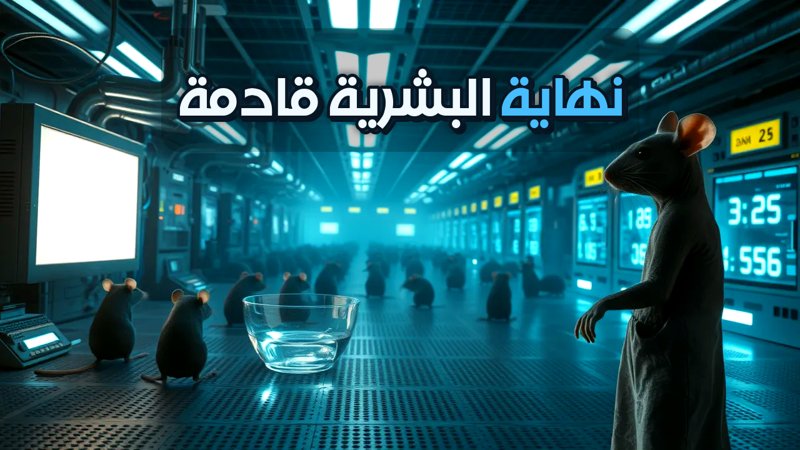
The Mystery of Universe 25: Why Did the Mouse Utopia Collapse?
In 1968, an American psychologist named John Calhoun decided to conduct a rather unusual experiment. He built an ideal world, not for humans, but for mice. Named ‘Universe 25,’ its purpose was to answer a seemingly simple question with unexpected implications: What happens to a society when all its material and basic needs are completely met?
Navigate Content
The Construction of a Rodent Paradise
Calhoun constructed a very large enclosure designed to comfortably accommodate thousands of mice under optimal conditions. He provided an endless supply of food, a network of water pipes, and exceptionally comfortable sleeping quarters. There were no cats, no cold weather, and no diseases. Initially, the experiment proceeded by the book; the mice began to breed, and their population grew rapidly, as if they had indeed found the paradise of every living creature’s dreams. This setup draws fascinating parallels to historical attempts at utopian planning, much like the human fascination seen in projects such as Giant Desert Cities: Why Build Skyscrapers in the Sand?.
The Behavioral Sink and Loss of Purpose
However, as time passed, Calhoun began to notice mounting tension within the environment. The core of the issue is that when a living organism loses its daily challenges or the natural struggle required for survival, it essentially loses its internal compass. This society did not collapse due to famine or plague; rather, it began to erode from within due to a profound sense of emptiness. Abundance left individuals without any real purpose in life. Calhoun termed this phenomenon the ‘behavioral sink’.
Enter ‘The Beautiful Ones’ and the Breakdown of Instincts
Amidst the crowding, a strange group emerged that Calhoun called ‘the beautiful ones.’ These were males who had completely detached themselves from society:
- They did not fight for dominance.
- They sought no mates.
- They showed no interest in protecting anyone.
Their sole focus in life was eating, sleeping, and grooming themselves. They spent hours licking their fur to keep it soft and shiny, wearing a vacant, detached expression. This bizarre psychological drift mirrors other historical anomalies of isolation, such as the eerie atmospheres explored in The Palace of Darkness: 70 Years of Mystery and Abandonment.
The Two Deaths: Social and Physical Mortality
Calhoun explained that a living organism dies twice: the first death is ‘social death’, occurring when it loses the ability to perform its natural role, followed by the second death, which is actual physical mortality. In Universe 25, the mice still ate and drank, but subsequent generations grew up entirely devoid of communication skills or the ability to form families. Society became a collection of thoroughly isolated individuals, each living within their own bubble despite sharing physical space.
Lessons for Modern Human Society
This experiment is not merely a story about lab mice; it prompts us to reflect on our own lives as humans. Could excessive luxury be a trap we fall into unawares? The parallels between the events in the enclosure and our digital lives today are striking. When everything becomes accessible at the push of a button and without effort, we risk transforming our own communities into a human equivalent of Universe 25.
Frequently Asked Questions
Generated by AI Content Architect
About The Author