The Mystery of Hattusa: The Empire That Faced Ramesses II
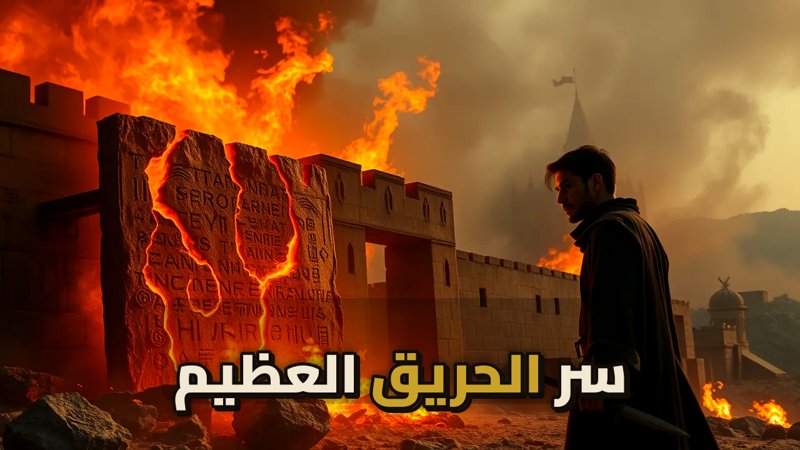
We are standing before a city built atop rugged rocky highlands, surrounded by walls that stretch for miles. Ironically, the massive fire that ultimately destroyed this city is the primary reason we are able to read their history today; the intense heat transformed the clay tablets on which they recorded their correspondence into hard pottery that has survived for thousands of years. Here, we are analyzing a place that was not merely a capital, but a powerhouse of an empire that treated the Pharaoh of Egypt as an ‘equal brother,’ before it suddenly collapsed and vanished from the map.
Standing today amidst the Anatolian plateau in Turkey, you will find the climate harsh, the winds dry, and the terrain rugged and difficult. More than 3,000 years ago, the Hittites built their capital, Hattusa, in this very location. This choice was not driven by luxury; the Hittites were primarily motivated by security concerns. The city was designed as a massive fortress, taking advantage of the mountain’s topography so that anyone approaching would feel insignificant in the shadow of these fortifications.
Similar to other ancient civilizations that relied on structural ingenuity, such as those discussed in When the River Dried Up: The Mystery of Bronze Age Cities, the Hittites maximized their environment to survive and project power.
Advanced Architecture and Military Engineering
The walls they built were ahead of their time, reaching a length of 6 kilometers and constructed from massive stone blocks. Looking at the ‘Lion Gate,’ you will notice the precision of the carving, which clearly sent a message of power to any visitor. Technically even more significant are the ‘Postern gates’—narrow tunnels beneath the walls that allowed soldiers to make surprise sorties and flank the enemy. This is the design of a city that constantly anticipated war, rather than just a commercial or residential center.
6-kilometer perimeter walls made of massive stone blocks.
The iconic ‘Lion Gate’ symbolizing royal and military might.
Strategic ‘Postern gates’ for tactical defensive maneuvers.
Bureaucracy, Law, and the Hittite Mindset
The Hittite king was not merely a worshipped god as was the case in other civilizations of that time, but rather the ‘chief magistrate’ and the mediator who ensured that the ‘law’ applied to everyone. We are talking about the discovery of approximately 30,000 clay tablets that turned this ruin into a giant ‘library’ chronicling the minutest details of their lives.
The Hittites were not just fierce warriors; they were the quintessential ‘lawyers’ of the Bronze Age. Curiously and surprisingly, they spoke an Indo-European language, meaning their tongue was closer to ancient Greek and Latin than to the Semitic languages surrounding them in the region. This allowed them to develop an unprecedented administrative system. For more insights into ancient legal codes and justice systems, you can explore Before Rome: The Truth Behind Hammurabi’s Laws of Justice.
The Battle of Kadesh and History’s First Peace Treaty
After years of violent clashes at the famous Battle of Kadesh and endless bloodshed on the battlefield, the cold Hittite mentality decided that the time had come for the ‘logic of law’ to replace the ‘heat of the sword.’ This decision was not merely a desire for peace, but the result of a conviction shared by both parties that neither could decisively crush the other.
In Hattusa, we found a copy of the peace treaty resulting from these negotiations, and in Egypt, we found the second copy. This document is considered the first written peace treaty in history. Hattusili III wrote to Ramesses II addressing him as ‘brother,’ and the two treated each other as equals; neither was the ‘master’ and the other the ‘vassal.’
The Mysterious Collapse and Internal Erosion
When we analyze the Hittites’ historical trajectory, we see that at this moment they reached the peak of their political maturity and international power. Curiously, however, this very peak marked the beginning of their decline. The collapse that followed was not a sudden ‘event,’ but the result of a slow erosion that began to weaken the state’s joints from within, coinciding with environmental pressures weighing on the entire region.
Key factors in the decline:
Internal political decay and administrative strain.
Regional environmental pressures and resource scarcity.
The gradual erosion of centralized authority long before foreign invasions.
Frequently Asked Questions
What is Hattusa?
Hattusa was the capital city of the ancient Hittite Empire, located in the rugged Anatolian plateau of modern-day Turkey.
Why is the destruction of Hattusa by fire considered ironic?
The massive fire that destroyed the city baked and hardened the clay tablets used for writing records, effectively preserving thousands of years of Hittite history for modern archaeologists.
What makes the treaty between Hattusili III and Ramesses II historically significant?
It is widely considered the oldest known written peace treaty in history, establishing equal diplomatic relations between two superpowers instead of a master-vassal dynamic.
What language did the Hittites speak?
The Hittites spoke an Indo-European language, making their tongue linguistically closer to ancient Greek and Latin than to the surrounding Semitic languages.