The Crystal Skull Hoax: Unmasking History’s Greatest Museum Deception
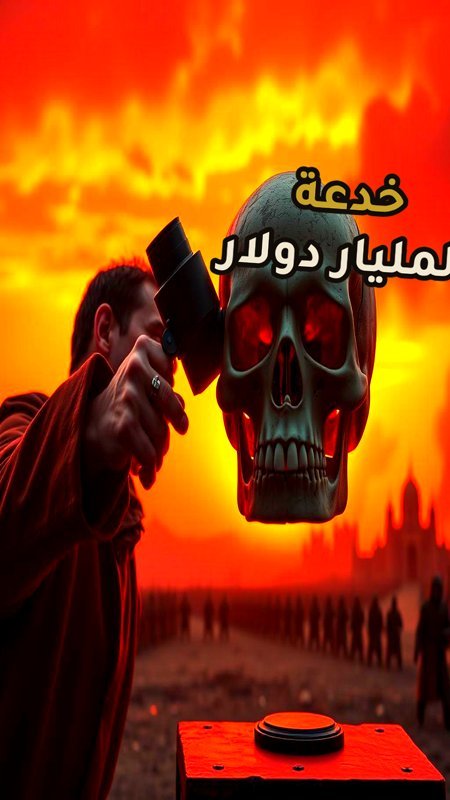
The Crystal Skull Hoax: Unmasking History’s Greatest Museum Deception
For decades, the enigmatic crystal skulls captivated imaginations, whispered to be ancient relics, perhaps even portals to other worlds. Museums, including the prestigious British Museum, acquired these mesmerizing objects at significant expense, believing them to be genuine artifacts of profound historical or mystical importance. Yet, beneath their polished surfaces lay a secret far more intriguing than any ancient curse or extraterrestrial origin: a grand deception that fooled experts and the public alike.
Navigate Content
The Allure and Acquisition of the Crystal Skulls
The legend of the crystal skulls painted a picture of ancient wisdom and mystical power. Many believed these intricately carved objects were creations of pre-Columbian Mesoamerican civilizations, imbued with spiritual significance or even extraterrestrial connections. This captivating narrative led institutions like the British Museum to invest heavily, adding them to their collections as priceless treasures. The human desire for belief, for something extraordinary beyond the mundane, made these skulls irresistible, cementing their place in popular culture and museum exhibits.
Science Unveils the Shocking Truth
The true nature of the crystal skulls remained hidden until the advent of advanced scientific investigation. When researchers employed the electron microscope, a tool capable of revealing minute details invisible to the naked eye, the long-held beliefs began to crumble. The microscope did not reveal the meticulous, irregular marks indicative of 500-year-old hand-carving, as one would expect from ancient craftsmanship. Instead, it exposed a tell-tale sign: perfectly parallel circular scratches – ‘the signature mark’ of modern machinery. This crucial discovery pointed to a fabrication method far removed from ancient techniques.
The Imprint of Modern Technology and Deception
The presence of perfectly parallel circular scratches was undeniable evidence of a mechanical ‘rotary wheel.’ This technology, crucial for such precise and uniform carving, simply did not exist prior to the Industrial Revolution in Europe. The revelation was stark: the crystal skulls were not ancient relics but products of 19th-century manufacturing. Investigations traced their origin to a German jewelry workshop around 1860. The mastermind behind this elaborate hoax was identified as the dealer, Eugène Boban, who skillfully exploited the public’s fascination and museums’ eagerness to acquire unique artifacts. This incident stands as a stark reminder of how easily historical narratives can be manipulated, much like the ongoing debate around artifacts such as The Shroud of Turin.
A Legacy of Forgery: Beyond the Crystal Skulls
The crystal skull saga serves as a powerful cautionary tale in the world of historical artifacts. It highlights:
- The importance of rigorous scientific scrutiny in authenticating historical objects.
- How easily institutions and individuals can fall victim to elaborate hoaxes.
- The enduring human desire for belief, which can be exploited by unscrupulous dealers.
If you believe this to be the last deception history holds, you are mistaken. The text warns that ‘other artifacts are currently being sold for thousands of dollars, awaiting exposure.’ The world is full of concealed layers of truth, waiting to be unveiled. Join us on our channel, ‘Wonders from Around the World,’ to explore more such fascinating revelations and uncover the hidden stories behind history’s most intriguing mysteries.
Frequently Asked Questions
Generated by AI Content Architect
About The Author