The Chuotong Cave Rock Art: Ancient Machinery or Maps in China?
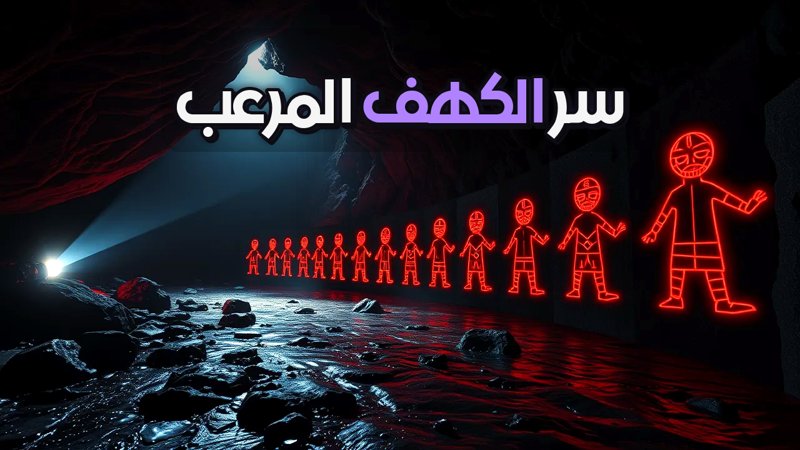
The Chuotong Cave Rock Art: Ancient Machinery or Maps in China?
Deep within the rugged mountains of Guizhou in southwest China lies the enigmatic Chuotong Cave, a site featuring mysterious geometric rock art and mechanical shapes that defy conventional historical interpretations.
Navigate Content
Navigating the Depths of Guizhou’s Mountains
Reaching the Chuotong Cave opening is no ordinary trek. Guizhou Province is renowned for its harsh limestone topography, heavy fog, and isolated villages. Researchers had to scale hazardous inclines and descend through a narrow rock fissure where daylight completely vanishes. Once inside, the environment turns profoundly quiet, with high humidity and dropping temperatures setting the stage for a remarkable archaeological discovery.
Unusual Geometric Art and Pigment Analysis
Unlike typical primitive sketches of animals or hunting scenes found in ancient caves, the Chuotong Cave walls reveal precise parallel lines, polygonal shapes reminiscent of mechanical designs, and human faces covered by massive masks. To prove authenticity, researchers tested the red pigment, finding a natural compound of iron oxide mixed with ancient binding agents. Similar archaeological debates surround sites like Tassili n’Ajjer: The Ancient Sahara Writing Discovery, where unexpected imagery sparks worldwide curiosity.
Scientific Proof and Rock Encrustation
Skeptics initially questioned whether the drawings were modern hoaxes. However, geologists discovered an extremely thin layer of calcium carbonate deposits—natural rock encrustation—formed completely over the painted lines. Because this crystalline layer takes centuries or even millennia to develop, it scientifically confirmed that the artwork is genuinely ancient.
Local Lore and the Projection of Modern Concepts
Interviews with elderly members of local Miao tribes revealed a hereditary wariness toward the cave, which was historically used as a refuge during times of war or as a burial site. While local lore explained the sanctuary’s historical use, it offered no answers regarding the abstract geometric lines. When photographs surfaced online, observers quickly projected modern concepts onto the art, interpreting headgear as space helmets and intersecting lines as advanced vehicles—a psychological phenomenon similar to debates surrounding The Mystery of Puma Punku: Ancient Engineering or Lost Technology?.
Frequently Asked Questions
Generated by AI Content Architect
About The Author