Stronger Than Steel: The Secret of Life in the Mariana Trench
Stronger Than Steel: The Secret of Life in the Mariana Trench
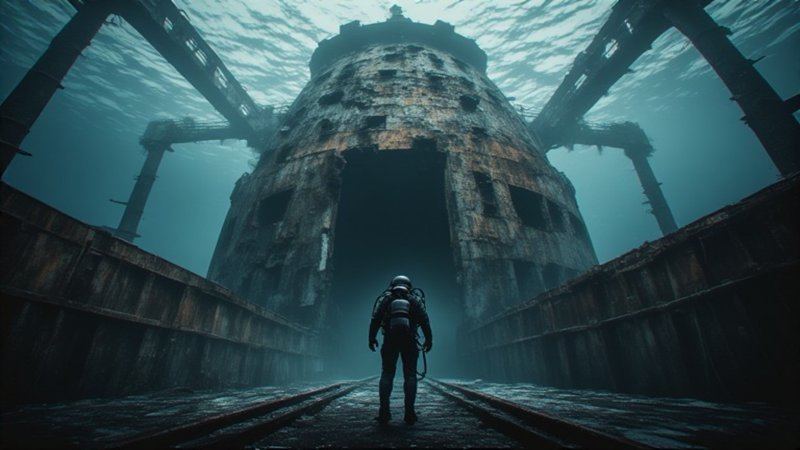
Steel hulls crumble like paper 11,000 meters below sea level, yet life persists in the darkness of the Challenger Deep. How do creatures of flesh and blood survive pressures that turn proteins to dust? The answer lies in a hidden biochemical revolution that challenges our understanding of life itself.
Navigate Content
The Physics of the Abyss
At the bottom of the Mariana Trench, the weight of the water is equivalent to twenty-five Boeing 747 jumbo jets. This hydrostatic pressure doesn’t just push from the outside; it alters atoms. It threatens to turn delicate biological molecules into rigid, useless structures, much like an egg becoming hard-boiled under extreme force. Life here does not fight the pressure; it has evolved to use it.
Piezolytes: The Biological Armor
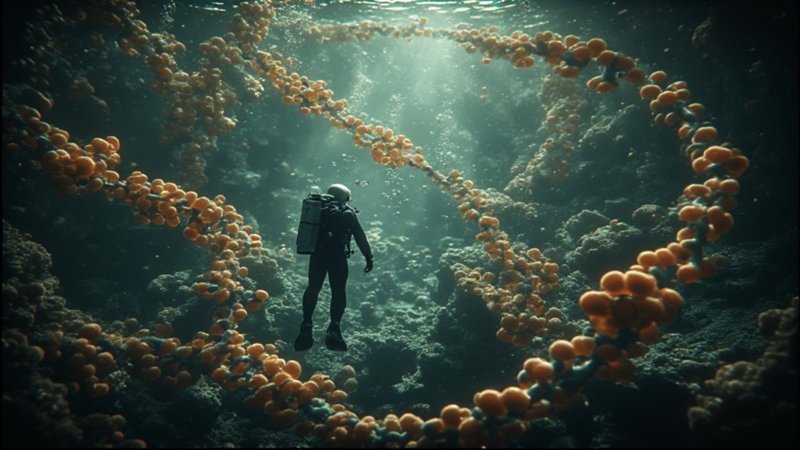
Survival in the deep is a matter of chemical stabilization. Scientists have identified ‘piezolytes’—specialized molecules that act as guardians for cells. The most notable is Trimethylamine N-oxide (TMAO), which:
- Prevents proteins from collapsing under pressure.
- Binds water molecules around delicate structures.
- Allows fish to maintain function where steel would fail.
For more on how extreme environments create unique biological adaptations, see Lake Vostok’s Oxygen Paradox.
The Fluidity of Survival
If a cell membrane were to solidify, life would suffocate. Deep-sea organisms combat this through a high concentration of unsaturated fatty acids. These keep cell membranes in a state of permanent ‘fluidity,’ ensuring that nutrients and waste can flow even under a thousand atmospheres of pressure. It is a constant molecular dance against the stillness of the abyss.
A New Frontier for Life
We often look to the stars for extraterrestrial life, yet we ignore the alien environments hidden on our own planet. These organisms are not merely ‘adapted’ to the deep; they are ‘addicted’ to it. If brought to the surface, many would simply dissolve as their internal chemistry fails to function in our light, low-pressure world. To explore more about extreme landscapes on Earth, visit Antarctica’s Deep Secrets.
Frequently Asked Questions
Generated by AI Content Architect
About The Author