Secrets of Water Worlds: Unveiling Fireless Civilizations in Cosmic Depths
Imagine a world entirely enveloped by ocean, from pole to pole. A hydrosphere thousands of kilometers deep, concealing the secrets of civilizations that have never known the sun’s light. Have you ever wondered if the stars you observe in the night sky are, in fact, colossal aquatic tombs, harboring the ruins of intellects vastly superior to our own?
You stand now on a solid planetary crust, but the cosmos tells a vastly different story. Recent astronomical studies suggest that rocky planets like ours may be the exception, while water worlds are the norm. In recent years, space telescopes have detected planets orbiting within the habitable zone that lack discernible surface features. They appear as dark blue spheres, where water constitutes up to fifty percent of their total mass. Compare this to our planet, where water represents only a tiny fraction of its total mass. You reside on a dry speck of dust compared to those desolate worlds. The pressure at the bottom of these oceans is unlike any pressure we know. It is an immense pressure that transforms water into exotic physical states, such as Ice VII, a solid ice forming at extremely high temperatures due to tremendous hydrostatic force. In such an environment, the notion of a civilization seems impossible at first glance, yet the philosophical mind perceives beyond the veil.
Fireless Civilizations: The Biotech Alternative
Let us delve together into the depths of this terrifying possibility. As humans, we link technological advancement to the discovery of fire. Fire enabled us to smelt metals, construct engines, and launch rockets into space. In a completely aquatic world, fire does not exist. No flame could endure under the pressure of hundreds of tons of water. This leads one to ponder: Is fire the sole path to civilization? Perhaps there are aquatic civilizations that have developed biotechnologies beyond our imagination. Instead of smelting iron, perhaps they learned to engineer coral to grow into complex architectural forms. Instead of copper wires, perhaps they utilized the neural fibers of marine organisms to transmit information. You perceive technology as metallic machinery, but they might view it as obedient living organisms. These civilizations could be millions of years older than humanity, living in absolute silence, far from the tumult of waves.
Bioluminescent Cities and Sonic Communication
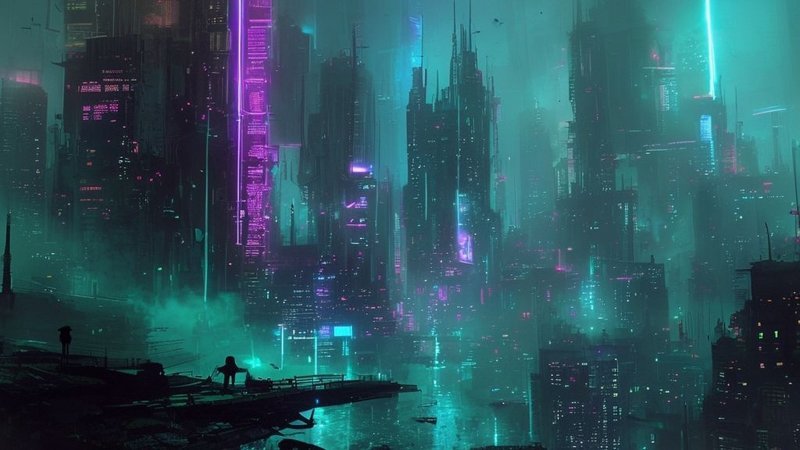
Consider with me the light in those abyssal depths. Beyond a depth of two hundred meters, sunlight completely dissipates. The world becomes dark, cold, and desolate. Yet, death is not the prevailing force there. Organisms in those worlds rely on bioluminescence. Imagine entire cities glowing with phosphorescent blue and green. Not electric lamps, but programmed microorganisms illuminating pathways and plazas. The ruins of these cities, if they exist, would not be rubble of cement and rust. They would be calcified biological structures, silent, telling the story of beings that communicated through light pulses and high-frequency sound. Sound travels four times faster in water than in air. For them, music and language were one, vibrations penetrating bodies and flowing through cells.
The Great Filter and K2-18b’s Enigma
Why have we not found any trace of them yet? The answer may lie in what is termed ‘The Great Filter‘. We strive to communicate with space via radio waves, but these aquatic civilizations are trapped beneath layers of ice or dense water that absorb all signals. They live in a perfect aquatic prison. Even if they possessed sufficient intelligence, departing their planet would be nearly impossible. Escaping the gravity of a massive water world demands enormous energy that cannot be generated without chemical combustion, an impossibility underwater. They would perceive the surface, if they could reach it, as a lethal barrier teeming with cosmic radiation. To them, we, the creatures living in air, are the alien beings who breathe toxic gases.
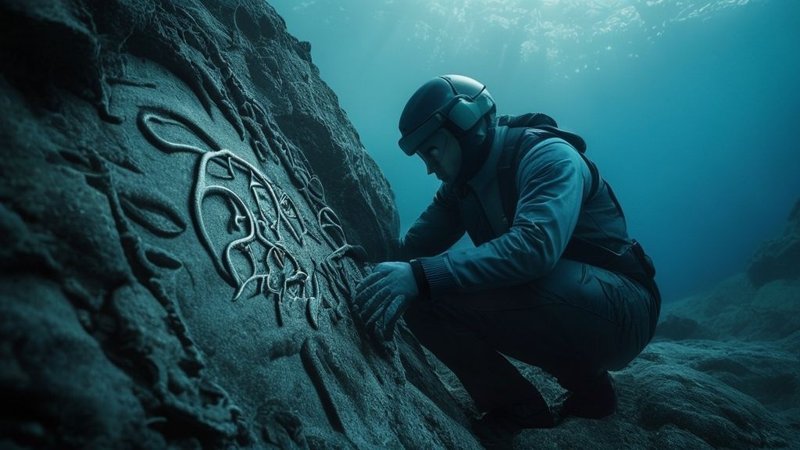
Consider ‘K2-18b,’ a planet that recently generated significant scientific interest. Scientists detected dimethyl sulfide gas in its atmosphere, a gas produced on Earth almost exclusively by marine life. This planet could be the grand basin of a submerged civilization. Imagine sending a probe to penetrate its atmosphere, only to discover an endless ocean. And thousands of meters beneath the surging waves, immense ruins lie. Palaces constructed from natural glass formed by hydrothermal volcanism. Pathways extending between hydrothermal vents that once supplied power to that civilization. You feel awe as you realize that the fate of any aquatic civilization is eternal isolation. They are born, thrive, and perish, never knowing that a vast cosmos of stars exists above them.
Our Own Cosmic Ocean: Redefining Intelligence
This leads us to a psychological analysis of our own reality. Do we also live within another kind of ‘ocean’ that prevents us from perceiving cosmic truth? Perhaps our limited consciousness is the hydrosphere that obscures our view of civilizations unlike our own. We search for technological signatures resembling our own: factory smoke and satellite signals. Yet, we disregard the possibility of silent cosmic intelligence, an intelligence that reveres harmony with the aquatic environment rather than seeking to dominate it. The ruins of water worlds might not be debris, but rather continuous life that chose to retreat into the depths to evade stellar fluctuations and the wrath of supernovae. Water offers ideal protection against lethal radiation, making these planets safe havens for billions of years.
Consider the eons life spent in Earth’s oceans before daring to venture onto land. It took three and a half billion years. We, as a technological civilization, have existed for only a few millennia. This implies that the vast majority of intelligent life forms in the universe may still be in their aquatic phase. They are not primitive; rather, they may have reached the pinnacle of philosophical and spiritual evolution without the need to invent the wheel. Their communication might occur through chemical telepathy or hydro-resonance. When you gaze at
Frequently Asked Questions
What are water planets, and how common are they thought to be?
Water planets are celestial bodies where water constitutes a significant portion of their total mass, potentially forming oceans thousands of kilometers deep. Recent astronomical studies suggest that such water worlds may be more common in the cosmos than rocky planets like Earth.
How could a civilization develop without the discovery of fire?
In completely aquatic environments, fire is impossible. It is speculated that fireless civilizations could develop advanced biotechnologies instead, such as engineering coral for architecture or utilizing neural fibers of marine organisms for information transmission, perceiving technology as obedient living organisms rather than metallic machinery.
Why haven’t we detected these potential aquatic civilizations?
The text suggests ‘The Great Filter’ may be at play. These civilizations could be trapped beneath dense water or ice layers that absorb radio signals, making communication with space impossible. Furthermore, escaping the gravity of a massive water world without chemical combustion would require immense energy, effectively creating a ‘perfect aquatic prison’.
What is K2-18b, and why is it relevant to the theory of water civilizations?
K2-18b is a planet that has generated scientific interest due to the detection of dimethyl sulfide gas in its atmosphere, a gas produced on Earth almost exclusively by marine life. This finding raises the intriguing possibility that K2-18b could harbor a vast, submerged civilization.
Could our own consciousness be a ‘cosmic ocean’ limiting our perception of other intelligences?
The article proposes a psychological analysis, suggesting that our limited consciousness might be like an ‘ocean’ that prevents us from perceiving cosmic truths or forms of intelligence that don’t resemble our own technological signatures. It encourages considering silent cosmic intelligence that lives in harmony with its environment, potentially having evolved philosophically or spiritually without our form of technological advancement.