Pharaohs’ Impossible Technology: Unraveling Ancient Egypt’s Baffling Granite Secrets

0
image_1-153


Pharaohs’ Impossible Technology: Unraveling Ancient Egypt’s Baffling Granite Secrets
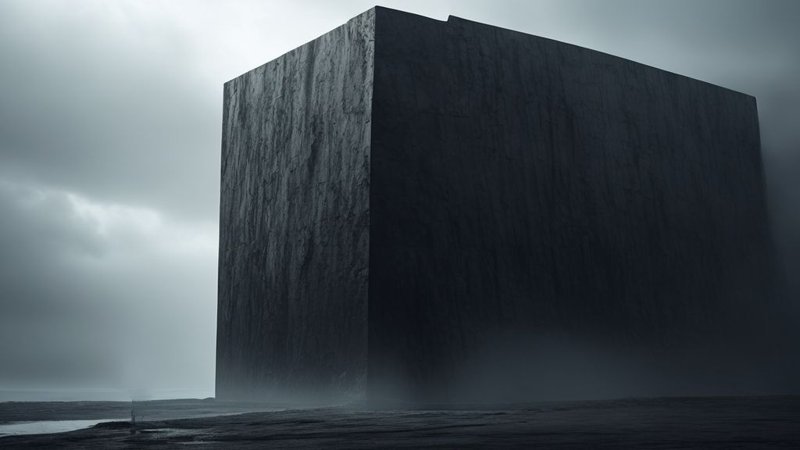
Stand before that colossal mass of pink granite at the heart of the Giza Plateau. Observe its polished surface, which reflects sunlight like a silver mirror crafted in the most advanced laboratories of the 21st century. How could Bronze Age humans, whom conventional science presumes possessed only copper chisels and flint stones, have shaped the hardest rocks on Earth with such exquisite precision that defies the laws of physics and logic? You are now entering a realm of engineering enigmas that compels us to pause and reflect on all we have learned.


The Serapeum Sarcophagi: Precision Beyond Modern Capabilities

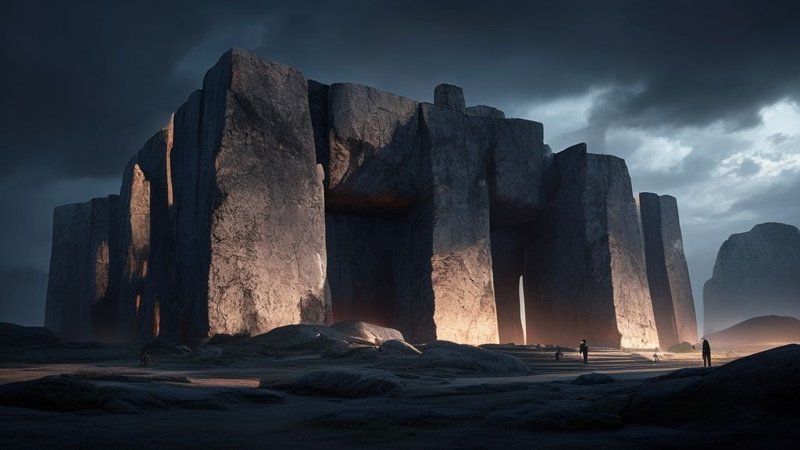
Beneath the sands of Saqqara, deep within the dark Serapeum catacomb, lie twenty-four enormous granite sarcophagi. Each box, with its lid, weighs up to one hundred tons. These are not merely ordinary stone sarcophagi; they are technological marvels in every sense of the word. When you run your hand over the inner corners of these boxes, you will feel the stone’s coolness and its extraordinary smoothness. But what is truly astonishing is the engineering precision. The corners are perfectly ninety degrees, with a deviation no greater than a hair’s breadth. Researchers using modern laser measurement devices have discovered that the surfaces are so perfectly flat that such a finish can only be achieved today with Computer Numerical Control (CNC) machines.

Imagine the immense pressure and heavy load within a narrow underground tunnel. How were one hundred tons of granite transported through passages barely wide enough for a few men? And how could they have polished the interior with such masterful skill in absolute darkness? The physical evidence screams before our eyes: copper tools cannot even scratch granite, let alone cut and polish it in this manner. Granite contains a high percentage of quartz, a stone with a hardness of seven on the Mohs scale, whereas copper barely exceeds three. Attempting to cut granite with copper is akin to trying to cut wood with a piece of paper; it is physically impossible.
The Serapeum Sarcophagi: Precision Beyond Modern Capabilities


Ramses II Statues & The Aswan Obelisk: Geometric Symmetry and Unconventional Quarrying

Now, let us turn to the temples of Luxor and examine the colossal statues of Ramses II. View them not merely as art, but as an engineering achievement. When the faces of these statues were analyzed using 3D photogrammetry, a startling truth emerged. The statue faces exhibit absolute geometric symmetry. The right side of each face is an exact mirror image of the left, with precision down to fractions of a millimeter. The intricate curves around the nose, eyes, and lips adhere to complex mathematical equations. This is not the result of random manual carving with a hammer and chisel. The human hand, no matter how skilled, cannot maintain this level of mathematical symmetry on a stone mass weighing hundreds of tons. This strongly suggests the use of colossal turning machines or automated guidance systems that controlled the carving process.

In Aswan, the Unfinished Obelisk lies as a silent testament to lost technology. This obelisk weighs over 1,100 tons. Examine the trenches surrounding it. You will observe marks resembling scoops, as if someone were scooping out solid granite like ice cream with a warm spoon. The conventional explanation suggests the use of dolerite balls to pound the granite until it eroded. However, mathematical calculations reveal that this process would take hundreds of years and thousands of workers who would perish from the exertion and heat. Furthermore, the narrow spaces within the trenches do not allow for sufficient range of motion to strike the stone with force. The marks on the trench walls strongly suggest the presence of a large mechanical machine that moved in a circular, uniform motion, stripping away the stone with astonishing speed.


The Enigma of Tubular Drills and Vanished Machines

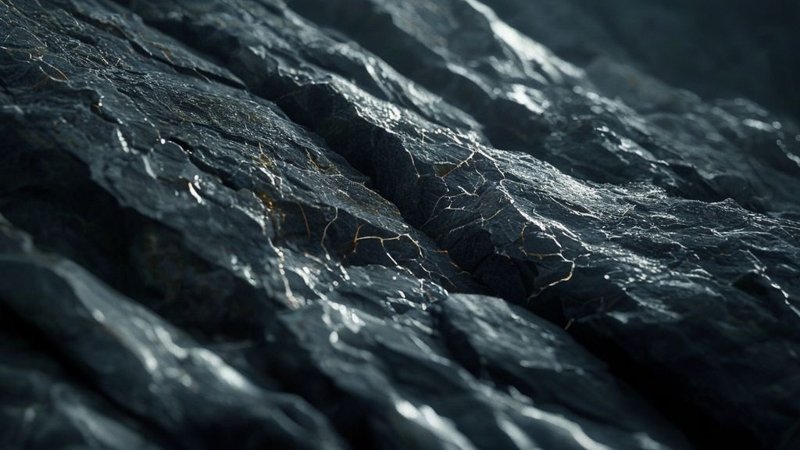
Let us now consider another enigma: that of the tubular drills. In numerous archaeological sites, precise holes are found bored into blocks of granite and basalt. When the British engineer Sir Flinders Petrie examined these holes in the 19th century, he was astonished by his findings. He discovered helical grooves carved inside the holes, indicating that the drilling tool was penetrating the granite at tremendous speed. Petrie estimated that the penetration rate of these drills into the stone was five hundred times faster than any modern drill available in his time. These marks show that the tool withstood immense pressure and rotated at an exceedingly high velocity. They are a clear imprint of powerful mechanical machines, not the product of tedious and arduous manual labor.

You may now be asking: where have these machines gone, and why have they not been found? The answer may lie in the nature of the materials themselves. Machines made from recyclable metals or those that corroded over thousands of years might have vanished, yet the indelible marks of their actions on the enduring stone remain to tell us the truth. Stone does not lie, and engineering measurements are impartial.
The Enigma of Tubular Drills and Vanished Machines


The Great Pyramid: A Resonant Engineering Marvel

When we examine the Great Pyramid, we find it oriented towards true north with astonishing accuracy, with an error margin not exceeding three-sixtieths of a degree. This demands astronomical, mathematical, and surveying knowledge far surpassing what we attribute to ancient civilizations. Inside the King’s Chamber of the Great Pyramid, you will find walls and a ceiling of colossal red granite. The blocks are interlocked with such precision that a knife blade cannot pass between them. But there is more intriguing evidence. This chamber is designed with unique acoustic properties; it functions as a massive resonant chamber. The quartz present in granite is a piezoelectric material, meaning it generates an electrical current when subjected to mechanical stress. The pyramid is not merely a silent stone structure, but a complex engineering device that interacted with Earth’s energy or was utilized for specific sonic frequencies for purposes yet unknown to us.


Frequently Asked Questions

What evidence suggests ancient Egyptians possessed advanced technology for working with granite?
Evidence includes the perfectly 90-degree corners and flat surfaces of Serapeum sarcophagi (comparable to CNC machine precision), the geometric symmetry of Ramses II statues (suggesting automated carving), scoop marks on the Unfinished Obelisk (implying mechanical removal), and helical grooves in tubular drill holes indicating extremely high penetration rates.
How do these ancient granite feats challenge conventional understanding of Bronze Age capabilities?
Conventional science presumes Bronze Age humans only had copper chisels and flint stones. However, copper cannot even scratch granite (Mohs hardness of 7 for quartz in granite vs. 3 for copper), making the exquisite cutting, shaping, and polishing observed physically impossible with known ancient tools. The sheer scale and precision defy manual labor explanations.
Why haven’t the alleged advanced machines or tools used by the pharaohs been found?
The text suggests that these machines might have been made from recyclable metals or materials that corroded and disintegrated over thousands of years. While the machines themselves are gone, their indelible marks and the resulting precision on enduring stone structures remain as evidence of their use.
What are the unique properties of the Great Pyramid, specifically the King’s Chamber?
The Great Pyramid is oriented to true north with extreme accuracy. The King’s Chamber, built from colossal red granite blocks, exhibits interlocking precision where a knife blade cannot pass. Furthermore, it’s designed as a massive resonant chamber, and the granite’s quartz content suggests it could have functioned as a piezoelectric device, interacting with Earth’s energy or sonic frequencies.
What are some specific examples of impossible precision mentioned in the text?
Key examples include the Serapeum sarcophagi with perfectly 90-degree corners and surfaces flat to a hair’s breadth, and the Ramses II statues exhibiting absolute geometric symmetry down to fractions of a millimeter, indicating precision far beyond manual carving.

Generated by AI Content Architect

About The Author

Leave a Reply

Your email address will not be published. Required fields are marked *