Deep Echo Technology: The Secret Seismic Weapon and the Terrifying Potential for Induced Earthquakes

Deep Echo Technology: The Secret Seismic Weapon and the Terrifying Potential for Induced Earthquakes
Imagine the ground beneath your feet is not as solid as you believe, but rather a ticking weapon awaiting activation. The idea of controlling earthquakes is no longer mere science fiction from dystopian novels; it has transformed into a terrifying technical question that troubles scientists and decision-makers alike. Today, we are discussing deep echo technologies — waves capable of penetrating Earth’s layers to touch the planet’s sensitive nerves.
Navigate Content
Tectonic Plates and the Principle of Resonance
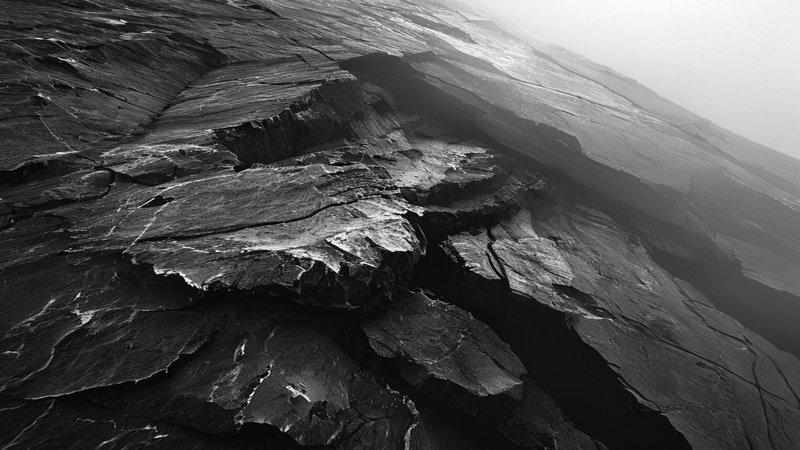
Our planet consists of massive tectonic plates that float on a layer of molten magma. These plates are in constant motion and perpetual collision, generating immense pressures deep within the Earth. When these pressures reach their breaking point, an earthquake occurs, releasing energy equivalent to thousands of atomic bombs in a matter of seconds. You might now wonder if humans can intervene in this complex natural process. The answer lies in our profound understanding of mechanical resonance and ultra-low frequencies. Do you recall how an opera singer can shatter a glass with her voice alone? This happens when the frequency of her voice matches the natural frequency of the glass. Scientists today are investigating whether we can do the same with the Earth’s crust.

The Mechanics of Induced Earthquakes
Deep echo technology relies on transmitting extremely low-frequency acoustic or electromagnetic waves into immense depths. These waves do not move randomly but are precisely directed towards known fault lines and seismic zones. The goal here is not to create energy, but to stimulate already stored energy. You are not building an explosion; you are merely lighting the fuse. Imagine two massive rocks beneath you, grinding against each other with immense force but stuck due to friction. If you transmit specific vibrations at the right time and frequency, you will reduce the coefficient of friction and allow the rocks to suddenly slip. This sudden slip is what we call an induced earthquake.
Historical Precedents: From Tesla’s Oscillator to Fracking
History tells us of intriguing attempts in this field, starting with the genius Nikola Tesla in the late 19th century. Tesla claimed he built a small mechanical oscillator that could fit in his pocket. When he activated it in his New York laboratory, nearby buildings began to vibrate violently. Although Tesla’s experiments were rudimentary, they laid the groundwork for understanding how mechanical waves interact with massive bodies. In the modern era, we have moved from small oscillators to giant facilities and highly secretive research. The most convincing evidence of human-induced seismicity comes from hydraulic injection:
Geopolitical Nightmare: The Silent Weapon
Deep echo technologies go beyond mere water injection. We are talking about using massive arrays of antennas to send electromagnetic pulses to the ionosphere in the atmosphere, then reflecting them back to penetrate the Earth’s crust. These pulses can heat specific regions deep within the Earth or create microscopic vibrations sufficient to destabilize the balance of tectonic pressures. Here, you are not dealing with a hammer striking the Earth, but with an acupuncture needle targeting geological nerve centers. The real danger lies in our incomplete understanding of where the limits of control end and catastrophic failure begins.
The geopolitical aspect of this technology is terrifying beyond imagination. If a nation can possess earthquake-inducing technology, it holds the perfect weapon for silent warfare. Imagine a devastating earthquake striking a coastal city in a rival country. It would appear to be a tragic natural disaster, and the world would rush to provide aid. This type of warfare leaves no fingerprints and requires no border crossings or missile launches. It is death emerging from beneath our feet, with a mere push of a button from another continent.
The Geological Domino Effect and Detection Challenges
The Earth is a complex and interconnected system far beyond our current comprehension. If you trigger a small earthquake in one spot to relieve pressure, you might unintentionally transfer that pressure to another, more dangerous region. This is what scientists call the geological domino effect. Manipulating plate tectonics is like playing with fire in a powder magazine. You might be paving the way for a mega-earthquake that could devastate an entire continent. The consequences could be planetary. The biggest technical challenge facing scientists today is distinguishing between natural and artificially induced earthquakes. Key differences currently under investigation include:

Frequently Asked Questions
Generated by AI Content Architect
About The Author