The Reality of the 2012 Apocalypse Prophecy and Maya Calendar
The Reality of the 2012 Apocalypse Prophecy and Maya Calendar
In December 2012, the world experienced a wave of mass anxiety driven by the belief that an ancient Maya prophecy signaled the end of the world. From bunker construction to viral rumors, fear gripped society. But what did the ancient texts actually say? Let’s unpack the truth behind Monument 6, the Long Count calendar, and how the media commercialized human fear.
Navigate Content
The Panic of December 2012
As the third week of December 2012 approached, NASA was flooded with frantic calls and emails from terrified people. Teenagers asked if they should end their lives, and weeping mothers wondered if they should protect their children from impending doom. This wasn’t just harmless internet chatter. In China, a man named Lu Zhenghai spent his life savings building a massive iron ‘Noah’s Ark’. In the United States, underground bunker sales soared as families abandoned their homes, stockpiling canned food for years. For similar deep-dives into historical anomalies and mass delusions, you might enjoy reading about The Doomsday Clock: The Artistic Origins of Our Global Countdown.
Monument 6 and the Tortuguero Discovery
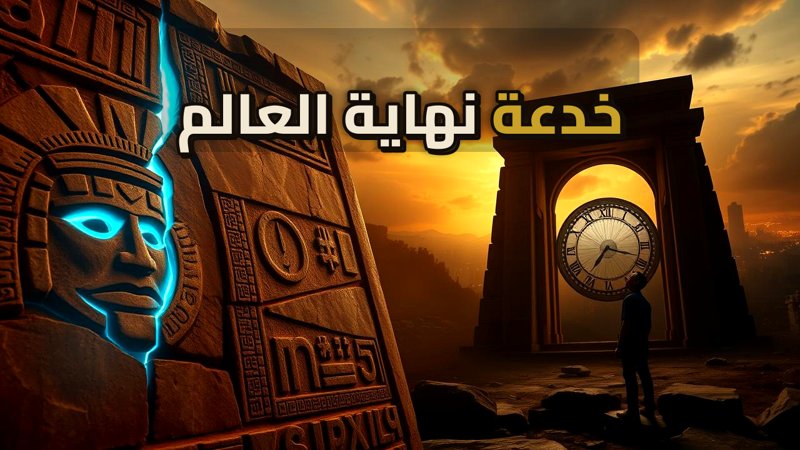
The story began in 1957 in Tortuguero, Mexico, when workers clearing a path for a road struck an ancient stone tablet buried underground. Known as Monument 6, the eroded clay stone featured mysterious symbols in the ancient Maya language. When archaeologists decoded it in the 1960s, they discovered it spoke of Maya kings and a future date corresponding to December 21, 2012, marking the return of the god of war and creation, Bolon Yokte. Conspiracy theorists seized on a broken fragment, transforming a celebration into a global doomsday myth despite scientists’ repeated clarifications.
Understanding the Maya Long Count Calendar
To understand the Maya perspective on time, we must abandon our linear view where time starts in the past and moves forward without returning. The Maya viewed time as recurring cycles. They invented the clever Long Count calendar, which functions much like an automobile odometer. It consists of five main units:
- Kin: A single day.
- Uinal: Twenty days.
- Tun: Roughly one year (eighteen uinals).
- Katun: Approximately twenty years.
- Baktun: A massive span equivalent to roughly 394 current years.
The grand cycle concludes upon counting 13 baktuns—roughly 5,125 years—which ended on December 21, 2012.
The Counter Resets: Celebration, Not Destruction
When the 13th baktun concluded on December 21, 2012, the counter simply reset, much like our transition from 1999 to 2000. For the Maya, the end of a time cycle was a joyous occasion celebrating new life, not the destruction of humanity. However, a quiet notion of a counter resetting does not generate profit. Corporations and media realized that fear sells exceptionally well, laying the groundwork for a massive commercial industry built around the approaching apocalypse.
Hollywood and the Catalyst of 2009
The ultimate catalyst for widespread panic arrived in 2009 with the release of Hollywood’s blockbuster film 2012. The movie painted vivid, terrifying pictures in people’s minds: tsunamis swallowing cities, splitting earth, and erupting volcanoes. This cinematic imagery made the fictional danger feel intensely real and imminent to millions worldwide. If you enjoy exploring how narratives and human psychology are manipulated, take a look at The Psychology of Anchoring: Why You Are Being Manipulated by Prices.
Frequently Asked Questions
Generated by AI Content Architect
About The Author