The Lost City of Iram: Did the Desert Swallow a Civilization?
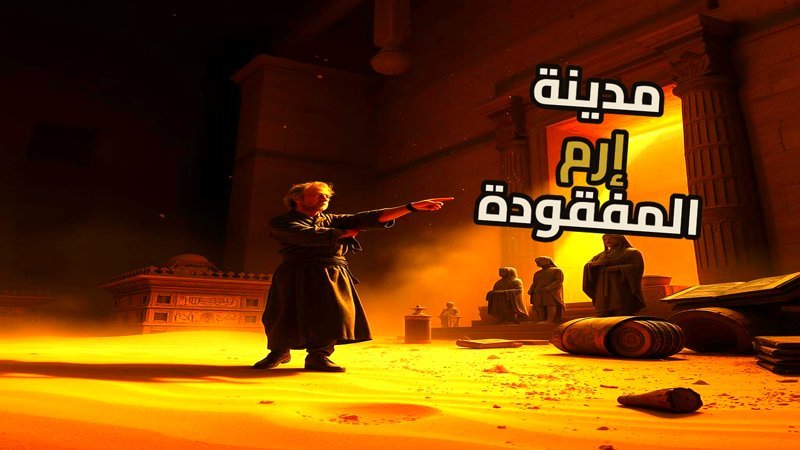
The Lost City of Iram: Did the Desert Swallow a Civilization?
Deep within the unforgiving sands of the Rub’ al Khali, or the Empty Quarter, lies a secret that has baffled scientists and historians for decades. Satellite imagery has revealed the remnants of a lost civilization, once a thriving trade hub, now buried beneath miles of shifting dunes. Was Iram of the Pillars a mere myth, or did a geological catastrophe erase this ‘New York’ of the ancient world from existence?
Navigate Content
The Satellite Discovery
In 1991, filmmaker Nicholas Clapp utilized advanced satellite imagery to peer beneath the desert sands. What he found were ancient caravan routes converging on a single point in Oman: Shisr. While initial excavations revealed a ruined fortress and a well, the true scale of the discovery lay deeper. The site, often identified as the legendary city of Ubar or Iram, suggests a sophisticated civilization that once controlled the lucrative frankincense trade.
A City Swallowed by the Earth
The destruction of Iram was not the result of war, but a silent geological collapse. Evidence suggests:
- The city was built atop a massive underground limestone aquifer.
- Over-extraction of water caused the reservoir to empty, weakening the foundation.
- The weight of the palaces and pillars became too great, leading to a catastrophic sinkhole.
This sudden collapse effectively ‘swallowed’ the city, leaving behind only broken pillars and a mystery that continues to haunt archaeologists.
The Breadbasket of the Ancient World
Long before it became a scorching wasteland, the region was known as ‘Arabia Felix’—a green paradise. Much like the mysteries surrounding The Pyramids: Pre-Flood Tablets Revealed and the Lost History of Humanity, the story of Iram challenges our understanding of climate history. Geological shifts 4,000 years ago transformed this fertile land into the Empty Quarter, proving that even the most powerful civilizations are vulnerable to the whims of nature.
What Lies Beneath the Dunes?
The Empty Quarter remains largely unexplored, with only a fraction of its secrets revealed. As we continue to investigate, we must consider: Is Iram the only city hidden beneath the sand? Ancient manuscripts mention other lost locations like ‘Al-Wabar’ and ‘Jubar.’ Much like the historical verification of Troy, these legends may hold more truth than modern science is currently willing to admit.
Frequently Asked Questions
Generated by AI Content Architect
About The Author