Ismail al-Jazari: The Forbidden Technology and the 500-Year Gap
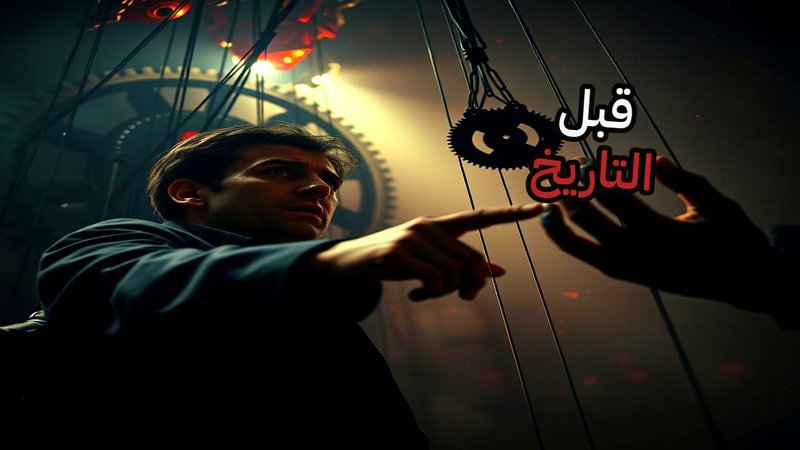
Ismail al-Jazari: The Forbidden Technology and the 500-Year Gap
History is often presented as a straight line of progress, but the story of Ismail al-Jazari suggests a different, more unsettling reality. While the world was supposedly drowning in ignorance, this 12th-century engineer was crafting the foundations of modern robotics, hydraulic systems, and digital logic. Was his work a threat to the power structures of his time, or are we simply living in a loop of forgotten genius?
Navigate Content
The Mechanical Corpse and the Pattern of Suppression
The discovery of the Antikythera mechanism proved that ancient civilizations possessed technology far beyond their era. This pattern of ‘forbidden genius’ repeats with Ismail al-Jazari. Just as the Antikythera device was a 2,000-year-old analog computer, al-Jazari’s work in Diyarbakir introduced the crankshaft—the very heart of the modern industrial engine. Why does history consistently attempt to bury these breakthroughs? It appears that whenever technology threatens the status quo, it is systematically dismantled or hidden, much like the Timbuktu Manuscripts which hold the lost scientific archives of Africa.
The Architect of Reality: Robots in the 12th Century
Al-Jazari did not just build machines; he created autonomous systems that mimicked life. His inventions included:
- A mechanical musical band for Sultan feasts.
- Advanced water pumps utilizing complex physics.
- The legendary Elephant Clock, a masterpiece of mechanical synchronization.
These machines were not mere toys; they were early forms of artificial intelligence. By using valve systems and cams, he effectively utilized binary logic—zeros and ones—centuries before the digital age.
The Price of Genius: Why Al-Jazari Vanished
The sudden disappearance of al-Jazari and the subsequent abandonment of his research by his students point to a deliberate effort to regress human progress. His work, The Book of Knowledge of Ingenious Mechanical Devices, was frequently banned. The threat was existential: if machines could perform human labor and provide free energy, the entire economic system of control would collapse. This mirrors the themes of power and manipulation found in Project MKUltra, where knowledge is weaponized to maintain authority.
Are We 500 Years Behind?
We often look at modern marvels like Boston Dynamics’ robots and assume we are at the peak of human evolution. However, the evidence suggests we are merely rediscovering what was already achieved. If al-Jazari’s inventions had been allowed to flourish rather than being stolen or hidden in European archives, our current technological landscape might be centuries ahead. We are living in a closed loop, where the ‘archives of oblivion’ dictate what we are allowed to know.
Frequently Asked Questions
Generated by AI Content Architect
About The Author