Your Phone is Stealing Your Identity: How Digital Narcissism & Addiction Are Reshaping Your Mind
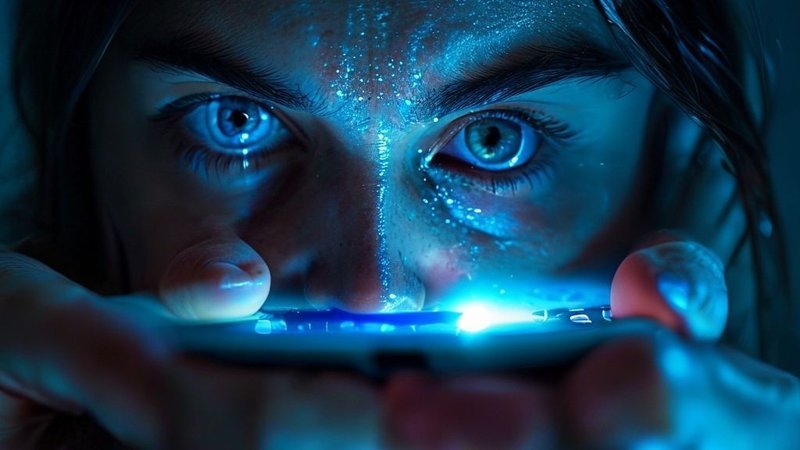
You currently hold a weapon aimed at your identity. Worse, you are the one constantly pulling the trigger without realizing it. A digital entity monitors your heartbeat from behind the cold glass of your phone. It knows your fears better than you do. It analyzes the tremor of your thumb as you scroll through images. In the coming minutes, I will reveal how this small device has transformed into a narcissistic mirror that slowly devours your soul. But beware. The truth you will uncover at the end of this journey might make you want to shatter this mirror forever. Have you ever wondered why you feel a sudden emptiness after an hour of browsing? Why does your pulse quicken when the number of likes is lower than usual? The answer is not in your phone. The answer lies in the void that has expanded within yourself.
The Digital Narcissus: A Mirror to Your Soul’s Demise
Imagine with me the ancient myth of Narcissus. The youth who fell in love with his reflection on the water’s surface until he drowned. Today, we don’t need a lake. We carry the lake in our pockets. Twenty-four hours of constant reflection. Digital platforms are not merely communication tools; they are psychological laboratories specifically designed to feed your deepest fears of marginalization. You enter a vicious cycle of unfair comparison, juxtaposing the struggling realities of your life with the carefully curated snapshots of others. This is not merely envy; it is a systematic destruction of your self-image. Your skin grows cold. Your eyes narrow. Your body stiffens before the screen. You seek value in a place that offers nothing but mirages.
The Dopamine Trap: Rewiring Your Brain for Validation
Why do we need external validation in such a terrifying way? The answer lies in brain chemistry. Every “like” is a small dose of dopamine, an intoxicating shot that momentarily makes you forget the pain of loneliness. But the tragedy begins when the dose wears off. You find yourself alone with a self you no longer recognize. You have fragmented your identity into images and videos, becoming a “product” showcased in the digital marketplace where identities are commodified. Do you notice how your posture changes when you take a photo of yourself? You don’t smile because you’re happy; you smile because the algorithm demands it. You feign your emotions to satisfy an audience that perceives you only as statistics. Here emerges the central question everyone avoids: What remains of you if the world loses power? If your accounts disappear, will you truly know who you are? The feeling of inadequacy is not a product of poverty or failure; it is a product of the illusion sold to you by screens. You chase an idealized version of yourself that you will never reach, because this version has been modified by AI programs. You have fallen into the trap of “illusory validation.” You believe thousands of followers love you, but in reality, they love the image you project. And they, in turn, use you as a mirror to see themselves. It is a vicious cycle of mutual narcissism.
The Silent Epidemic of Digital Identity Disorder
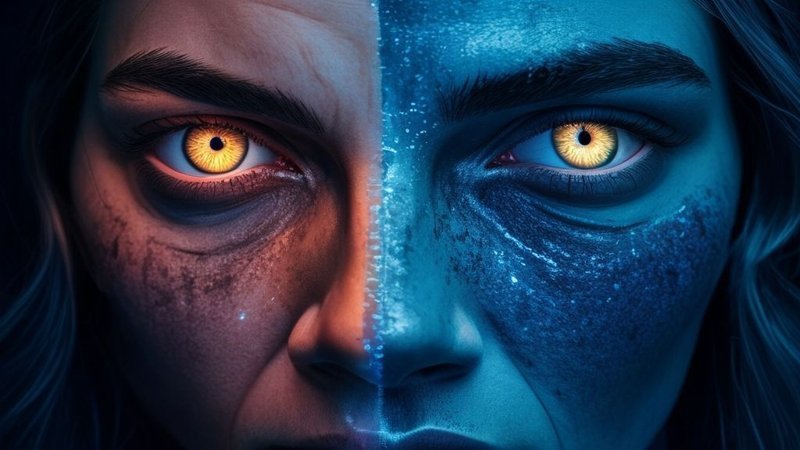
Now, back to the heart of the storm. Have you ever considered your body language while browsing? Your bent neck. Your hunched shoulders. You are in a posture of “surrender.” You are submitting to the will of Silicon Valley programmers who have decided how you should feel today. These programmers use “psychological manipulation” techniques to make your phone the sole source of your identity. Digital identity disorder has become a silent epidemic. You no longer possess a single “self.” Instead, you experience a fragmented existence:
A curated “self” on Instagram
A performative “self” on Twitter
A third, often hidden, “self” in reality
This division generates chronic anxiety: Will I look good enough? What if they discover my true self? The truth is, you are afraid. Afraid of being ordinary. The platforms have convinced you that “ordinary” is death. You must be exceptional, brilliant, and always the center of attention. This is the essence of pathological narcissism: the constant need for external validation. When people stop looking at you, you feel as if you no longer exist. Do you realize the horror of this idea? Your very existence has become dependent on a stranger’s touch in another continent. This is modern slavery in its most splendid digital form. You adorn yourself for strangers while extinguishing your inner light.
The Digital Panopticon: Your Existence Under Scrutiny
Look at your hands now. Do you feel the coldness of metal and glass? This device is not a window to the world; it is a wall separating you from your true self. Constant comparisons steal your contentment. You see others’ travels, their food, their successes, and feel your own life is dull. But you forget that you are only seeing the “display window.” No one posts a picture of a midnight panic attack. No one photographs their shame after a personal failure. We all lie to each other in this grand mirror. The result is “collective isolation.” We are together in the digital space, yet more alone than ever. What happens to your mind when you receive a negative comment? Your world collapses. Why? Because you’ve tied your self-worth to the opinion of someone who doesn’t know you. You’ve given the keys to your psychological sanctuary to the public. You now live in a digital “panopticon,” a glass prison where everyone watches everyone, and everyone pretends to be happy. Your real-world body language becomes disturbed. You find it difficult to make genuine eye contact, because you’ve grown accustomed to looking at lenses, not eyes. Eyes hold a truth that no algorithm can process.
Frequently Asked Questions
How does a phone ‘steal’ your identity?
Your phone facilitates digital platforms that act as psychological laboratories, prompting you to constantly compare yourself, seek external validation through likes, and fragment your identity into curated online personas, leading to a loss of your true self.
What is ‘illusory validation’?
Illisory validation is the belief that thousands of followers love you, when in reality, they love the image you project online, which has often been modified by AI programs. This creates a cycle of mutual narcissism where people use each other’s projected images as mirrors.
What is ‘digital identity disorder’?
Digital identity disorder is a silent epidemic where individuals no longer possess a single coherent self. Instead, they have fragmented identities across different platforms (e.g., an Instagram self, a Twitter self, and a real-world self), leading to chronic anxiety and a fear of their ‘true’ self being discovered.
What is the ‘digital panopticon’?
The digital panopticon refers to the experience of living in a virtual ‘glass prison’ where everyone watches everyone, and everyone pretends to be happy. This constant scrutiny and tying self-worth to public opinion can lead to the collapse of one’s world over negative comments and distort real-world body language.
How does brain chemistry contribute to phone addiction?
Every ‘like’ received on digital platforms delivers a small dose of dopamine, creating an intoxicating shot that momentarily alleviates feelings of loneliness. However, when the dopamine wears off, users are left with an intensified void, driving them to seek more external validation in a vicious cycle.