Titanoboa: The Colossal 42-Foot Snake That Ruled After Dinosaurs
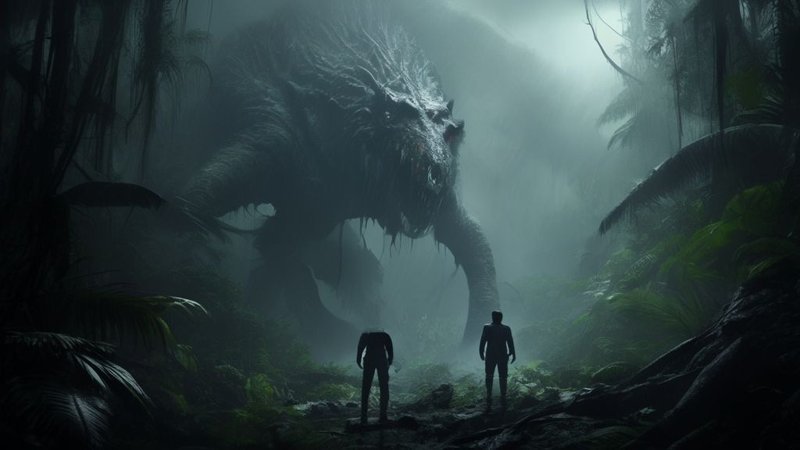
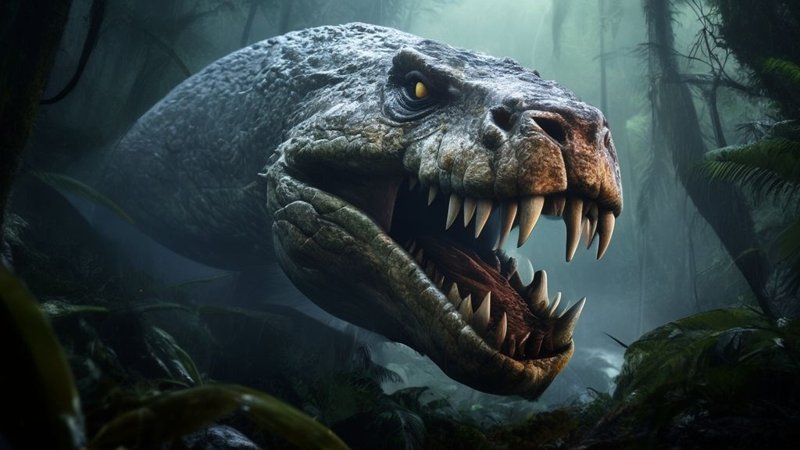
Imagine standing in the heart of a rainforest sixty million years ago. The silence here is not serene, but a harbinger of impending doom. The ground beneath your feet does not tremble with the steps of a giant dinosaur; their era has passed. Yet, you sense a strange movement in the stagnant water beside you – a silent, fluid motion leaving no trace. Suddenly, a head as wide as a household gate emerges. Cold eyes track your every breath. You are now face-to-face with Titanoboa, the creature that inherited the throne after the demise of the giants.
Following the famous asteroid impact sixty-six million years ago, darkness prevailed. The dinosaurs, dominant for long centuries, vanished. This disappearance left an immense void at the apex of the food chain. Nature abhors a vacuum. The Earth began to recover dramatically, with temperatures soaring to extreme levels. The planet transformed into a giant greenhouse. In the ancient forests of Colombia, specifically in the Cerrejón region, a new leviathan began to take shape. This creature possessed neither the sharp claws nor fangs of a T-Rex, but rather an endless, muscular cord of a body.
Anatomy of a Giant: How Heat Fueled the Serpent
Titanoboa’s scale redefined predation. This immense snake could reach lengths of thirteen meters (42 feet), a size equivalent to a large school bus. Its weight exceeded 1,135 kilograms (2,500 pounds), surpassing that of an entire compact car. Imagine the compressive force of these muscles as it coiled around its prey. It didn’t merely break bones; it reduced the body to rubble in mere seconds. Its girth could reach a full meter at its thickest point. Compare this giant to other monarchs of the ancient world.
But why did it achieve such immense size? The answer lies in its cold-blooded nature. Reptiles depend on ambient environmental heat for their growth. During the Paleocene epoch, carbon dioxide levels were exceptionally high. This led to a natural greenhouse effect, raising average tropical temperatures to 34 degrees Celsius. This elevated heat served as fuel for Titanoboa’s growth. The warmer it became, the faster its metabolism, allowing its cells to divide and grow to sizes unprecedented in reptilian history.
Ambush Tactics and the Colombian Discovery
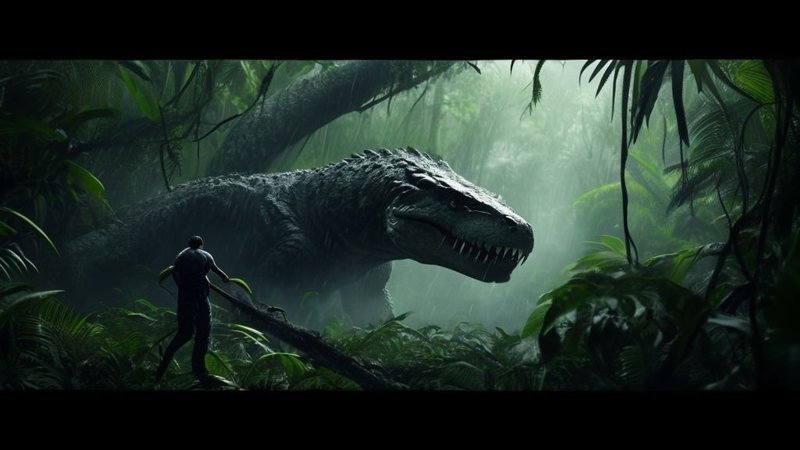
Consider its daily environment: dense swampy forests, giant trees obscuring sunlight, and murky waters brimming with deadly opportunities. Titanoboa was no ordinary snake; it was an ambush predator, spending most of its time in water. Its heavy body made terrestrial movement arduous, but in water, it became as agile as lightning. It preyed on giant crocodiles and turtles the size of dining tables. Indeed, crocodiles were mere snacks for it. It would surge from beneath the water with astonishing speed, clamp down with its powerful jaws, and then commence the lethal constriction.
The discovery of this formidable creature began in 2009, when scientists in a Colombian coal mine unearthed gigantic vertebrae. Initially, they believed these belonged to a colossal crocodile, but closer examination revealed a startling truth: they were the vertebrae of a snake unlike any the world had ever seen. Remains of twenty-eight individuals of this species were found. This discovery completely reshaped our understanding of events following the dinosaur extinction.
The Cooling Earth: Death Sentence for a Behemoth
Titanoboa was the ecological arbiter of its time, but its reign was not destined to last forever. Just as heat granted it power, it also ultimately spelled its demise. Over millions of years, tectonic plate movements began to shift, mountains began to rise, and oceanic currents altered their courses. The planet gradually began to cool.
This temperature drop delivered a death sentence to Titanoboa. As a cold-blooded creature of such immense size, its body could not sustain vital functions in a colder climate. The tropical rainforest habitats, its sole home, began to shrink. Its food sources either disappeared or migrated. With every degree the Earth cooled, Titanoboa lost a measure of its strength. The planet could no longer sustain this behemoth. Massive geological changes always result in a biological reckoning.
The Age of Mammals and Lessons in Adaptation
Titanoboa’s disappearance opened the door wide for the emergence of new monarchs. Mammals, which had lived in the shadows and hidden in burrows, began to emerge. Mammals possessed a significant competitive advantage:
Endothermy: The ability to internally regulate their body temperature.
Independence: They did not require the blistering sun to begin their day.
These smaller creatures began to grow and evolve. Reptiles, meanwhile, began to decrease in size to adapt to the new climate. The era of colossal reptiles had ended, giving way to the age of mammalian dominance that we inhabit today.
The story of Titanoboa is not merely about a massive snake; it is a lesson in the fragility of power in the face of nature’s vicissitudes. Biological grandeur is always tied to environmental conditions. And when those conditions change, neither your length nor your muscular strength can provide salvation.
Frequently Asked Questions
How large was the Titanoboa?
Titanoboa could reach lengths of up to 13 meters (approximately 42 feet), making it roughly the length of a modern school bus. Its weight exceeded 1,135 kilograms (2,500 pounds), and its girth could reach a full meter at its thickest point.
Why did Titanoboa grow to such an immense size?
As a cold-blooded reptile (poikilotherm), Titanoboa’s growth was directly fueled by ambient temperature. During the Paleocene epoch, high carbon dioxide levels created a massive greenhouse effect, raising average tropical temperatures to about 34 degrees Celsius. This extreme heat accelerated its metabolism, allowing it to achieve unprecedented size.
When and where were Titanoboa fossils discovered?
The first Titanoboa fossils, consisting of gigantic vertebrae, were discovered in 2009 in the Cerrejón coal mine in Colombia. This region was once a dense, swampy rainforest ecosystem.
How did the Titanoboa hunt and what did it eat?
Titanoboa was an ambush predator, primarily aquatic due to its massive weight. It preyed on large animals like giant crocodiles and huge turtles. It would constrict its prey with immense muscular force, crushing its bones instantly.
Why did Titanoboa become extinct?
Titanoboa went extinct because the global climate gradually began to cool. As a cold-blooded giant, its massive body could not sustain its vital functions in lower temperatures. The shrinking of its specific tropical habitat and the disappearance of its food sources sealed its fate.