Zealandia: The Eighth Lost Continent Hidden Beneath the Pacific Waves

Zealandia: The Eighth Lost Continent Hidden Beneath the Pacific Waves
The geography you were taught is a deliberate simplification. Beneath the vast, dark waters of the Pacific lies Zealandia, a landmass five million square kilometers wide, functioning as the Earth’s eighth continent. For 85 million years, it has remained submerged, hidden from view by the ocean’s pressure. This is not just a submerged plateau; it is a fully formed continental crust that challenges everything you thought you knew about our planet’s structure.
Navigate Content
The Concealed Giant: Defining the Eighth Continent
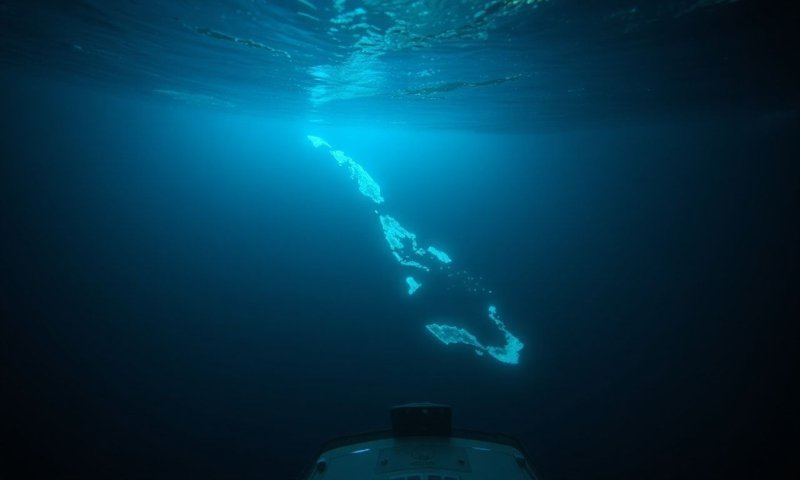
While you see only waves, draining the Pacific would reveal a colossal plateau defined by thick continental crust, not volcanic peaks. In 2017, scientists formalized Zealandia’s status, setting it apart from mere islands. The core question remains: How does an entire continent vanish beneath the waves? The answer lies in a catastrophic geological process—the violent fracturing of the ancient supercontinent Gondwana. This separation involved immense tension, leading to what geologists term ‘tectonic thinning.’
Stretched to the Brink: The Mechanics of Submergence
Imagine stretching dough until it becomes nearly transparent; this happened to Zealandia. Normal continental crust averages forty kilometers in thickness, but Zealandia was pulled so violently that sections thinned to less than ten kilometers. This dramatic loss of thickness eroded its buoyancy. Consequently, gravity and hydrostatic pressure forced this massive land away from the sun, sinking it below sea level over epochs. Only the peaks of New Zealand and New Caledonia remain visible today—the tips of a geological iceberg.
Fossilized Forests: Proof of a Surface Life
The reality of Zealandia’s past existence is etched in the cores retrieved from the seafloor. The research vessel JOIDES Resolution drilled deep to extract evidence. What they found refuted the idea of a barren abyss:
- Pollen from Terrestrial Plants: Microscopic remnants indicating complex flora.
- Warm Forest Organisms: Fossils belonging to life that thrived in above-water environments.
This evidence confirms that Zealandia was once a lush, green paradise, violently torn from the surface world.

Geopolitics Beneath the Waves: The Real Reason for Naming
The official declaration of Zealandia as a ‘continent’ is viewed by some as far more than an academic curiosity; it is the opening salvo in a geopolitical resource war. The title change is crucial because of international law:
- A continent implies defined continental margins.
- These margins grant exclusive economic rights stretching hundreds of miles into the ocean.
This pursuit is for billions in potential oil, gas, and rare earth minerals. Science, in this context, becomes a calculated tool deployed to legally secure future wealth, effectively making Zealandia the new underwater ‘El Dorado.’ You might also find parallels in geological mysteries that shift our understanding of history, such as the secrets hidden beneath other vast ice/ocean masses.
A Fragile Foundation
The very criteria used to classify Zealandia are suspiciously bent. It fails the classical thickness and elevation tests, yet the designation was granted anyway. This flexibility suggests that geological definitions are secondary to strategic needs. Zealandia serves as a potent symbol of terrestrial fragility—a reminder that the ground we rely on for stability is subject to immense, slow-motion planetary violence. While geological forces dictate massive change, we must also consider historical disasters, like the Storegga Slide, which reshaped ancient coastlines in an instant.
Frequently Asked Questions
Generated by AI Content Architect
About The Author