Unveiling the Pacific’s Secret: The Hidden Underwater Network Controlling the World
Beneath the dark waters of the Pacific Ocean lies a network that not only listens but monitors every pulse of the planet’s heart. Do you believe the depths are silent? You are mistaken, for you are currently moving above the largest intelligence framework known to humanity, operating in complete silence at this very moment.
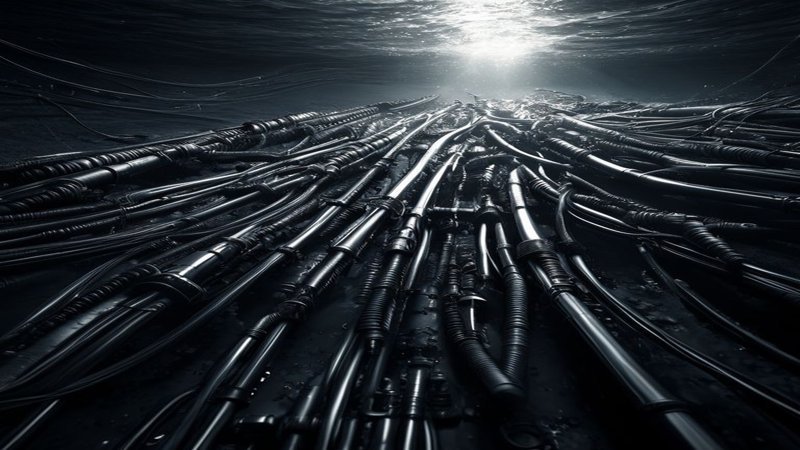
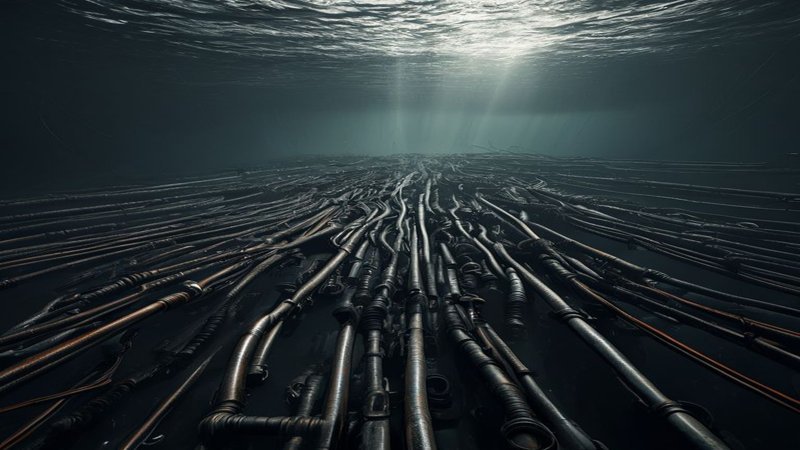
You gaze at a map, seeing a vast blue expanse covering one-third of our planet, yet you do not perceive what lies beneath the surface. The Pacific Ocean is not merely water; it is the largest theater of covert operations in human history. Imagine yourself now descending into absolute darkness, where pressure intensifies to the point of crushing steel. In these depths, there is no sun, no air, yet there are eyes and ears that never sleep. A network of sensors and fiber optic cables extends for thousands of miles, connecting continents in an unsettling silence. This network is not solely dedicated to transmitting the internet data you currently use; it is a colossal surveillance system, engineered to detect the slightest vibration from a nuclear submarine or even suspicious movement on the seabed.
Decades ago, major powers began deploying this technology. During the peak of the Cold War, a system known as SOSUS existed. This system comprised arrays of hydrophones placed on the ocean floor to track Soviet submarines. Today, however, this technology has evolved into something far more terrifying and intricate.
Automated Cities and Unexplained Phenomena
We are discussing the presence of massive technological structures operating in the depths of the Pacific Ocean—structures that go beyond mere eavesdropping. They are miniature automated cities, powered by nuclear energy or ocean currents, managing swarms of drones that do not fly, but swim. These devices can remain on the seabed for years undetected. They monitor ships, cables, and even you, should you approach restricted areas.
Consider for a moment the sheer scale of this environment. The Pacific Ocean encompasses the Mariana Trench, the deepest point on Earth. There, at depths of eleven thousand meters, inexplicable sounds have been recorded. Some are regular mechanical noises, distinct from whale songs or tectonic plate movements. Are they secret installations belonging to shadow governments? Or are they remnants of ancient technology reactivated? Unofficial reports indicate massive underwater equipment movements in remote areas like Point Nemo. This point is the furthest place from land on Earth; it serves as a spacecraft cemetery where old satellites are brought down. But why is this specific location chosen by all? The reason is not merely its remoteness, but because the depths there provide ideal cover for technological structures that cannot be observed from space.
The Deep-Sea Data Arteries and Global Control
You feel fear now, and rightfully so. For you realize that global control is not achieved solely through satellites but through dominion over underwater information pathways. Ninety-nine percent of the world’s data traverses fiber optic cables on the ocean floor. These cables are the arteries through which money, information, and secrets flow. He who possesses the ability to access these arteries in the depths of the Pacific holds the keys to the world. Current technology has made an astounding leap with incredible speed. Now, what is known as Distributed Acoustic Sensing (DAS) is being employed. This means the cable itself transforms into a colossal microphone spanning thousands of kilometers. Any movement above the cable—any passing ship, any approaching diver—is detected and analyzed by artificial intelligence in secret data centers located beneath mountains.
Imagine the immense pressure these structures must endure. We are talking about thousands of tons per square inch. To construct anything there, one requires materials unheard of by the general public: alloys of titanium and advanced ceramics, capable of resisting corrosion and pressure for centuries. The ability to control these underwater information pathways is paramount to global power.
The Unheard Weapons and Silent Arms Race
In 1997, a mysterious sound known as ‘The Bloop’ was recorded. It was so powerful that hydrophones five thousand kilometers apart detected it simultaneously. At the time, it was attributed to breaking ice, but military analysts hold a different opinion. Could it have been an explosion in a nuclear reactor of an underwater facility? Or perhaps a test of a new acoustic weapon being developed in the silence of the deep?
The chasm between what we know and what truly transpires in the depths of the Pacific Ocean is terrifying. You live in a world where you believe you are protected by geographical borders, yet beneath the waves, no such boundaries exist. A silent arms race is currently underway. Major nations are constructing what is termed the ‘Great Dragon Wall’ underwater: a network of sensors and armed platforms designed to prevent any infiltration of territorial waters. These platforms are not merely sensing devices but massive structures containing missiles and torpedoes, ready for launch at the push of a button from thousands of miles away.
Corporate Ambition and The Unseen Impact
Furthermore, there is the dark side of major corporations. Deep-sea mining is the new gold rush. Companies seek rare metals crucial for manufacturing electric car batteries and smartphones. However, to access these metals, logistical bases must be established on the seabed. These bases are fully automated cities. They operate ceaselessly, excavating, crushing, and transporting, far from environmental or legal oversight. This intense technological activity is altering the nature of the ocean. Sounds that once belonged to nature have been replaced by the roar of engines and electromagnetic pulses.
You now wonder why we don’t see images of these structures. The answer is simple: water absorbs light very quickly. Satellites cannot see more than a few hundred meters beneath the surface. To view the seabed, you need sonar, and sonar is controlled by those who possess this technology. We rely on the maps provided by these entities. Have you ever considered the areas that appear blurred or black on Google maps, particularly in oceanic regions?
Frequently Asked Questions
What is the ‘Hidden Surveillance Network’ in the Pacific Ocean?
It is described as the largest intelligence framework known to humanity, comprising a vast network of sensors, fiber optic cables, and advanced technological structures operating in complete silence beneath the Pacific Ocean. Its purpose is to monitor global activities, from submarine movements to internet data.
How has underwater surveillance technology evolved since the Cold War?
During the Cold War, the SOSUS system used hydrophones to track Soviet submarines. Today, this technology has evolved into miniature automated cities powered by nuclear energy or ocean currents, managing swarms of underwater drones, and utilizing Distributed Acoustic Sensing (DAS) where fiber optic cables themselves act as colossal microphones.
What role do fiber optic cables play in global control and surveillance?
Ninety-nine percent of the world’s data, including money, information, and secrets, traverses fiber optic cables on the ocean floor. These cables are not only used for data transmission but are also integrated into surveillance systems like DAS, allowing them to detect and analyze any movement or vibration above them, giving those who control access to these ‘arteries’ significant global power.
What is ‘The Bloop’ and what are the theories behind it?
‘The Bloop’ was a mysterious, ultra-low-frequency sound recorded in 1997, so powerful it was detected by hydrophones five thousand kilometers apart. While initially attributed to breaking ice, military analysts speculate it could have been an explosion in a nuclear reactor of an underwater facility or a test of a new acoustic weapon.
Why is Point Nemo significant to these hidden underwater structures?
Point Nemo, the oceanic pole of inaccessibility, is the furthest place from land on Earth and serves as a spacecraft cemetery. Unofficial reports suggest massive underwater equipment movements occur there. Its remoteness and deep depths provide ideal cover for technological structures that cannot be observed from space, making it a strategic location for clandestine operations.