Tutankhamun’s Cosmic Dagger: The Ancient Egyptian Weapon Forged from a Meteorite
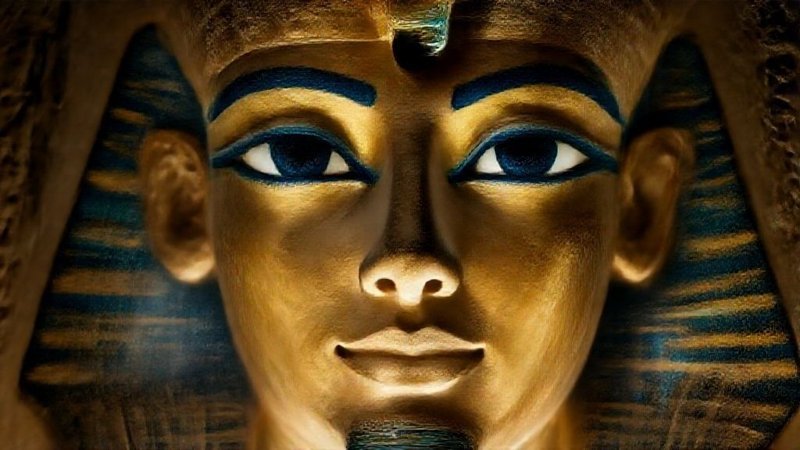
Here, where the dust of history merges with the fragrance of legend, and where the hands of time stop, unable to explain what the eye has never before witnessed, we commence our journey. Imagine yourself standing in the heart of the Valley of the Kings, in the year 1922, as Howard Carter broke the silence of centuries by piercing a hole in the fabric of time. Amidst mounds of gold and innumerable treasures, and within the folds of linen wrappings that had cradled the body of the young pharaoh Tutankhamun for over three thousand three hundred years, something was found that should not have been there. It was not pure gold, nor a rare gemstone, but the blade of a dagger gleaming with an enigmatic brilliance, defying rust and the elements of decay as if crafted only yesterday.
The Bronze Age Paradox: An Iron Blade from Antiquity
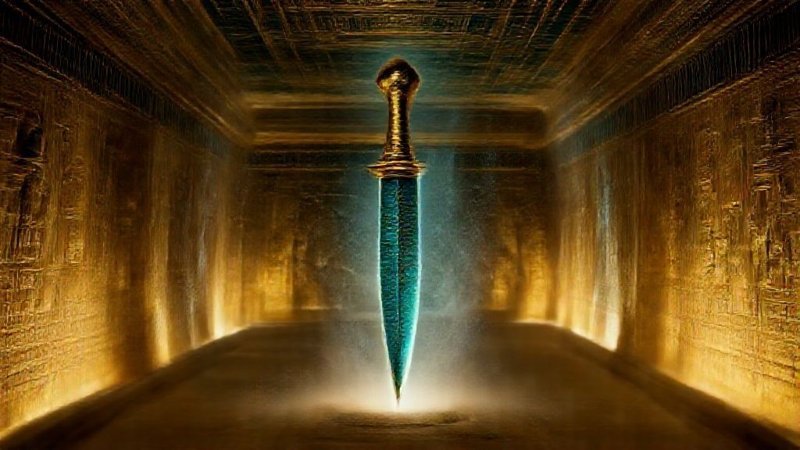
You now stand before the great enigma that has astounded archaeologists and physicists alike. In the Bronze Age, when humanity struggled to shape copper and tin, how could a boy-king possess a weapon forged from superior-quality iron, exhibiting a technical finesse that preceded the Iron Age by hundreds of years? It is the paradox that compels one to ask: Did the pharaohs possess lost technology? Or does this dagger carry within its atoms a story grander than mere human craftsmanship? When the dagger was extracted in 1925, no one realized that this blade did not belong to the soil of this land, but was a strange visitor from the farthest reaches of the cosmos. This polished iron blade resisted rust for thirty-three centuries, a miracle that has baffled scientists for decades, much like the Delhi Iron Pillar’s own enduring mystery.
Celestial Forging: The Scientific Revelation
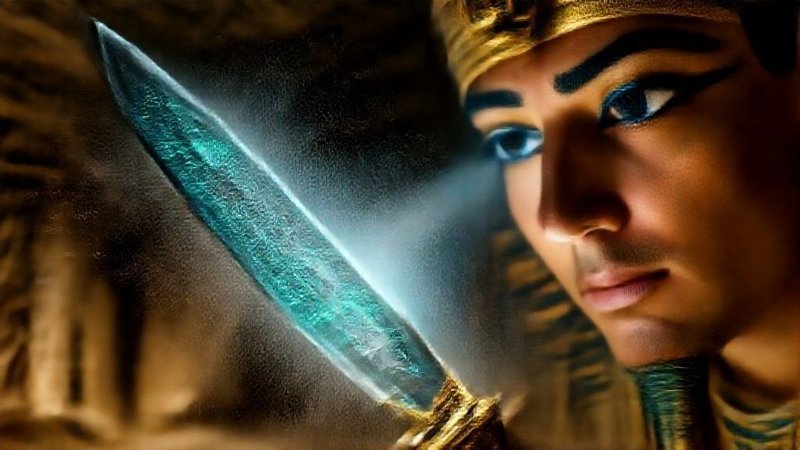
The true secret of Tutankhamun’s dagger lies within precise scientific analyses conducted in 2016, which completely overturned historical understanding. Using flash X-ray technology, scientists discovered that the chemical composition of this blade contained high percentages of nickel and cobalt. This chemical fingerprint is found only deep within meteorites falling from the sky. We are not speaking here of myths, but of a scientific fact indicating that the ‘Dagger of the Sky’ was forged from extraterrestrial material that fell from the stars, shaping the blade of the unconquerable pharaoh. This discovery links Tutankhamun’s weapon to other extraordinary artifacts, such as the sky-iron daggers made from Tibetan Thokcha meteorites.
Beyond Earthly Craftsmanship: The How and Why
But did the pharaohs truly understand the celestial origin of this metal? And what rituals surrounded the creation of this ‘non-terrestrial’ weapon? Just when you think science has provided all the answers, deeper and more chilling questions emerge:
How could they have tracked and identified the falling meteorite?
How did they melt and forge it without kilns capable of reaching the required temperatures?
The ancient Egyptians called this metal ‘bia-in-pet,’ meaning ‘iron from the sky,’ viewing it as a direct gift from the gods—a sacred material befitting only a pharaoh who ruled the Earth in the name of the heavens. This suggests an understanding that challenges our perceptions of ancient Egyptian technology and knowledge of the cosmos.
The Divine Weapon: Artistry and Symbolism
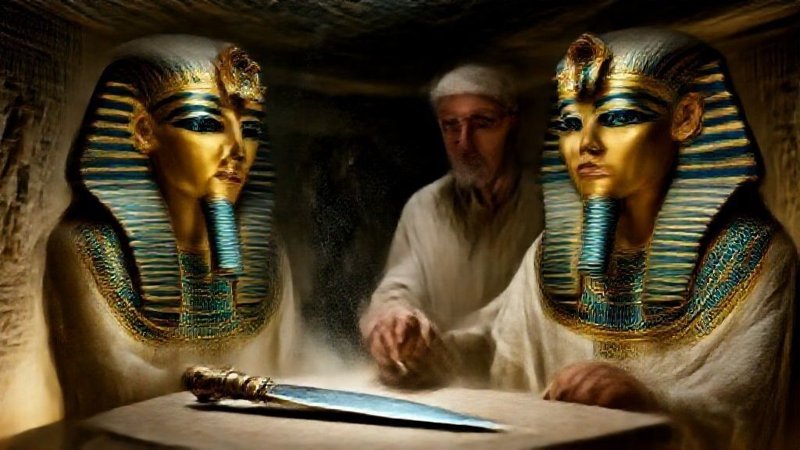
Imagine yourself standing in that burial chamber, where the air is thick with the scent of time and ancient resins. Before you lies a dagger unlike any other; it is a masterpiece embodying the pinnacle of pharaonic luxury and the assertion of immortality. The dagger’s hilt is crafted from pure gold, intricately engraved with lifelike botanical motifs, and inlaid with:
Blue lapis lazuli stones mimicking the azure of the clear sky
Red carnelian dripping like the blood of enemies
Turquoise holding the color of the Nile at its peak flood
The scabbard itself was an epic canvas, decorated with depictions of falcon feathers and the papyrus flower, proclaiming to the world that the owner of this weapon was not merely a king, but a chosen son of the gods. Tutankhamun chose to be buried with this specific dagger resting against his right thigh, as if guarding his eternal secret.
An Unsolved Riddle: Echoes from the Cosmos
This pressing question, knocking at the door of your consciousness now, is no coincidence, but the echo left by the first footsteps in that narrow, dark corridor of the Valley of the Kings. The answer lies not only in the iron particles but in the secrets of laboratories that recently unveiled astonishing details about the origin of the meteorite from which the blade was extracted. This leads us to a journey to discover the sites where these sacred stones fell, and how the debris of stars transformed into a symbol of divine authority on Earth, wide open to a single question that will haunt your imagination until the very last moment… If this iron is meteoric, and meteorites are incredibly hard and difficult to work with, how did ancient artisans achieve such technical mastery? The cosmic dagger remains a profound testament to ancient ingenuity, or perhaps, a hint at knowledge far beyond our current understanding.
Frequently Asked Questions
What makes Tutankhamun’s dagger unique?
Tutankhamun’s dagger is unique because its blade is made from high-quality iron, which was extremely rare and difficult to work with during the Bronze Age, hundreds of years before the Iron Age. Furthermore, scientific analysis confirmed it was forged from extraterrestrial material – a meteorite.
How was the meteoric origin of the dagger confirmed?
In 2016, precise scientific analyses using flash X-ray technology revealed that the dagger’s blade contained high percentages of nickel and cobalt. This specific chemical fingerprint is characteristic only of iron found deep within meteorites.
What challenges does the dagger’s existence pose to historical understanding?
The dagger challenges historical understanding by raising questions about ancient Egyptian technological capabilities. It’s puzzling how they could have tracked and identified falling meteorites, and then melted and forged such hard material without kilns capable of reaching the necessary high temperatures.
What did the ancient Egyptians call this type of metal?
The ancient Egyptians referred to this celestial metal as ‘bia-in-pet,’ which translates to ‘iron from the sky,’ indicating their probable understanding of its extraterrestrial origin.
What was the significance of the dagger being buried with Tutankhamun?
The dagger’s intricate design, featuring a gold hilt inlaid with lapis lazuli, carnelian, and turquoise, along with its celestial origin, suggests it was not just a decorative object but a powerful symbol of divine authority. It was a sacred material befitting a pharaoh considered a son of the gods, guarding his eternal secret.