Tibetan Supergenes: The Extinct DNA Granting High-Altitude Survival
Imagine trying to breathe through an extremely narrow straw while running atop a towering mountain that touches the clouds. For most humans on this planet, this scenario represents certain death within mere minutes due to tissue asphyxiation. Yet, there is a people living in those deadly altitudes, calmly going about their daily lives, their children running on the slopes without ever losing their breath.
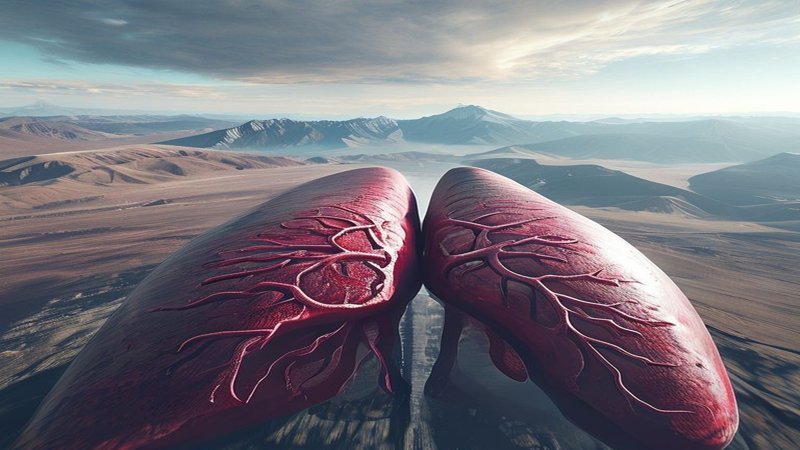
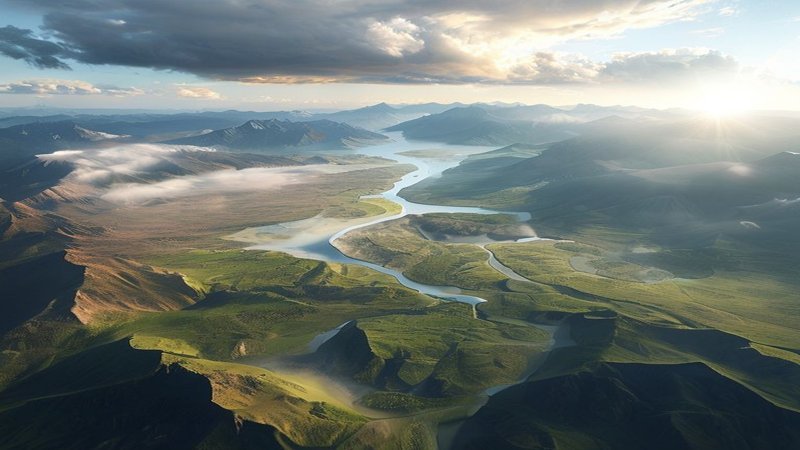
You now stand on the roof of the world, on the Tibetan Plateau, where the land rises more than four thousand meters above sea level. In this desolate part of our planet, oxygen levels in the air are reduced by up to forty percent compared to what you breathe now at sea level. If you were to ascend there suddenly, your body would begin to collapse at an alarming rate. Your heart would pound wildly, attempting to pump more blood. You would experience a splitting headache, and your lungs would fill with fluid in a desperate attempt to absorb scarce oxygen molecules. This is what we call altitude sickness, nature’s final warning that this environment is not for you. Yet, Tibetans look at you with surprise. They do not suffer from headaches, nor do their hearts enlarge, nor does their blood thicken. These people have deciphered the code of survival in impossible conditions.
The EPAS1 Gene: A Double-Edged Sword
The secret lies not in their athletic training or strength of will, but hidden deep within their DNA. For many years, scientists believed that Tibetans possessed larger lungs or a higher red blood cell count, similar to Andean populations in South America. However, the truth was far stranger and more astonishing. When researchers compared plateau inhabitants with lowland populations, they found a fundamental difference in a gene called EPAS1. This gene is responsible for regulating the body’s response to oxygen deficiency. In your body, when oxygen is scarce, this gene immediately triggers the production of vast quantities of red blood cells. You might think this is beneficial, but it is actually catastrophic. The increase in red blood cells makes your blood viscous like black treacle, making it difficult for the heart to pump and leading to fatal clots and blockages.
Tibetan Physiology: Engineering for Efficiency
In the Tibetan body, however, this gene has undergone a unique mutation that causes it to behave with extraordinary intelligence. Instead of increasing blood volume, their bodies have focused on improving the efficiency of using the oxygen already present. They have developed a vastly expanded network of blood vessels that allows blood to flow with astonishing smoothness, without needing to increase its viscosity. They breathe at a faster rate and dilate their blood vessels using nitric oxide gas in quantities ten times greater than the average human. This gas acts as a magical vasodilator for arteries, ensuring that every cell in their bodies receives nourishment despite the scarcity of atmospheric fuel.
The Ghost in Their Genes: A Denisovan Legacy
But the question that has puzzled scientists for centuries is where this mutation originated. The evolution of an organism to live in such an environment typically takes hundreds of thousands of years. Yet, genetic studies have shown that Tibetans diverged from their lowland relatives less than three thousand years ago. This is an extremely short period by human evolutionary standards, considered but a blink of an eye. How did this radical transformation occur with such astonishing speed? The answer was hidden in a cold, dark cave called Kara-Kaste high in the mountains.
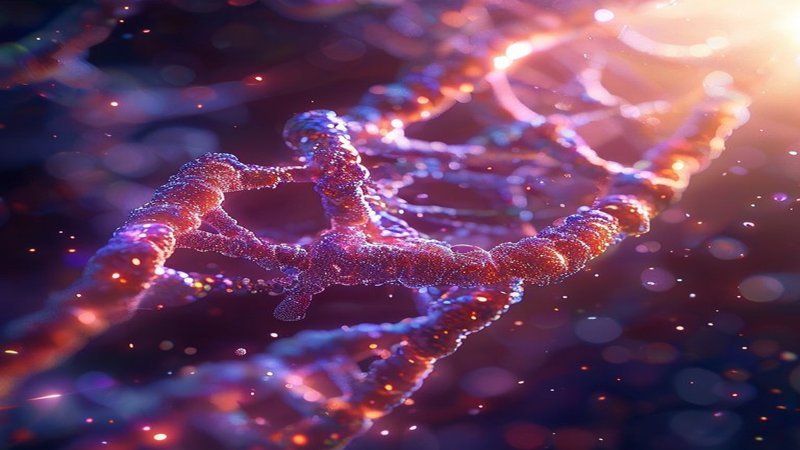
There, scientists discovered the remains of an ancient, extinct human called the Denisovan. This type of hominin lived in this region tens of thousands of years ago. When scientists analyzed the DNA of this extinct human, they were shocked by the result. The gene that allows Tibetans to breathe at high altitudes is an exact copy of a Denisovan gene. An ancient interbreeding occurred between the ancestors of Tibetans and this extinct species, leading to the transfer of these “supergenes” to their offspring. Tibetans inherited their extinct ancestors’ ability to survive on towering peaks. This is not merely a random mutation but a valuable biological legacy that enabled them to colonize an environment others dare not enter. Learn more about your own genetic history in You Are a Living Ghost: The Haunting Science of Your DNA & Ancestral Legacy.
A Testament to Resilience: Life Above the Clouds
Observe the Tibetan heart at work. It does not strain itself to pump thick blood but operates with a calm, regular rhythm. Their lungs are not necessarily larger, but the blood vessels surrounding their alveoli possess a superior capacity for gas exchange. Even their children are born at normal weights and with perfect health, at a time when the children of outsiders suffer developmental deficiencies due to oxygen deprivation in the womb. It is a marvel of bioengineering, refined by thousands of years of isolation above the clouds.
Contemplate with me the geographical harshness that surrounds them. Temperatures drop tens of degrees below zero. Winds howl with a force that uproots tents. And atmospheric pressure is so low that water boils at temperatures far below what you are accustomed to. In this environment, every simple act becomes a challenge for survival. Walking a few meters requires effort equivalent to running a marathon for you. Yet, the Tibetan carries heavy loads and ascends slopes with a smile. Their circulatory system is not merely a transporter of nutrients but a highly advanced cooling and heating system that protects their vital organs from freezing and collapse.
This unique adaptation has led scientists to re-examine our definition of human capabilities. We are not merely identical organisms inhabiting a single planet. We are a collection of genetic stories written with the ink of suffering and adaptation. Every cell in a Tibetan’s body tells a tale of resilience against the impossible. They represent the fastest documented case of evolution in all of human history. While natural evolution requires eons to alter a single trait, these people managed to change their blood physiology in a few centuries to counter the threat of extinction that loomed. This rapid change is an ancient secret to survival in extreme conditions.
Frequently Asked Questions
What is the primary challenge for humans at high altitudes?
At high altitudes, oxygen levels are significantly reduced, leading to tissue asphyxiation, altitude sickness symptoms like headaches, rapid heart rate, and fluid in the lungs, which can be fatal for most people.
How does the EPAS1 gene in Tibetans differ from the average human?
In average humans, the EPAS1 gene triggers increased red blood cell production in low-oxygen conditions, making blood dangerously thick. In Tibetans, a unique mutation in EPAS1 prevents this thickening, instead promoting efficient oxygen use through expanded blood vessels, faster breathing, and higher nitric oxide levels.
What is the surprising origin of the Tibetans’ high-altitude adaptation?
The adaptation originated from an ancient interbreeding event between the ancestors of Tibetans and an extinct human species called the Denisovans. Tibetans inherited a copy of the Denisovan EPAS1 gene, which provided the ‘supergenes’ necessary for high-altitude survival.
How quickly did this evolutionary adaptation occur in Tibetans?
Genetic studies suggest that Tibetans diverged from lowland relatives less than three thousand years ago, an incredibly short period by human evolutionary standards, making it the fastest documented case of evolution in human history.
What are some physiological benefits Tibetans exhibit due to their adaptation?
Tibetan hearts operate with a calm, regular rhythm without straining, their lungs’ blood vessels have superior gas exchange capacity, their children are born healthy without developmental deficiencies, and their circulatory system functions as an advanced cooling and heating system, all contributing to their resilience in harsh environments.