The Voynich Manuscript: Decoding History’s 600-Year-Old Unbreakable Cipher

The Voynich Manuscript: Decoding History’s 600-Year-Old Unbreakable Cipher
Opening the ancient leather cover reveals a universe you have never witnessed. Plants that have never sprouted on our soil and stars that have never shone in our sky. This is the Voynich Manuscript, a tome that has humbled modern science and remained inscrutable for centuries. It is not merely an old book; it is a black hole in the history of human knowledge, swallowing all who attempt to decipher its codes.
Navigate Content
Discovery and Material Authenticity
The enigma begins in 1912, when merchant Wilfrid Voynich acquired the manuscript in an Italian villa. This tome comprises 240 vellum pages, crafted from calfskin, which still carries the scent of the Middle Ages. Radiocarbon dating was conclusive: the vellum dates between 1404 and 1438, solidifying its age and ruling out modern forgery. The illustrations, vibrant despite their age, suggest mastery of natural pigments used centuries before established records, hinting at lost techniques, much like the secrets behind Unbreakable Roman Glass.
The Botanical and Balneological Anomalies
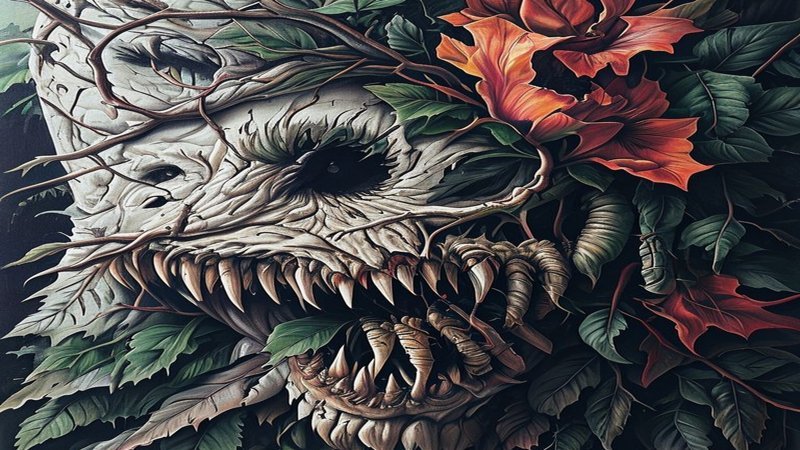
The manuscript is visually dominated by baffling illustrations, particularly in the botanical section which features 113 drawings of bizarre flora. These plants defy taxonomy; roots resemble fangs or claws, and leaves form impossible geometric shapes. Furthermore, the astronomical and ‘Nymphs’ (Balneological) sections present confounding celestial charts where zodiac signs are interwoven with naked women emerging from tubes and channels linking human organs to the cosmos. These visions suggest a lost cosmological philosophy bearing no resemblance to contemporary Arab, European, or Chinese medical texts.
The Language That Refuses to Speak
The deepest mystery lies in the script itself. Written in a unique alphabet bearing no resemblance to known scripts, the text flows with absolute regularity, left-to-right or vice-versa, with zero punctuation or discernible errors. The sheer confidence of the writing implies an author writing in a known, natural tongue. The true shock came in the 20th century: when analyzed by supercomputers, the text adheres to Zipf’s Law. This statistical property proves the writing is a genuine language structure, not random scribbling. The challenge remains: it is a language spoken by no one on Earth. The failure of World War II cryptographers to break it mirrors other unsolved textual puzzles like the Shugborough Code Enigma.
Contested Theories and Enduring Power
Despite rigorous analysis, theories suggesting Proto-Romance, encoded Hebrew, or Old Turkish have all failed scientific scrutiny. The manuscript resists every attempt at comprehension. Its historical journey is equally legendary: reputedly purchased by King Rudolf II of Bohemia for a vast sum, he believed it held secrets from Roger Bacon. It moved through courts and monasteries before landing at Yale University. Why does it captivate us? Because it forces us to confront the limits of human intellect. We are addicted to the silence of the unexplained, as detailed in studies of The Psychology of Mystery.
Frequently Asked Questions
Generated by AI Content Architect
About The Author