The Forgotten World War: Evidence of Ancient Global Conflict?

0
image_1-189


The Forgotten World War: Evidence of Ancient Global Conflict?
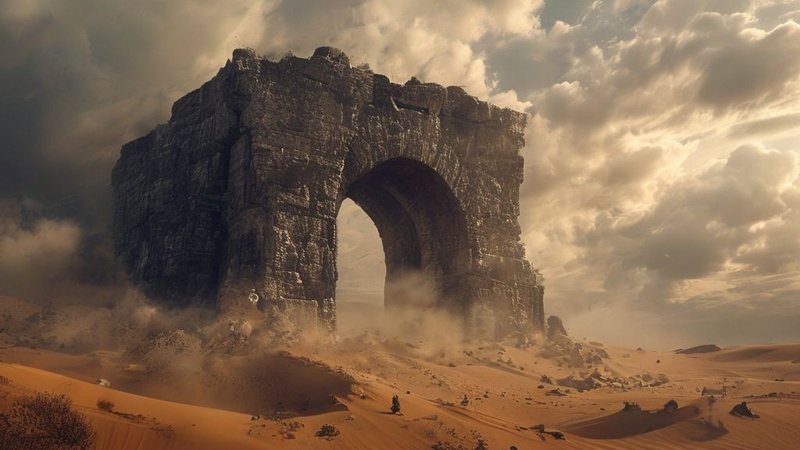
Have you ever wondered about civilizations crushed beneath the weight of time’s oblivion? Could there have been a devastating global war thousands of years ago, a war that obliterated its traces and closed its chapters forever in the book of human history?


Echoes of a Prehistoric Cataclysm

Imagine a world, a world steeped in the folds of ancient legends and whispers, a world yet untouched by the historian’s pen or the ink of written records. A world where ancient technologies surpassed our current understanding, and a conflict unfolded that transcended everything we know about warfare. We are not speaking here of Alexander’s conquests or Genghis Khan’s campaigns. Instead, we delve into the abyssal depths of time, where neither you nor any history professor possesses a single document testifying to what transpired. Yet the Earth itself, my friend, guards its secrets within its rock, its sands, and its silent geological strata.

Allow me to take you on a journey, a journey to discover scattered evidence, to glimpse threads woven into the fabric of time. These are archaeological and geological clues, speaking of a catastrophe that was not merely an earthquake or a local flood, but something grander and more terrifying. They speak of a forgotten global war, a war in which the ancients might have employed weapons beyond your wildest imagination, weapons rivaling, or even surpassing, the most formidable inventions of our modern civilization. Could these be the whispers of a lost civilization that vanished without a trace?
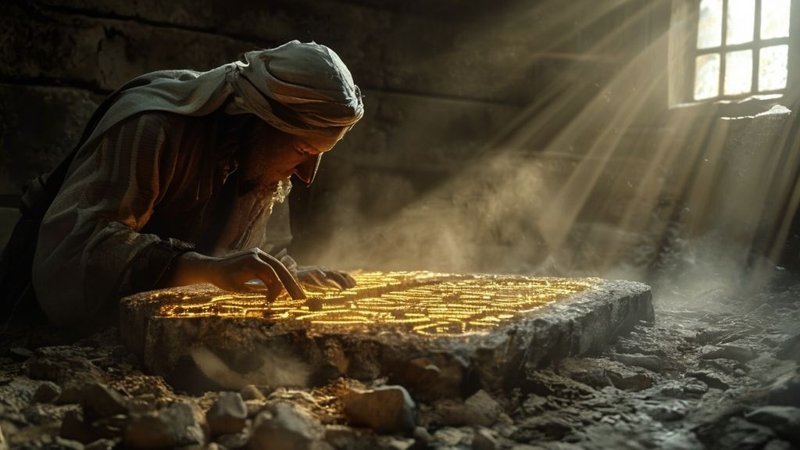
Echoes of a Prehistoric Cataclysm


Archaeological Anomalies: Vitrified Fortifications and Ancient Texts

Consider the vitrified fortifications. Yes, vitrified. In sites like the ancient forts of Scotland, and in parts of India such as Mohenjo-Daro, you find stone structures fused into glass. Can you imagine the immense heat required to transform rock into glass? It is heat that exceeds ordinary smelting furnace temperatures by thousands of degrees Celsius. Such heat cannot be produced by traditional fires or wood combustion. It requires a tremendous explosion, an energy that cannot be explained by purely natural phenomena of those eras. What could melt mountain rocks and fuse them in such a horrifying manner? These are not lightning strikes, nor are they volcanoes. They are the imprint left by an incomprehensible destructive force, hinting at technologies beyond our current understanding, much like the mysteries of lost cities and their builders.

Have you heard of the ancient Indian legends, specifically the “Mahabharata” and “Ramayana”? These texts describe “Vimanas,” or advanced flying vehicles, and speak of divine weapons unleashing “a column of glowing white smoke” and “a brilliance like a thousand suns.” They describe the complete destruction of cities, and warriors falling, feeling “dry and burning.” These texts speak of effects strikingly similar to those of nuclear radiation: hair and nail loss, poisoned food, and climate changes. Could these be mere myths? Or are they distorted memories of terrifying truths, memories passed down through generations that then donned the mantle of the supernatural due to a loss of comprehension, perhaps fueling a form of collective illusion?


Geological Footprints: Tektites and Ice Core Records

The evidence does not stop there. Let us turn to the realm of geology. Scattered across the planet are tiny glassy beads known as “tektites” and “spherules.” These beads form only under conditions of extreme heat and pressure, such as those produced by a massive meteor impact or a colossal explosion. While some can be explained by meteorites, their distribution and composition in certain areas raise questions about alternative origins. Could these be fragments of enormous explosions that occurred on Earth’s surface? Explosions perhaps not celestial in origin, but terrestrial.

And if you look at the ice core records, at the heart of polar ice which holds memories spanning millennia, you will find strange layers, layers indicating sudden and unexplained climate changes. Were these changes the result of a widespread catastrophic event? Were massive quantities of dust and ash released into the atmosphere, leading to a miniature nuclear winter or a short-lived artificial ice age? Reading these records requires an insight that penetrates these layers and transcends conventional explanations, similar to the profound shifts discussed in the astonishing truth of a polar reversal.
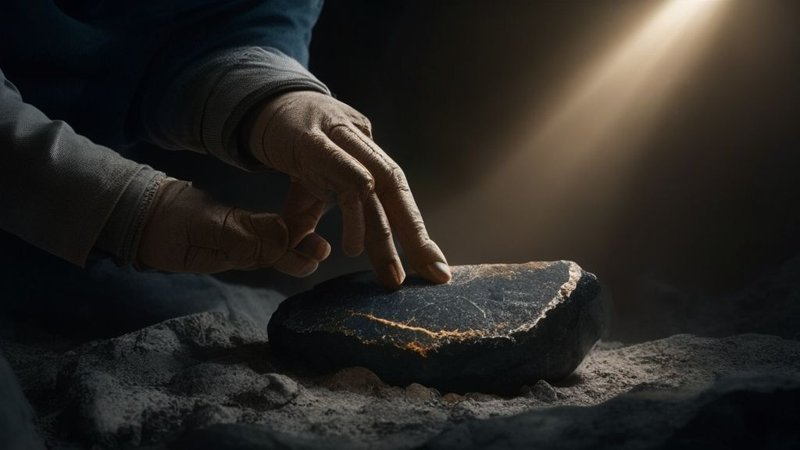
Geological Footprints: Tektites and Ice Core Records


The Annihilation and the Amnesia

Now, imagine with me. Imagine a world, perhaps advanced in its own unique way. Civilizations that rose, competed, and evolved, then reached the pinnacle of their power. Perhaps they possessed knowledge of technologies we do not understand today, technologies far exceeding what we conceive of the Stone Age. What if that knowledge, instead of leading them to peace and sustainable prosperity, led them to self-destruction? For humans, my friend, across the ages, have not changed much in their inclinations. The desire for control, the fear of the other, the quest for absolute power. These are all drivers of conflict as old as human existence itself, and they continue to drive us today. Perhaps these advanced societies resembled the advanced civilizations hidden beneath the ocean floor or Antarctica’s lost cities.

How could such a global war be completely forgotten? The secret lies in the magnitude of the catastrophe itself. When total destruction occurs, when entire civilizations are annihilated, and when the Earth’s features are fundamentally altered, survivors, if any exist, return to ground zero. They struggle for survival, not for recording history or preserving knowledge. Knowledge dissipates, languages change or die out, and technologies are lost irrevocably. Subsequent generations lived in a completely different world, a world where the horrific remnants of the past were no longer clear or comprehensible, much like the collapse of Bronze Age Civilizations.


Whispers of the Past, Warnings for the Future

Consider this: if libraries were destroyed, records erased, and teachers and scientists perished, what would remain? Only whispers, distorted stories, and myths whose true meaning no one understands. A nuclear flood, heavenly fire, the wrath of the gods. All of these might be encrypted images of a reality beyond imagination. The fear of repeating the experience, or even merely remembering it, might have driven the survivors, if any, to erase everything that alluded to it. Perhaps it was an instinct to preserve a fragile peace, or perhaps because the truth was simply too horrific to recount, too heavy to bear in the memory of a new generation.

This is not a discussion about extraterrestrials or hidden conspiracies. Rather, it is a stark reminder of the cyclical nature of conflict and the profound potential for self-destruction that has always existed within humanity. The true forgotten world war might not be a distant legend, but a cautionary tale echoing through the silent ages, waiting to be truly heard.

Whispers of the Past, Warnings for the Future


Frequently Asked Questions

What archaeological evidence suggests a forgotten global war?
Archaeological evidence includes vitrified fortifications found in places like Scotland and Mohenjo-Daro, where stone structures are fused into glass. This phenomenon requires immense heat, far beyond that produced by conventional fires, suggesting colossal explosions.
How do ancient Indian texts relate to this theory?
Ancient Indian legends such as the “Mahabharata” and “Ramayana” describe advanced flying vehicles (“Vimanas”) and ‘divine weapons’ that unleashed ‘a column of glowing white smoke’ and ‘a brilliance like a thousand suns.’ The texts also detail effects on warriors and cities strikingly similar to those of nuclear radiation, like hair and nail loss and poisoned food.
What geological clues support the idea of a prehistoric catastrophe?
Geological clues include the presence of ‘tektites’ and ‘spherules’ – tiny glassy beads formed under extreme heat and pressure, often associated with massive impacts or colossal explosions. Additionally, polar ice core records show unexplained layers indicating sudden and widespread climate changes, possibly from vast amounts of dust and ash released into the atmosphere.
Why might such a devastating global war be completely forgotten?
A global war of such magnitude could be forgotten due to the total destruction of civilizations, leading to a complete loss of records, languages, and technologies. Survivors would focus on basic survival, not history, and subsequent generations would live in a world where the remnants of the past were no longer comprehensible, resulting in knowledge dissipating into myths and legends.

Generated by AI Content Architect

About The Author

Leave a Reply

Your email address will not be published. Required fields are marked *