
The Forbidden Secret in the Empty Quarter: What Did US Forces Discover Beneath the Sands of Iram?
The Forbidden Secret in the Empty Quarter: What Did US Forces Discover Beneath the Sands of Iram?
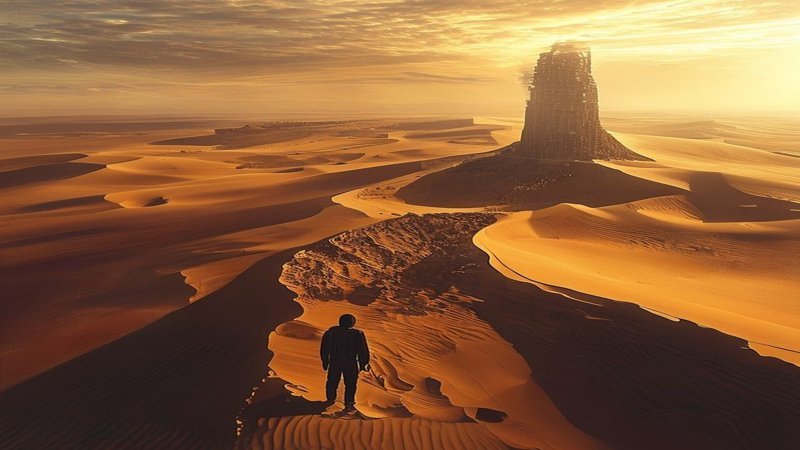
Imagine standing now at the heart of the greatest desert on Earth, where no sound rises above the howl of the wind as it strikes the towering sand dunes. You are surrounded by a sea of golden sands stretching for thousands of kilometers, in a place humanity calls the Empty Quarter (Rub’ al Khali). Suddenly, on the horizon, you discern the outlines of a magnificent city emerging from beneath the earth, a city untouched by daylight for millennia. Its walls are high, and its domes are studded with emeralds and rubies, yet it is encircled by another kind of barrier: walls of military secrecy and enigmatic intelligence reports. Have you ever wondered why great powers impose no-fly zones over vast expanses of arid desert? Have you considered the reason modern armies secure archaeological sites that hold no obvious material value in the eyes of the ordinary person? Today, you are on the verge of embarking on a chilling journey where ancient legends meet cutting-edge military technology, to unveil what is known as the Atlantis of the Sands, or the city of Iram of the Pillars, the like of which has never been created in any land.
Navigate Content
The Legend Awakens: Ubar and the Whispers of Secrecy
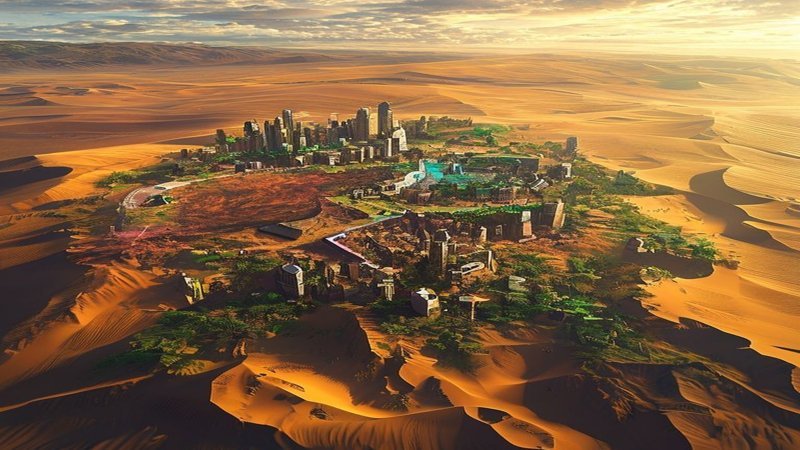
For centuries, Arabian tribes have passed down tales of a lost city swallowed by the earth in a moment of divine wrath. It was said to be a paradise in the heart of the desert, replete with flowing springs and palaces that defied gravity. However, these stories did not remain confined to popular imagination for long. In 1992, the world was stunned by the news of the discovery of the lost city of Ubar, thanks to satellite imagery from NASA. Yet, what is suspicious is what transpired in the years following that discovery. Leaked reports began to emerge from within the corridors of the CIA and the US Air Force, speaking of something far grander than merely an ancient caravan trading post. These reports speak of a massive magnetic anomaly detected in specific areas of the Arabian Peninsula, precisely at points corresponding to the historical description of the lost city of sands.
Military Interests and Subterranean Revelations
You now sense the extent of the mystery surrounding this case. Why would the US Department of Defense be interested in ancient ruins buried beneath hundreds of meters of sand? The answer lies in the technologies we employ today. Spy planes and military satellites have been equipped with radars capable of penetrating the soil for several meters. These radars revealed the existence of engineered structures that could not possibly be natural formations. We are talking about regular street layouts and massive installations resembling reactors or colossal storage facilities, all submerged beneath layers of sediment. In 1991, during major military operations in the region, the movement of special units specializing in military archaeology was observed. Yes, you heard that correctly. There are units in major armies whose mission is not combat, but rather to secure sites containing ancient technology or historical secrets that could alter global power dynamics. Consider it for a moment. If this lost civilization possessed advanced technologies in construction or energy, then whoever gains access to them first will rule the world. You realize that the history we learn in schools might be merely a superficial layer concealing terrifying truths beneath.
The Pillars of Iram: Unveiling a Lost Civilization
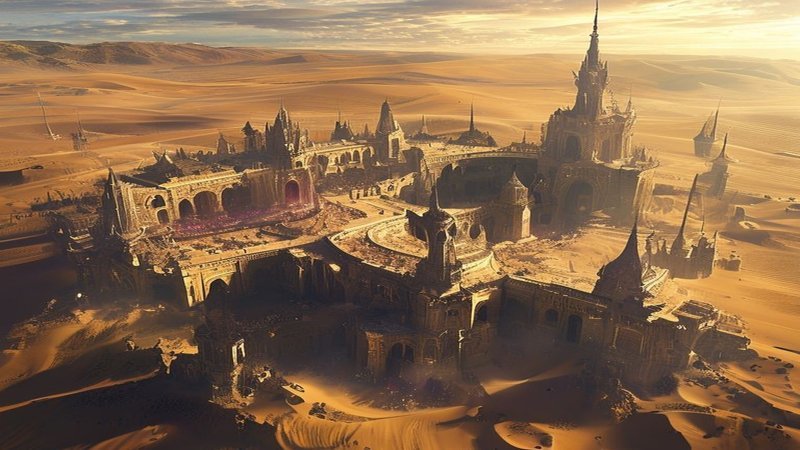
Some hypotheses suggest that during aerial surveys, US forces discovered entrances to underground passages leading to vast halls untouched by time. These halls do not merely contain golden statues, but also reservoirs of knowledge and ancient technology far beyond our current comprehension. Here arises the question now pressing on your mind: if this city is merely a legend, why have these areas been sealed off, and independent researchers prohibited from approaching them under threat of legal and military repercussions? These forces utilized LiDAR technology—laser pulses that map the Earth in three dimensions with extreme precision. What they observed was astonishing. Entire cities beneath the sands, with architectural designs unlike anything known to recognized human civilizations such as the Pharaohs or Sumerians. You are now imagining those colossal pillars mentioned in the Holy Quran, Iram of the Pillars. These pillars are not mere carved stones; they are the foundations of a civilization that controlled water and energy resources in an astonishing manner.
Ancient Technology and Global Implications
Slowly leaked military reports indicate that excavations in these areas led to the discovery of unknown metallic materials—metals that do not rust or react to heat—reinforcing the hypothesis that the Atlantis of the Sands was a center of a global civilization predating the Deluge. Examine the map closely. The Empty Quarter is not merely a desolate desert; it is a repository of secrets. Some soldiers who served in nearby bases report witnessing massive trucks emerging from restricted areas, carrying meticulously covered crates. These crates did not contain weapons; rather, they held colossal artifacts unlike anything seen in museums. Could these artifacts be keys to the free energy technology utilized by ancient civilizations? You now feel both curiosity and apprehension: curiosity to uncover the truth, and apprehension that this truth might remain buried forever behind barbed wire and stringent military orders.
A Time Capsule Beneath the Sands
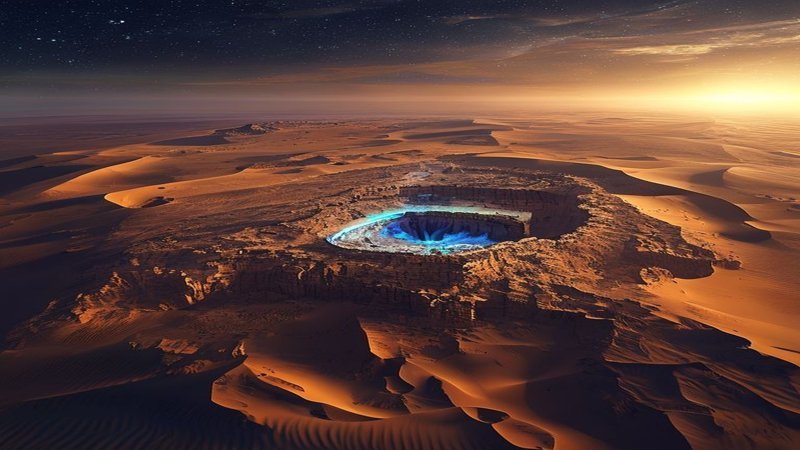
Let us journey back in time to grasp the context of this civilization. The ancient inhabitants of these regions were not as primitive as we imagine. They lived in a lush, green environment before the area transformed into an arid desert due to major climatic shifts millennia ago. This sudden transformation buried that civilization alive, turning its palaces into perfect time capsules. And when modern American forces arrived with their advanced machinery, they did not merely find ruins, but a city meticulously preserved under the high pressure of the sands. This pressure acted as a protective shield, preventing oxygen and moisture from damaging its contents. You now grasp the magnitude of the discovery.
Frequently Asked Questions
Generated by AI Content Architect
About The Author