The Cursed Andalusian Manuscript: Mind-Stealing Secrets & Unsolved Mystery

0
image_1-140


The Cursed Andalusian Manuscript: Mind-Stealing Secrets & Unsolved Mystery
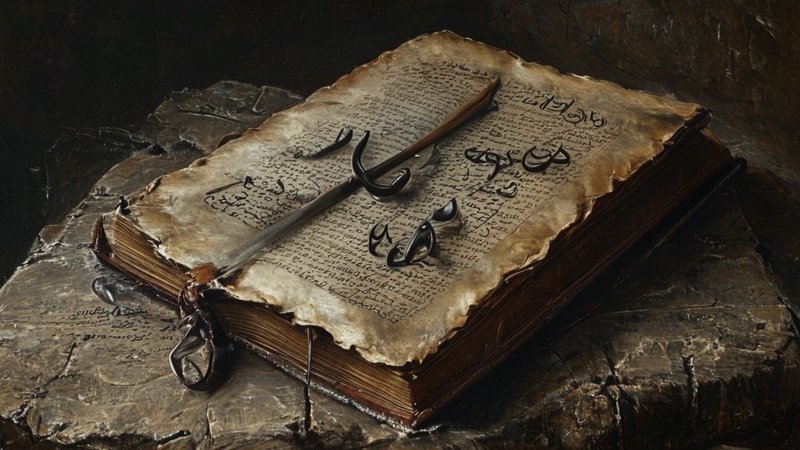
Imagine opening an ancient-looking book only to find the words writhing before your eyes like venomous snakes. It is said that this Andalusian manuscript does not bestow knowledge, but rather steals your sanity the moment you touch the final page. Are you prepared to confront the truth buried beneath the ruins of Granada for over five hundred years?


The Scholar and the Shadowed Gift

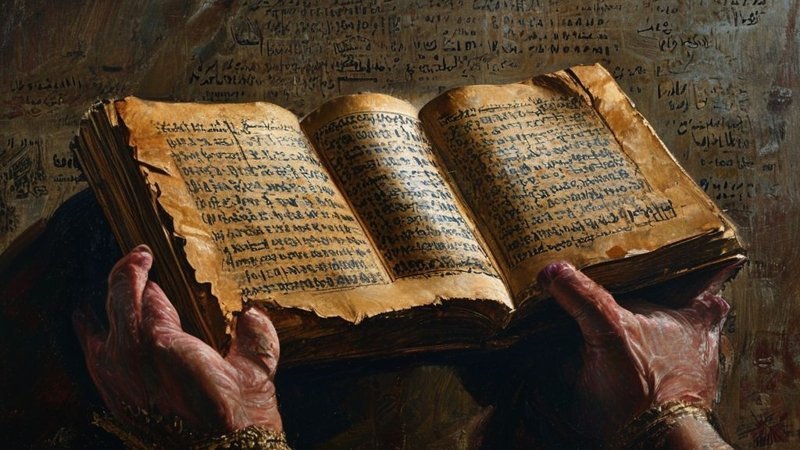
Our story begins in a narrow, cold alley in the city of Seville, in the year 1889. A young scholar named Eduardo was obsessed with collecting rare Islamic artifacts. On a stormy night, a mysterious man entered, wearing a long coat that exuded the scent of sandalwood and ancient dust. The man placed a package wrapped in black deerskin on the table and left without uttering a single word. When Eduardo opened the wrapping, he found himself confronted with something he had never witnessed in his entire life. The manuscript was bound in skin of an unusual texture, unlike any known animal hide. Its color verged on an ominous blackness that unnervingly absorbed the surrounding light. There was no title on the cover; instead, a raised engraving of an open eye with a small pupil at its center. As Eduardo placed his hand on the cover, a shiver ran down his spine. The book was as cold as a piece of ice freshly retrieved from the depths of a dark ocean.

The Scholar and the Shadowed Gift


The Forbidden Verses of Ibn al-Raqqad

Eduardo proceeded to open the first page. The ink was not ordinary; it glowed with a faint luminescence under the candlelight. The characters were written in a highly intricate Maghrebi-Andalusian Arabic script. On the first page, a stark warning was inscribed in deep crimson: “He who turns this page has sold his peace forever. He who reads the last line has opened a door that shall never close.” Eduardo dismissed this warning, deeming it mere medieval intimidation. Yet, he noticed something peculiar about the paper’s texture; it was heavy and thick, as if made from plant fibers that had been extinct for millennia. An aroma began to emanate from the pages, a scent resembling a blend of musk, gunpowder, and burnt flesh.

Secret historical records indicate that the author of this manuscript was an Andalusian alchemist named Ibn al-Raqqad. This man lived during the final days of the Nasrid Kingdom in Granada. He witnessed his city crumble before his eyes and the palaces of the Alhambra surrendered to enemies. Legend has it that Ibn al-Raqqad channeled all his rage and despair into this book. He sought to leave behind a weapon that would not kill bodies, but shatter minds. For the ink’s creation, he employed forbidden chemicals and extracts from herbs found exclusively in the dark caves of the Alpujarras mountains. Every character he penned was charged with immense negative energy. The objective was to safeguard Andalusian secrets from oblivion, but the price was exceedingly steep.


The Linguistic Trap and Blurring Realities

On the third night of Eduardo’s reading, events took a terrifying turn. He noticed that the shadows in his room no longer followed the movement of light; instead, they moved independently across the walls. Eduardo felt an unseen entity standing behind his shoulder, observing every word he read. His eyes were bloodshot from intense concentration. The letters were no longer inert characters; they began to dance before his eyes, forming images of fierce battles and muffled screams. He heard the clatter of horse hooves striking marble in his silent room. He tried to close the book, but his hands would not obey. An invisible magnet seemed to pull him towards the next lines.

Through his reading, Eduardo discovered that the manuscript was designed with a system called the “Linguistic Trap.” Each sentence you read forces your mind to envision a specific scene. These scenes act as keys to unlock dormant areas in the human brain: the region responsible for existential fear, the area that distinguishes reality from imagination. The manuscript propels you into a state of structured hallucination. You feel time has ceased, and you are not merely reading a book but living within the memory of someone who died centuries ago. The walls of his room began to fade, replaced by the pillars of the Great Mosque of Cordoba. Eduardo saw worshipers kneeling and smelled incense in the air. Yet, when he tried to touch the columns, he found only emptiness.
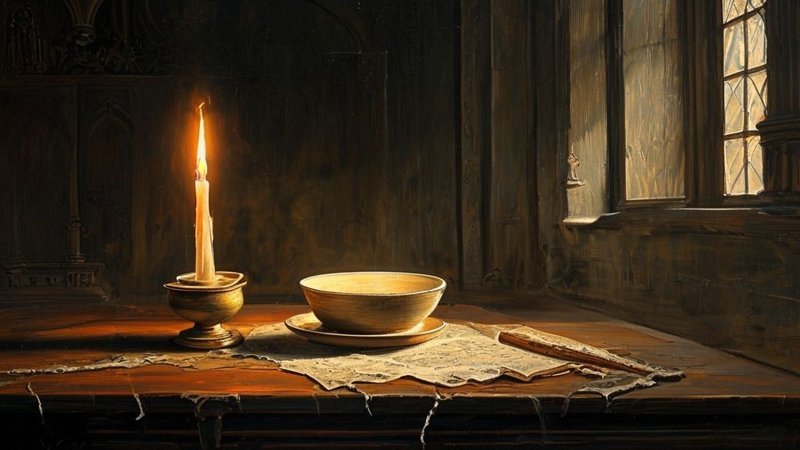
The Linguistic Trap and Blurring Realities


A Living Entity: The Manuscript’s Previous Victims

Historical accounts speak of three individuals who attempted to study this manuscript at different times.

  • The first was a Spanish priest in the 16th century, found dead in his library, eyes staring blankly at the ceiling, hands clutching empty pages. No trace of the book was found beside him.
  • The second was an 18th-century French merchant who completely lost his mind a week after acquiring the manuscript. He wandered the streets of Paris, shouting in eloquent Arabic he had never learned.
  • The third was a German monk who claimed to have found a way to decipher the curse, but he vanished entirely from his cell, which had been locked from the inside. He left behind only the scent of sandalwood and ancient dust.

The Andalusian manuscript is not merely paper and ink; it is a living entity that feeds on the curiosity of its readers. Ibn al-Raqqad did not write a book; he crafted a temporal trap. It is rumored that the manuscript contains maps to lost Andalusian treasures and plans for secret tunnels beneath the Alhambra Palace, undiscovered until now. However, this information is encrypted in a way that demands the sacrifice of a part of your consciousness. The more information you gain, the more of your personal memory you lose. You slowly become a vessel for the history of Al-Andalus. You forget your name, your family, and become merely another guardian of these secrets.


Eduardo’s Penultimate Page and the Ultimate Price

On the seventh night, Eduardo reached the penultimate page. His body had completely wasted away, and his skin had grown as pale as ancient parchment. He no longer ate or drank; his obsession had reached its zenith. On this page, he found a precise drawing of a human heart surrounded by unknown names. He realized these names were those of the previous victims, the guardians who had lost their minds and identities, etched forever into the manuscript’s dark history. Eduardo was about to join them, his own name soon to be added to the grim roster of those consumed by the cursed Andalusian manuscript, an unsolved mystery of mind and time.

Eduardo's Penultimate Page and the Ultimate Price


Frequently Asked Questions

What is the Cursed Andalusian Manuscript?
The Cursed Andalusian Manuscript is an ancient, ominous-looking book said to steal the sanity of its readers upon contact with its final page, rather than bestowing knowledge. It is bound in an unusual, dark hide with an engraving of an open eye.
Who authored the manuscript and why?
The manuscript was authored by an Andalusian alchemist named Ibn al-Raqqad during the final days of the Nasrid Kingdom in Granada. He channeled his rage and despair into creating it as a ‘weapon’ to shatter minds and safeguard Andalusian secrets from oblivion.
How does the ‘Linguistic Trap’ in the manuscript work?
The ‘Linguistic Trap’ is a system within the manuscript where each sentence forces the reader to envision specific scenes. These scenes unlock dormant areas of the human brain responsible for existential fear and distinguishing reality from imagination, propelling the reader into structured hallucinations and a blurring of real and imagined experiences.
What happened to others who tried to study the manuscript?
Historical accounts mention three individuals: a 16th-century Spanish priest found dead clutching empty pages, an 18th-century French merchant who completely lost his mind, and a German monk who vanished entirely from his locked cell, leaving only the scent of sandalwood and ancient dust.
What is the ultimate price of reading the Cursed Andalusian Manuscript?
The ultimate price is the sacrifice of personal memory and consciousness. The more information gained from the book, the more of one’s identity is lost, slowly transforming the reader into a ‘vessel’ for the history of Al-Andalus, causing them to forget their own name and family.

Generated by AI Content Architect

About The Author

Leave a Reply

Your email address will not be published. Required fields are marked *