Subterranean Living: Humanity’s Last Refuge or Imminent Captivity?
Imagine that the sun, which grants you life today, could tomorrow become your archenemy. Envision a world where the azure sky vanishes behind layers of concrete and impervious rock. Have you ever considered that your future, and that of your descendants, might lie within the heart of darkness, rather than beneath the stars?
The Surface Under Threat: A Historical Necessity Reimagined
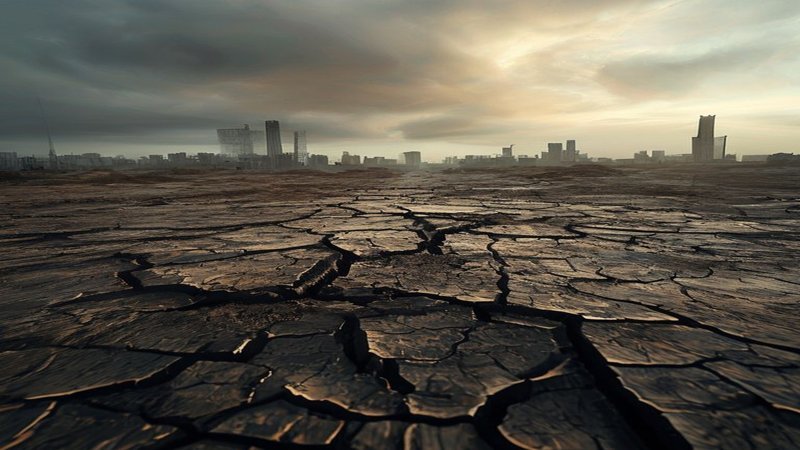
We currently live in an era brimming with variables that compel us to reconsider the nature of our existence. The surface we confidently tread upon has begun to tremble under the weight of severe global challenges:
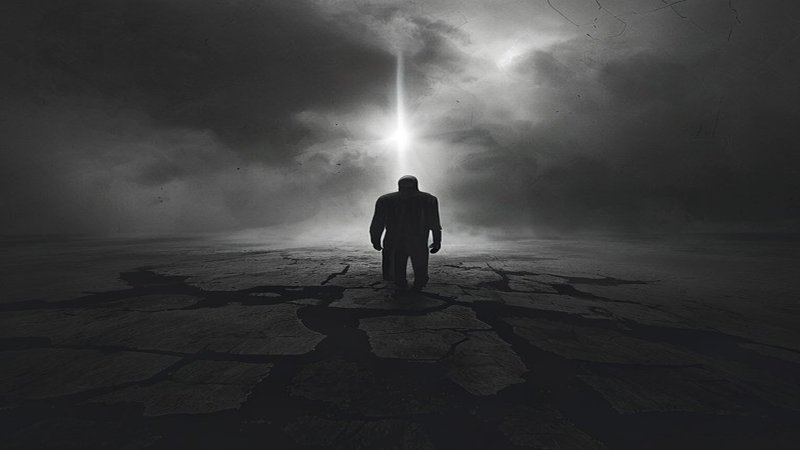
The Earth, which has cradled humanity for millennia, may no longer be suitable for our habitation upon its surface. This is not a scene from a science fiction film, but a reality currently being studied by engineers and social scientists. The concept appears simple on the surface, yet is terrifying in its essence: the complete relocation of civilization underground, to the depths of the Earth where seasons cease and winds no longer blow. This retreat into the depths is not a novel concept. In the Cappadocia region of Turkey lies the city of Derinkuyu, a mysterious city carved into rock, extending eighteen levels beneath the Earth’s surface. This city was capable of accommodating twenty thousand inhabitants, along with their livestock, food stores, wineries, and even churches. Fear was the driving force: fear of invasions and wars. Throughout history, humanity has sought refuge in darkness from the terrors of light. Today, this fear returns with new manifestations.
The Allure of the Earthscraper: A Technologically Advanced Refuge
Modern engineers have already begun designing “earthscrapers” instead of skyscrapers. In Mexico, designs have emerged for an inverted tower extending three hundred meters underground: a massive pyramid that breathes through overhead vents and draws sunlight via advanced fiber optic tubes. Imagine residing on the fiftieth underground level. You awaken in your room, open the blinds, and find a digital screen displaying a live feed of the sky above. You drink coffee grown in hydroponic farms relying on LED light. The air you breathe is meticulously filtered and cooled. Everything is under control. No sandstorms, no hurricanes, no aircraft noise. Below, temperatures remain constant and stable. The Earth acts as a natural insulator, protecting from extreme atmospheric fluctuations. It appears to be a meticulously organized technological paradise. But wait. Look at your hands. Do you feel the touch of a real breeze? Do you smell the rain after a long dry spell?
The Unseen Cost: Psychological Trauma and the Human Condition
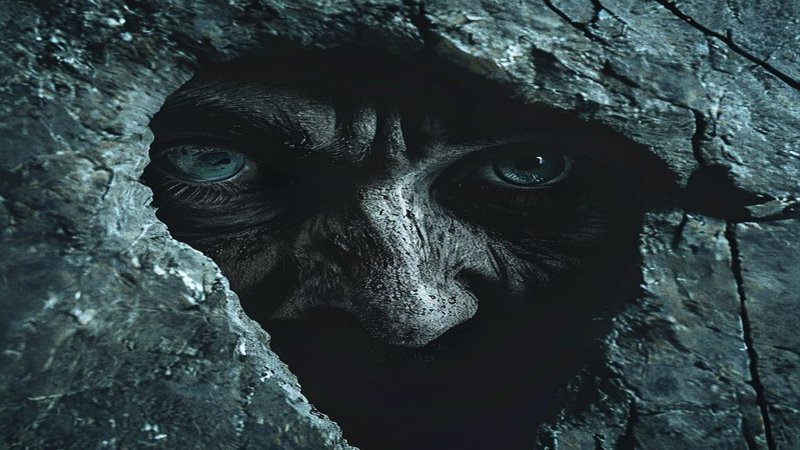
The greatest challenge lies not in architectural engineering, but in engineering oneself. You are a being that evolved over millions of years to live beneath the open sky. Your body is programmed to a circadian rhythm linked to sunrise and sunset. The loss of this connection leads to profound psychological disturbances. Scientists speak of Nature Deficit Disorder. When living in a completely enclosed environment, your mind begins to lose a proper perception of time. Stress levels rise, and rates of depression increase. In experiments involving prolonged isolation, researchers found that humans begin to experience visual and auditory hallucinations. The rock walls, however adorned, will begin to feel constricting. You will feel as though you are buried alive. This sensation could escalate into collective social unrest. How will an entire society cope with the realization that it has no escape to the vast open space? The constant simulation and confined existence might necessitate (reclaiming control of your programmed mind).
Social Stratification and the Specter of Authoritarianism
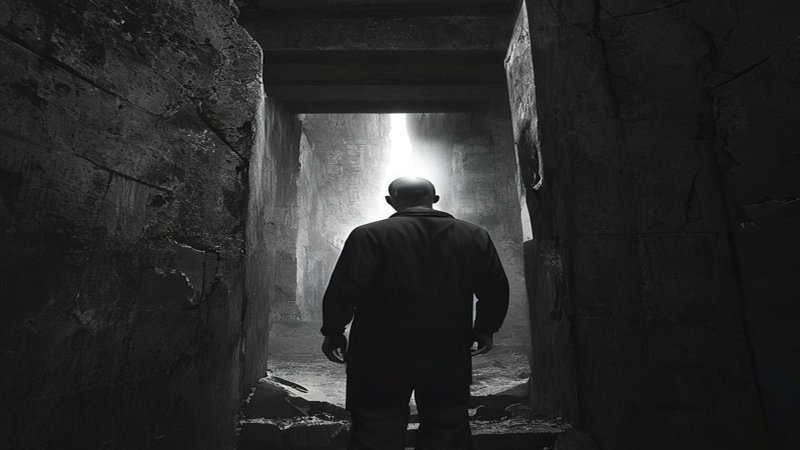
From a social perspective, there are darker concerns. Who will possess the right to reside in these sanctuaries? If resources are limited and spaces confined, will underground cities transform into exclusive enclaves for the wealthy? Will we see one class inhabiting luxurious depths while others are left to face their fate on the scorched surface? Or perhaps the inverse: the surface might become reserved for the elite, and the depths for the workers operating power plants and factories. Underground cities inherently impose a rigorous system of surveillance. In an enclosed environment, everything must be controlled: oxygen levels, water consumption, food production. This technical control opens the door to unprecedented political authoritarianism. Whoever holds the keys to the ventilation system literally holds your life. You cannot protest or escape. You are trapped in a completely closed system. This environment could foster an extreme form of (internalized social control).
A Colossal Stone Vessel: Sustainability Versus Freedom
Consider the technology that would make this possible. Vertical farms and hydroponics will secure food without the need for soil or sun. Every drop of water and every particle of waste will be recycled in a never-ending closed loop. Energy will be drawn from the Earth’s geothermal heat itself. It is absolute sustainability, but it is a sustainability akin to that of spacecraft on long voyages. You are not a resident of a city, but a passenger in a colossal, stationary stone vessel. Are you prepared to be part of this journey? Will you accept that your descendants will be generations who have never seen the real sun, generations who believe the sky is merely a blue screen suspended from the ceiling of a room? Human relationships will also change. In confined spaces, friction increases, and privacy diminishes. Underground architecture must be highly ingenious to create a deceptive sense of spaciousness. The use of mirrors, lighting, and visually manipulated high ceilings will be a necessity, not a luxury. But no matter how precise the simulation, something remains missing. The profound human connection to the natural, boundless world above.
Frequently Asked Questions
What are the primary drivers for considering subterranean living?
Humanity might consider moving underground due to increasing threats such as severe climate change making vast areas uninhabitable, nuclear threats rendering the air poisonous, and suffocating overpopulation straining surface resources.
Are there historical examples of underground cities?
Yes, historical precedents exist, such as the ancient city of Derinkuyu in Cappadocia, Turkey, which was carved eighteen levels deep to accommodate thousands of inhabitants and their resources, primarily for refuge from invasions and wars.
What are the psychological challenges associated with living in an enclosed underground environment?
Psychological challenges include Nature Deficit Disorder, loss of proper time perception due to disrupted circadian rhythms, increased stress and depression, and potential visual and auditory hallucinations resulting from prolonged isolation and lack of natural sensory input.
How could subterranean cities impact social structures and political control?
Underground cities could lead to social stratification, with access potentially restricted to the wealthy or designated for specific worker classes. The necessity for rigorous control over essential resources in an enclosed environment also opens the door to unprecedented political authoritarianism and surveillance.
What technologies would be crucial for sustaining life in an underground city?
Crucial technologies would include vertical farms and hydroponics for food production, advanced recycling systems for water and waste in a closed loop, and harnessing geothermal heat for energy, creating a sustainable but highly controlled living environment.