Quantum Life: Immortal Microbes, Deep-Sea Secrets & the Key to Perpetual Energy

0
image_1-31


Quantum Life: Immortal Microbes, Deep-Sea Secrets & the Key to Perpetual Energy
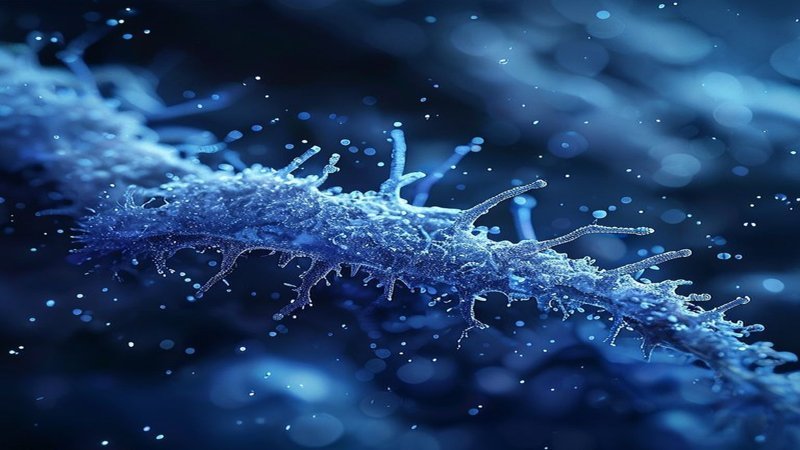
Imagine life flourishing in environments where cold, darkness, and immense pressure would be lethal to us. Microscopic organisms that utilize gleaming particles of cold light, converting them into perpetual, inexhaustible energy. This is not science fiction, but a biological reality concealed beneath our feet and in the most profound depths of our planet.


Life Beyond Sunlight: The Abyssal Anomaly

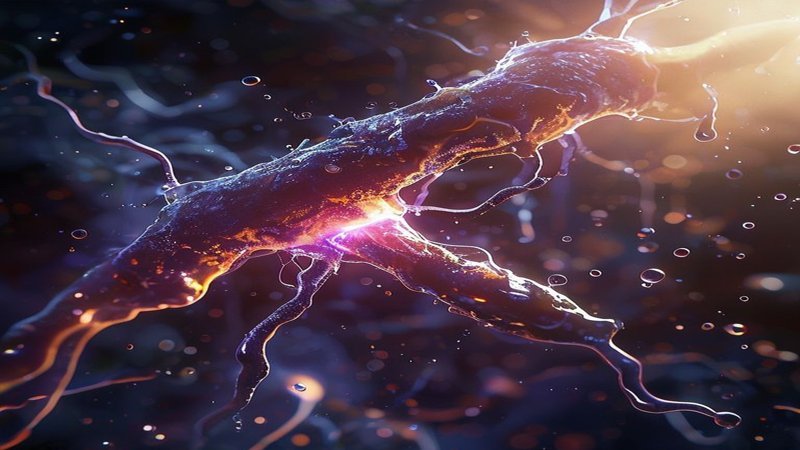
One might assume the sun is the sole source of life on this planet – a foundational concept learned in early scientific education. However, the truth is far more profound and enigmatic than commonly perceived. In the abyssal oceans, where sunlight never penetrates, lie hydrothermal vents that spew volcanic lava and lethal chemical compounds. Within this aquatic inferno, green sulfur photosynthetic bacteria thrive. These organisms do not await golden sunlight to produce their sustenance; they harness the faint luminescence emanating from hydrothermal vents. This light is so dim that it remains imperceptible to the human eye. Yet, these bacteria possess remarkable biological antennae known as chlorosomes. These antennae represent the most efficient light-harvesting systems found in all of nature, meticulously capturing every individual photon with extreme precision, as if they were sophisticated mechanisms designed to operate at the very limits of existence.

Consider the human body. It requires oxygen and nutrients for sustained survival; its cells undergo a slow combustion process to provide energy. These bacteria, however, defy conventional understanding of bioenergetic principles. They do not require oxygen; indeed, oxygen can sometimes be lethal to them. They thrive in entirely anaerobic environments, utilizing sulfur or hydrogen as electron donors. This stark defiance of environmental conditions prompts inquiry into the very boundaries of life. Could these organisms subsist on distant planets lacking atmospheres analogous to Earth’s? Might they represent the primordial life forms that colonized the universe billions of years ago? Scientists have discovered traces of these bacteria in rocks dating back 3.5 billion years, indicating their presence during the formation of continents and the ebb and flow of ancient oceans. They have endured five mass extinction events that obliterated the majority of Earth’s life forms.
Life Beyond Sunlight: The Abyssal Anomaly


The Enigma of Microbial Immortality

Let us delve deeper into the enigma surrounding the concept of immortality. In our world, death results from the accumulation of DNA errors and the depletion of cellular energy. Yet, photosynthetic bacteria possess remarkable repair mechanisms. They are capable of remaining dormant for millennia without perishing. When conditions improve, they reanimate as if nothing had occurred. This is not merely resilience but a form of biological time suspension. If we could comprehend how these bacteria safeguard their proteins from degradation, we might discover the key to human longevity. Imagine possessing cells that do not senesce because they know how to extract energy from the weakest possible sources. One is observing a simple microorganism, yet it is, in fact, a master in the art of perpetual survival. These organisms have witnessed and survived cataclysmic events, including five mass extinction events, showcasing their unparalleled resilience.


Quantum Mechanics: Nature’s Ultimate Engineer
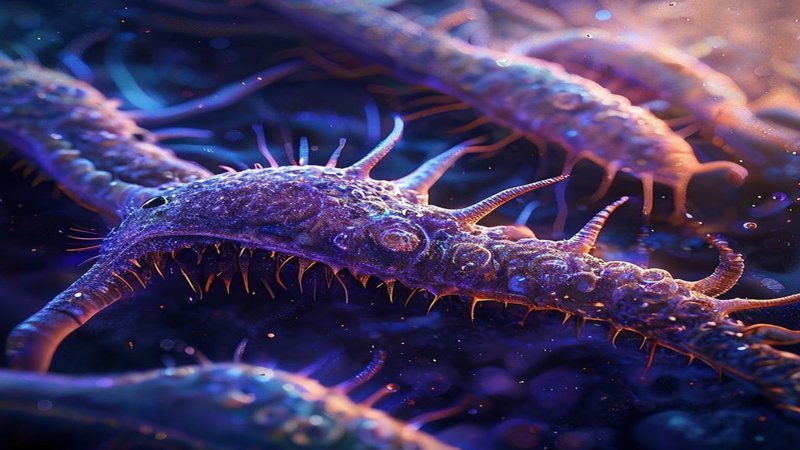
The true secret lies in quantum mechanics. Indeed, these minute bacteria employ quantum physics to enhance their efficiency. When a single photon strikes their antennae, it does not follow a single, arbitrary path. Thanks to a phenomenon known as quantum superposition, the photon explores all possible pathways simultaneously, selecting the fastest and most efficient route to reach the chemical reaction center. This ensures no energy is lost as heat. Humans attempt to construct quantum computers using multi-billion dollar technology, while these bacteria have performed identical operations within the dark ocean waters since the dawn of time. Does this not highlight the stark humility of our technology when faced with biological genius? This quantum system is precisely what enables them to flourish in environments where no other organism can breathe.

Quantum Mechanics: Nature's Ultimate Engineer


Feeding on Darkness: Unconventional Energy Sources

Observe the forests and trees around you. They utilize chlorophyll to convert sunlight into sugars and oxygen. However, purple photosynthetic bacteria and Chromatium species employ different types of pigments called bacteriochlorophyll, which allow them to absorb infrared radiation. These rays are essentially heat, imperceptible to our vision. This implies that these organisms perceive, sense, and feed on what we consider void or darkness. They inhabit a parallel world to ours, entirely within the same planet, utilizing energy sources not fully understood by current science. Theories suggest that some of these bacteria may rely on radiation originating within the Earth’s interior, specifically from the decay of radioactive elements in the planet’s core. If proven, this would present a form of life subsisting on natural nuclear energy, hinting at the vast possibilities of subterranean life.


Our Future with Immortal Microbes: Promise and Peril

One might now question the scientific imperative to study these microorganisms. The answer lies in our future and the survival of the human race. We face a global energy crisis and seek sustainable sources. If we could emulate the photosynthetic antennae of these bacteria, we could create solar cells with 100% efficiency, signifying free and limitless energy for all inhabitants of Earth. But ambition does not cease there. Scientists envision using these bacteria for interstellar travel. On long voyages spanning centuries, astronauts will require a closed-loop energy system. These bacteria could convert waste and the weak light from distant stars into food and oxygen. They would be the very lungs for off-world existence, our true bridge to the dark stars, potentially aiding future space exploration efforts.

However, there is a more somber aspect to this scientific endeavor. Manipulating these potent organisms could lead to unforeseen consequences. These bacteria possess the capacity to alter the entire planet’s chemistry. In the distant past, similar bacteria caused what is known as the Great Oxidation Event, pumping immense quantities of oxygen into the atmosphere, leading to the extinction of anaerobic life forms. The implications of harnessing such powerful biological forces are profound and demand careful consideration.

Our Future with Immortal Microbes: Promise and Peril


Frequently Asked Questions

What are the ‘immortal entities’ mentioned in the title?
The ‘immortal entities’ refer to microscopic photosynthetic bacteria, particularly green sulfur and purple photosynthetic bacteria, that thrive in extreme conditions like deep-sea hydrothermal vents. They exhibit remarkable resilience, dormancy for millennia, and efficient repair mechanisms that defy conventional understanding of biological aging and death.
How do these deep-sea bacteria obtain energy without sunlight?
These bacteria utilize unique pigments and antennae (chlorosomes and bacteriochlorophyll) to harness faint light sources not visible to the human eye. Green sulfur bacteria capture ‘cold light’ from hydrothermal vents, while purple bacteria absorb infrared radiation. Some theories even suggest they might subsist on radiation from radioactive decay within Earth’s core.
What role does quantum mechanics play in their survival?
These bacteria use quantum mechanics to enhance their energy harvesting efficiency. When a photon strikes their antennae, it leverages quantum superposition to explore all possible pathways simultaneously, selecting the most efficient route to the chemical reaction center without energy loss as heat. This quantum system is key to their survival in energy-scarce environments.
How could studying these bacteria benefit human civilization?
Understanding these bacteria could lead to revolutionary advancements: creating 100% efficient solar cells for limitless energy, developing methods for human longevity by mimicking their cellular repair and energy extraction, and enabling closed-loop energy systems for long-duration interstellar travel, providing food and oxygen for astronauts.
What are the potential risks of manipulating these organisms?
Manipulating these powerful organisms carries significant risks due to their capacity to alter planetary chemistry. Historically, similar bacteria caused the Great Oxidation Event, which led to a mass extinction of anaerobic life. Unforeseen consequences could arise from interfering with their natural processes.

Generated by AI Content Architect

About The Author

Leave a Reply

Your email address will not be published. Required fields are marked *