
Why Does an Investigator Sit Close to a Suspect? Evidence Explained
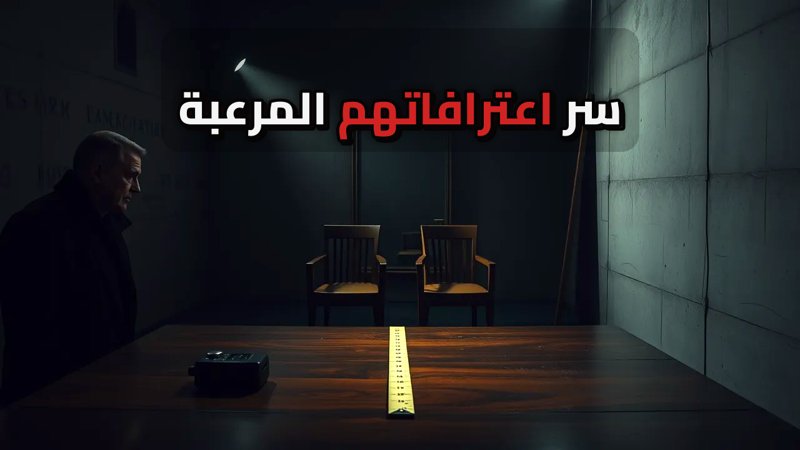
Why Does an Investigator Sit Close to a Suspect? Evidence Explained
Navigate Content
The Visual Setup and Initial Assumptions
A rectangular table, a chair on each side, and a short distance between them typically frame a roleplay or media scenario. However, visual impressions are not a measurement of what actually transpired.
- We cannot assume circumstances based solely on close chair placement.
- Closeness might be viewed as attention or, conversely, as an invasion of personal space.
- Distinctions must be made among professional recommendations, simulations, and practical surveys.
For related insights on interpersonal dynamics and communication tactics, consider how we handle changing the subject during a disagreement or apply the strategy of calculated vulnerability.
Professional Recommendations and the Reid Technique
In a study published in 2019, Hoogesteyn, Meijer, and Vrij noted that the Reid technique recommends a seating distance of approximately 1.22 meters between the investigator and the interviewee.
- Clear Reference: Provides an exact measurement rather than subjective terms like “close.”
- Psychological Rationale: Aims to foster a sense of psychological closeness and manage the interaction.
- Not a Guarantee: The recommendation is a suggested practice, not a magic formula that ensures a confession.
What Do Simulation Experiments Show?
To test whether distance actively changes human response, Hoogesteyn and colleagues conducted simulated interviews involving 139 participants in 2019, comparing distances of 1.65 meters and 2.10 meters.
- Focused on the amount of information disclosed and perceived rapport.
- Statistical Findings: No statistically significant difference appeared between the two tested distances regarding disclosure or rapport.
- Absence of a significant difference does not prove distance never matters, but it counters claims that a specific distance inherently boosts disclosure.
Understanding how human behavior shifts under observation is akin to studying why witness presence shuts down your brain.
Separating Myth from Measured Reality
The available sources do not provide a documented case directly attributing a confession to proximity alone. Visual arrangements alone cannot reveal whether someone is being truthful or deceptive.
- Evidence allows us to infer what was recommended and measured, but not ultimate guilt.
- Investigators’ practices vary widely beyond standard guidelines.
- Interpreting data requires looking strictly at tested metrics rather than dramatic tropes.
Frequently Asked Questions
About The Author