Auguste Mariette and the 70-Ton Sarcophagi of Saqqara
Auguste Mariette and the 70-Ton Sarcophagi of Saqqara
In the blazing heat of the Saqqara desert, shifting sands long concealed secrets that defied belief. While locals whispered tales of a mysterious subterranean burial ground known as the ‘Tomb of the Bulls,’ mainstream scholars dismissed the accounts as mere folklore. That was until 1850, when a French archaeologist named Auguste Mariette arrived with an entirely different mission—only to have his loose dog lead him straight to one of the most astonishing archaeological discoveries in history.
Navigate Content
The Accidental Discovery in the Dunes
When Auguste Mariette arrived in Egypt, his goal was strictly to collect ancient Coptic manuscripts, not to dig for lost ruins. However, destiny intervened when his dog broke free and darted into the desert dunes. Following the animal, Mariette stumbled upon a partially buried Sphinx statue. Shortly after, he found a second and a third, revealing an entire buried avenue. Despite lacking official excavation permits, funding, or heavy equipment, Mariette sensed a monumental secret hidden beneath the sands and resolved to investigate almost single-handedly.
Uncovering the Subterranean Labyrinth
Excavating in Saqqara was an immense test of endurance. Equipped with only basic tools like pickaxes and shovels, Mariette and a small workforce battled the scorching sun and fast-moving sands that constantly threatened to re-bury cleared areas. As layers of sand were removed, a complete avenue of hundreds of Sphinxes emerged—matching the historical descriptions left by the ancient Greek traveler Strabo. Eventually, they broke through a massive stone portal into a dark, stagnant underground complex featuring vast rock-hewn corridors reminiscent of sites like Evidence of Olmec Colossal Head Carving & 50-Ton Boulder Transport.
The Colossal 70-Ton Sarcophagi
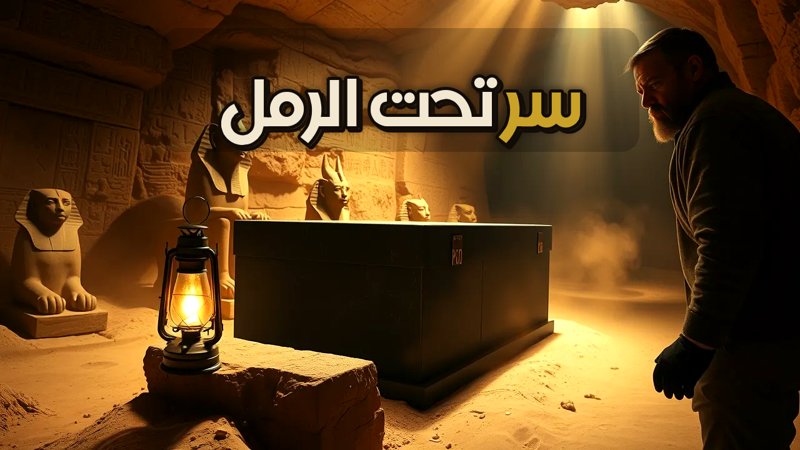
Venturing deeper into the pitch-black corridors, Mariette and his team made their most breathtaking discovery. Hidden away in secondary chambers were colossal stone chests carved from solid, polished black granite. Each box weighed up to seventy tons, showcasing an astonishing level of precision in cutting and finishing. The sheer scale raised profound logistical questions that still puzzle historians today:
- How did ancient builders transport seventy-ton blocks across the desert?
- What engineering methods placed them deep underground?
- How was such microscopic precision achieved with ancient tools?
The Sacred Apis Bulls of Memphis
The immense effort and grand scale behind the monument begged a central question: What entity deserved such extraordinary honor? For Mariette, the answer lay in ancient Egyptian religion. The tombs were built for the sacred Apis bulls—living incarnations of the supreme god Ptah. These animals were chosen based on extremely rare markings, such as a white triangular spot on the forehead and a scarab-shaped spot on the tongue. They lived in supreme luxury at the Temple of Ptah, and upon their deaths, the entire nation of Egypt entered a period of deep mourning before laying them to rest in these massive subterranean vaults.
Frequently Asked Questions
Generated by AI Content Architect
About The Author