Urban Engineering: Is Your City Designed to Control You?
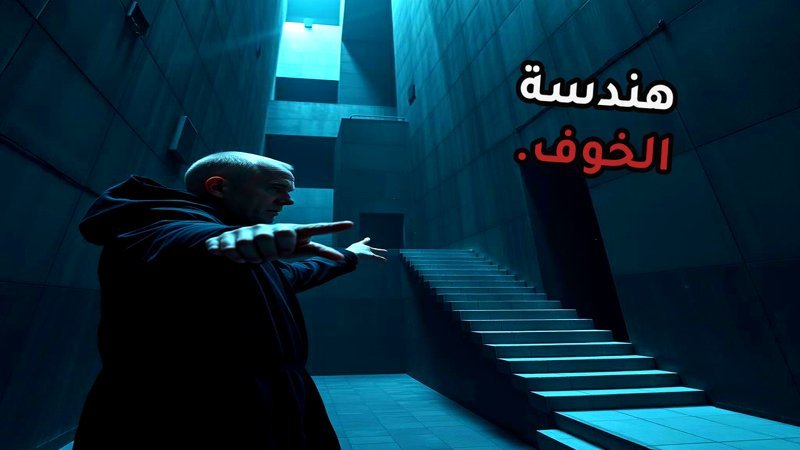
Urban Engineering: Is Your City Designed to Control You?
Look at the vast square in your city. While it may appear to be the ‘lungs’ of the urban landscape, architectural reality suggests a darker purpose. We are witnessing a conflict between the illusion of gathering and the reality of isolation. What you perceive as public space is often a calculated protocol of ‘the engineering of insignificance,’ designed to strip you of your sense of mass and keep you under constant observation.
Navigate Content
The Engineering of Insignificance
Why does your voice fade in a wide square, or your shoulders instinctively hunch? This is the effect of Dead Space. In spatial psychology, distances are calculated to the millimeter to break non-verbal communication. Instead of feeling the strength of a crowd, you are reduced to an isolated coordinate, easily monitored from above. This design creates an ‘optimal viewing angle’ for authority, ensuring you feel exposed and vulnerable at all times.
Haussmann and the Military Surgery of Paris
The roots of this control stretch back to 19th-century Paris. Napoleon III and Baron Haussmann didn’t just renovate a city; they performed ‘military surgery.’
- Narrow, winding streets were replaced with straight, wide boulevards.
- These axes eliminated ‘blind spots’ where rebels could hide.
- The design ensured that a single cannon could clear an entire street, turning the city into an open ‘shooting range.’
For more on how structures shape history, see The Great Wall of China: Was It a Prison Instead of a Shield?
Visual Ambushes and Tactical Barriers
The beauty of a city—its fountains, statues, and wide plazas—often serves as a tactical barrier. These elements are designed to: break the line of sight between individuals, preventing the coordination of movement or the spread of ’emotional contagion.’ When you cannot see the person on the other side of a fountain, you cannot share in their enthusiasm, effectively neutralizing the power of the crowd.
The Panopticon and Hostile Architecture
Modern urban planning often utilizes the philosophy of the Panopticon, where the mere possibility of being watched forces you to monitor your own behavior. This extends to ‘hostile architecture,’ such as metal protrusions on buildings designed to prevent loitering. To understand how we are conditioned to accept these environments, read The Struggle for Survival Within Your Mind: Why We Protect Our Exploiters.
Frequently Asked Questions
Generated by AI Content Architect
About The Author