Antarctica’s Deep Secrets: Boiling Lakes, Unknown DNA, and a Shifting Earth

0
image_1-18


Antarctica’s Deep Secrets: Boiling Lakes, Unknown DNA, and a Shifting Earth
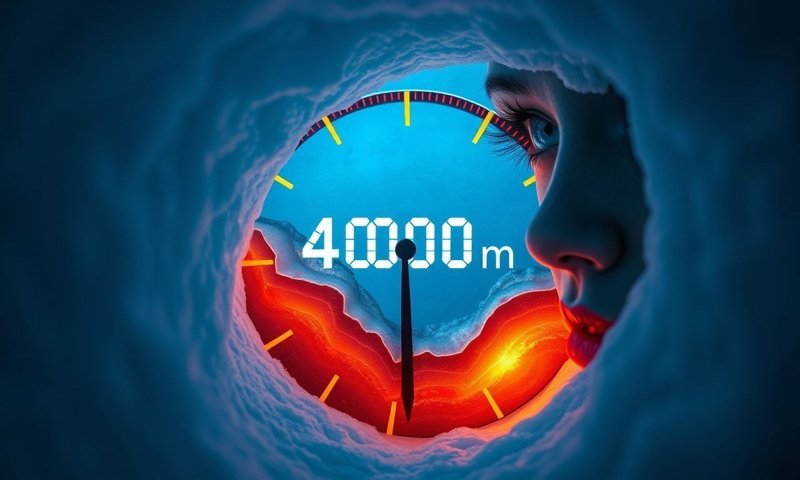
Under four thousand meters of solid ice, liquid water exists at nearly boiling temperatures in the heart of the Earth’s coldest continent. You might believe you know Antarctica as a barren white desert, merely a mass of ice accumulated over millions of years. The reality is, we stand atop a mysterious heat engine that defies the laws of physics you learned in school. Something is stirring beneath, and scientists maintain an unsettling silence regarding recent findings that have upended geophysical paradigms. Have you ever wondered why major powers are so intent on establishing military and scientific bases in an ostensibly lifeless place? The secret lies not in the ice, but in what conceals itself beneath.


The Subglacial Enigma: Warm Waters and Alien DNA

You are now in the most isolated place on our planet. Winds rage at three hundred kilometers per hour. Temperatures plummet to ninety degrees below zero. Yet, directly beneath your feet, lies a network of warm lakes that have not seen sunlight in fifteen million years. Lake Vostok is the largest among them. It is a lake the size of Lake Ontario, completely isolated from Earth’s atmosphere. When Russian scientists began drilling to reach it, they encountered inexplicable phenomena. Key observations included:

  • The pressure there is immense.
  • Oxygen is saturated in a way that renders life impossible by our human standards.
  • Nevertheless, they found traces of DNA belonging to no known species on Earth.

Can you comprehend that? We search for extraterrestrial life on Mars, while it lives beneath us, in warm waters protected by a thick glacial shield.

Why are they warm? This is the question that occupies scientists day and night. The traditional explanation cites Earth’s geothermal heat, but recent measurements indicate a thermal anomaly that cannot be explained by normal volcanic activity. An unknown energy source maintains the liquidity of these lakes. You feel curious now, don’t you? But curiosity will quickly turn to dread when you learn that these lakes are not merely reservoirs of water. They are biological time capsules. If this glacial shield were to rupture, what emerges might not just be ancient bacteria, but a complete redefinition of evolutionary history.
The Subglacial Enigma: Warm Waters and Alien DNA


Antarctica’s Erratic Pulse: The Magnetic Anomaly

Let us now turn to something more perilous than warm waters. The magnetic field at the South Pole is behaving erratically. There is a region scientists call the “Magnetic Anomaly,” where compasses deviate and satellite sensors malfunction. At this point, the laws of gravity and magnetism seem to intertwine inexplicably. Some speak of massive metallic objects buried deep within the Earth’s crust, remnants of ancient meteor impacts, or perhaps something far more complex. You understand that the magnetic field protects Earth from deadly cosmic radiation. If this shield weakens or changes in the South Pole, we face an impending catastrophe that is not merely looming, but has already begun. For more on magnetic anomalies and their potential impact, consider The Waratah Mystery: Magnetic Anomaly and the Sinking of the Titanic of the South.


A Continent Warming From Within?

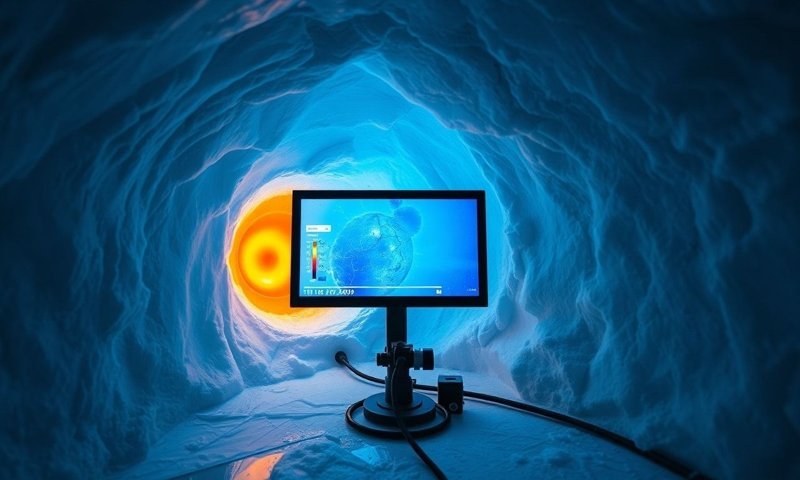
Here, my personal analysis, which you may find controversial, emerges. If we delve deeper than the dazzling newspaper headlines, we find that the official narrative surrounding climate change in Antarctica is entirely incomplete. Most people disregard this fact, but I contend that the ice is not melting solely due to rising atmospheric temperatures. The ice is melting from the bottom up. The continent is warming from within. In my personal opinion, we are not merely witnessing a climatic cycle, but a transformation within the Earth’s core itself. This is where the prevailing narrative collapses, much like how alternative theories challenge established accounts. Scientists speak of carbon emissions, yet they overlook the thermal pulses emanating from the depths of the frozen continent. Is this a natural geological cycle? Or has something within Earth’s core awakened?

Consider this. The continent that lay near the equator millions of years ago has returned to become a focal point of cosmic attention. The frozen mountains we see today, known as the Gamburtsev Mountains, are a mountain range the size of the Alps, yet completely covered by ice. How did these mountains form in the heart of the continent? And how have they remained preserved with such precision? You are looking at a giant geological museum, but it is a living museum. Current geophysical changes indicate that Antarctica’s crust has begun to rise. With the melting of the ice, the immense weight on the continent is alleviated, leading to what scientists call “tectonic rebound.” This rebound could alter Earth’s rotation by fractions of a second, but it is enough to change ocean currents and global climate forever. This geological phenomenon has implications similar to those debated in Oak Island’s geological mysteries.
A Continent Warming From Within?


Beyond Sunlight: Chemosynthetic Life and Parallel Evolution

You are now contemplating those isolated ecosystems. Imagine creatures that evolved in absolute darkness, under bone-crushing pressure, and in waters rich with minerals and chemicals deemed toxic to us. These organisms do not rely on the sun; they rely on chemosynthesis. If such life truly exists, our definition of a habitable environment must be discarded. We are not alone, not just in the universe, but perhaps not alone on this very planet. This isolation, spanning millions of years, has forged a parallel evolutionary path. If you possessed the power to halt drilling in these sensitive areas and protect these secrets, would you? Tell me your opinion in the comments, do you believe we are ready to face what might emerge from beneath the ice? The implications for human evolution and our understanding of species are as profound as the insights in The Hobbit Enigma: Homo floresiensis, Island Dwarfism, and Human Evolutionary Failure.


The Earth’s Deep Tremors: A Screaming South Pole
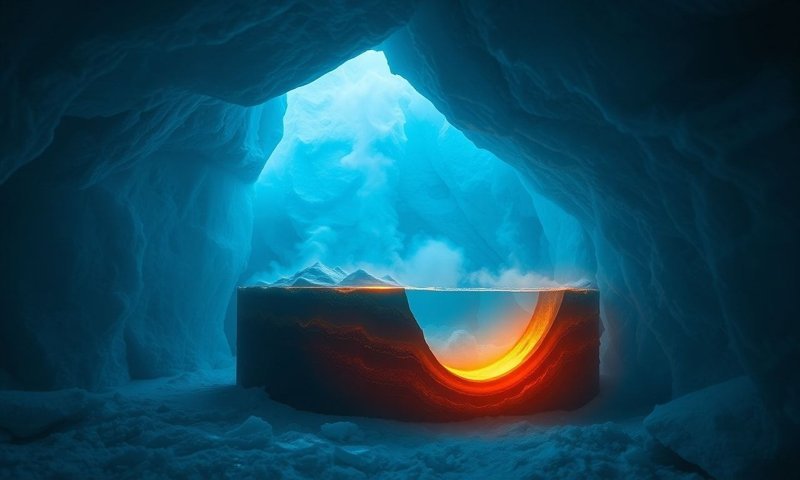
The mystery deepens as we observe the movement of the South Magnetic Pole. It is moving faster than ever recorded in history. It doesn’t merely crawl; it races away from the continent. This magnetic “escape” indicates that something within the metallic fluids of Earth’s core is undergoing violent turmoil. You might feel the Earth is stable beneath your feet, but at the South Pole, the Earth is screaming. The sounds recorded by sensitive microphones deep within the ice do not resemble ordinary ice cracking. They are more like groans, low frequencies that penetrate bodies before they are heard by ears. Is it plate movement? Or has the pressure of gases trapped beneath the warm lakes begun to seek an exit, perhaps echoing the concerns surrounding suboceanic methane time bombs?

The Earth's Deep Tremors: A Screaming South Pole


Frequently Asked Questions

Why does liquid water exist at near-boiling temperatures beneath 4,000 meters of Antarctic ice?
While traditional explanations point to Earth’s geothermal heat, recent measurements indicate a thermal anomaly that cannot be fully explained by normal volcanic activity, suggesting an unknown energy source maintains the warmth of these subglacial lakes.
What significant discovery was made in Lake Vostok, and what are its implications?
Russian scientists drilling into Lake Vostok found traces of DNA belonging to no known species on Earth. This discovery suggests the existence of unique life that has evolved in complete isolation for millions of years, potentially redefining our understanding of life and evolution on our own planet.
How is Antarctica’s magnetic field behaving unusually, and why is it a concern?
The South Pole exhibits a “Magnetic Anomaly” where compasses and satellites malfunction, and the magnetic pole is moving faster than ever recorded. This erratic behavior indicates violent turmoil within Earth’s core and a weakening magnetic shield, which protects Earth from deadly cosmic radiation, posing an impending catastrophe.
What is the author’s controversial theory regarding Antarctica’s ice melt?
The author contends that the ice is not melting solely from rising atmospheric temperatures, but from the bottom up, suggesting the continent is warming from within. This points to a transformation within the Earth’s core, with “thermal pulses” emanating from the depths rather than just external climatic cycles.
What kind of unique life could exist beneath the Antarctic ice, and what would its discovery mean?
Isolated ecosystems could harbor creatures evolved in absolute darkness, under immense pressure, and relying on chemosynthesis rather than sunlight. The discovery of such life would discard our current definition of a habitable environment, revealing a parallel evolutionary path on Earth and profound implications for astrobiology.

Generated by AI Content Architect

About The Author

Leave a Reply

Your email address will not be published. Required fields are marked *